WuXi XDC defends No. 1 market share with one-stop platform that slashes development timelines; Fujifilm unveils 2027 ADC integration roadmap on home turf; Samsung Biologics counters with CFD-optimized ADC process and November peptide acquisition
Asia's largest biotech exhibition, Bio Japan 2026, turned into an intense battle for contracts among leading contract development and manufacturing organizations from South Korea, China and Japan, with next-generation modalities — particularly antibody-drug conjugates (ADCs) and peptides — at the center of the fight.
Unlike past competitions that focused mainly on antibody production capacity, the key battleground this year has shifted to advanced conjugation technology and the speed of full-cycle development, from early-stage discovery through commercialization.
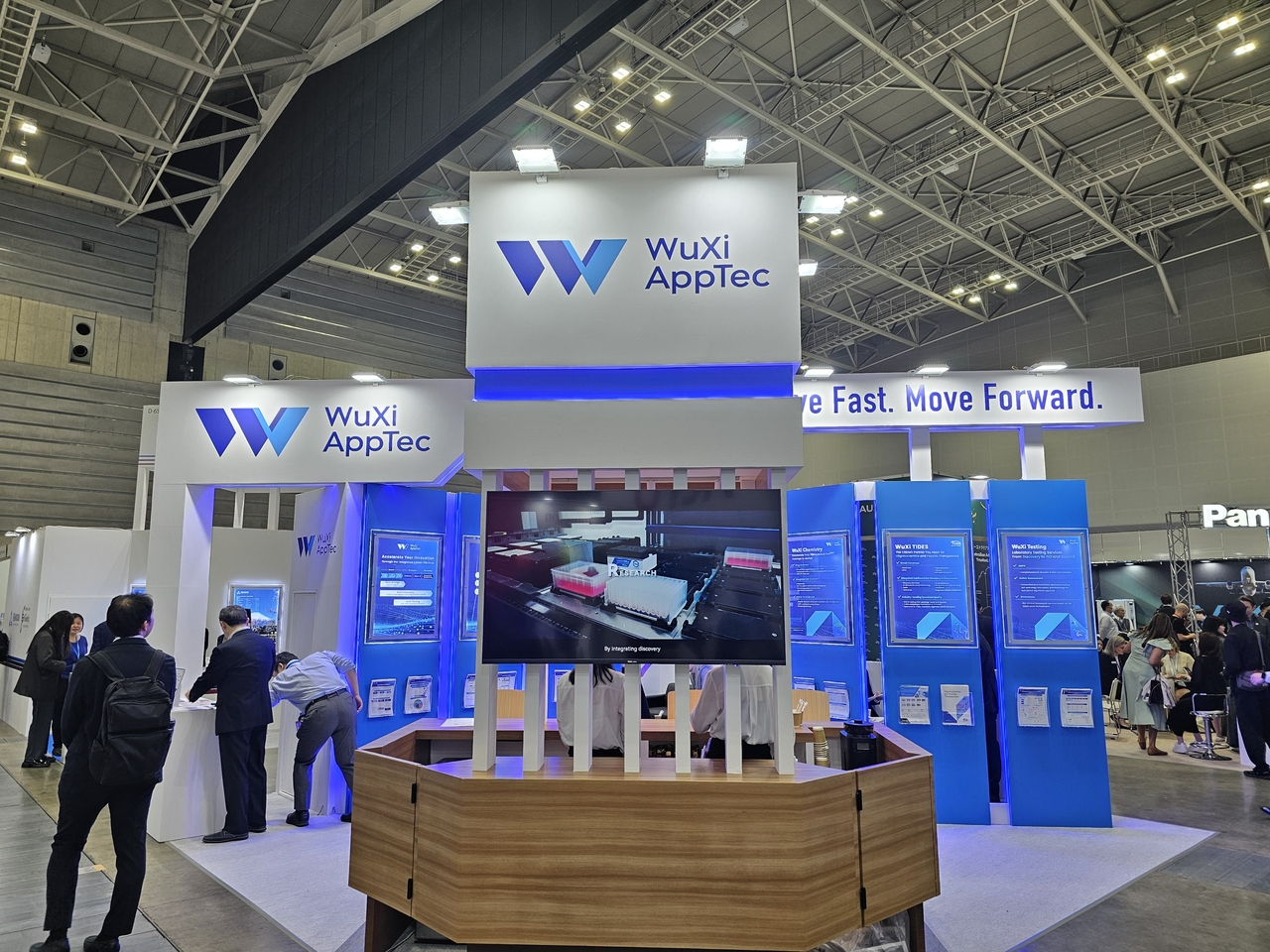
The most aggressive defender of its position was China's WuXi XDC. Holding more than 25 percent of the global ADC CMO market — the top share worldwide — WuXi XDC hosted a technical seminar to showcase its next-generation capabilities.
"The conventional fragmented CMO model requires passing through as many as seven separate vendors, pushing the timeline to IND approval out to 24 to 30 months," a WuXi representative said. The company argued it can dramatically cut that timeline through a proprietary platform that directly conjugates nucleic acids and peptides to antibodies without enzymes or genetic modification, combined with a fully integrated in-house system.
WuXi XDC also occupied a large standalone booth on the exhibition floor, placing its oligonucleotide and peptide platform brand WuXi TIDES front and center alongside the global network of parent company WuXi Biologics to pursue next-generation pipeline contracts. The company highlighted a track record of 967 cumulative ADC discovery projects and 286 clinical pipeline programs as it sought to win over global customers.
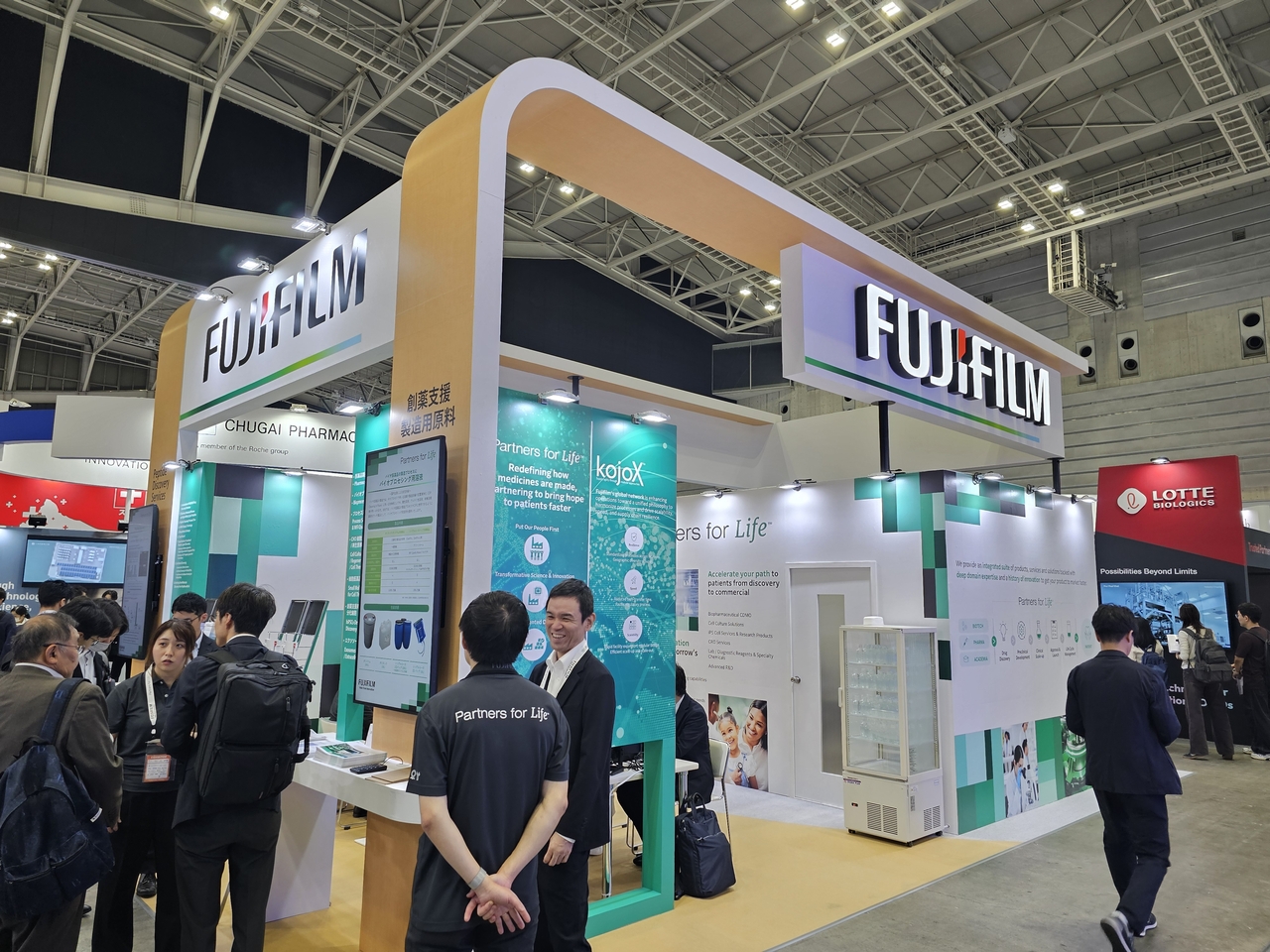
Japan's Fujifilm mounted a sharp counteroffensive on home ground. The company set up a large pavilion at the center of the exhibition floor and formally announced a concrete roadmap to launch fully integrated ADC CMO services from 2027. Fujifilm highlighted its global production network — including a 20,000-liter large-scale bioreactor in Holly Springs, North Carolina, and a facility in Hillerød, Denmark — along with its continuous bioprocessing platform MaruX and animal-cell expression system ApolloX, which combine upstream and downstream operations.
Fujifilm also pushed hard to leverage its long-accumulated drug discovery capabilities. The company prominently featured a peptide discovery service at the front of its booth, spotlighting a high-throughput cyclic peptide screening platform based on mRNA display technology and a proprietary AI drug design tool, drug2drugs AI-AAM®. It also brought forward iPSC disease models and blood-brain barrier penetration assessment technology from subsidiary Fujifilm Cellular Dynamics, positioning itself to capture the preclinical efficacy evaluation market.
![Choi Yeon-jeong, a professional from Samsung Biologics' New Modality Group, presents on the company's high-quality drug manufacturing capabilities through ADC conjugation process optimization at Bio Japan 2026 in Yokohama, Japan, on Wednesday. [Samsung Biologics]](https://wimg.heraldcorp.com/news/cms/2026/10/08/news-p.v1.20261008.e2329d068909484bbb5667157788819a_P1.jpg)
Samsung Biologics fired back with an end-to-end service offering and a diversified portfolio. At a seminar Wednesday, the company unveiled a high-quality ADC conjugation process optimized through computational fluid dynamics simulation and announced plans to bring a dedicated drug product line online in August 2027. Samsung Biologics also said it will complete its acquisition of global peptide company PolyPeptide Group in November to enter the obesity and diabetes GLP-1 treatment market, while building its third bio campus in Songdo to raise total production capacity to 1.3 million liters by 2032.
Industry observers at Bio Japan said the contract competition among the three Northeast Asian nations for dominance in the Asia-Pacific market has reached a qualitative turning point. As the potential US Biosecure Act accelerates the reshaping of global supply chains, analysts say the CDMO race — once centered on large-scale antibody manufacturing capacity — has fully transformed into a full-cycle discovery and process speed competition across high-value new modalities, including peptides for obesity treatments and ADCs for cancer targeting.
silverpaper@heraldcorp.com