Six finalists present youth-driven policy ideas, judged by experts and a youth audience panel
Proposals range from sharing startup failure stories to lifestyle education, mentorship and cultural arts
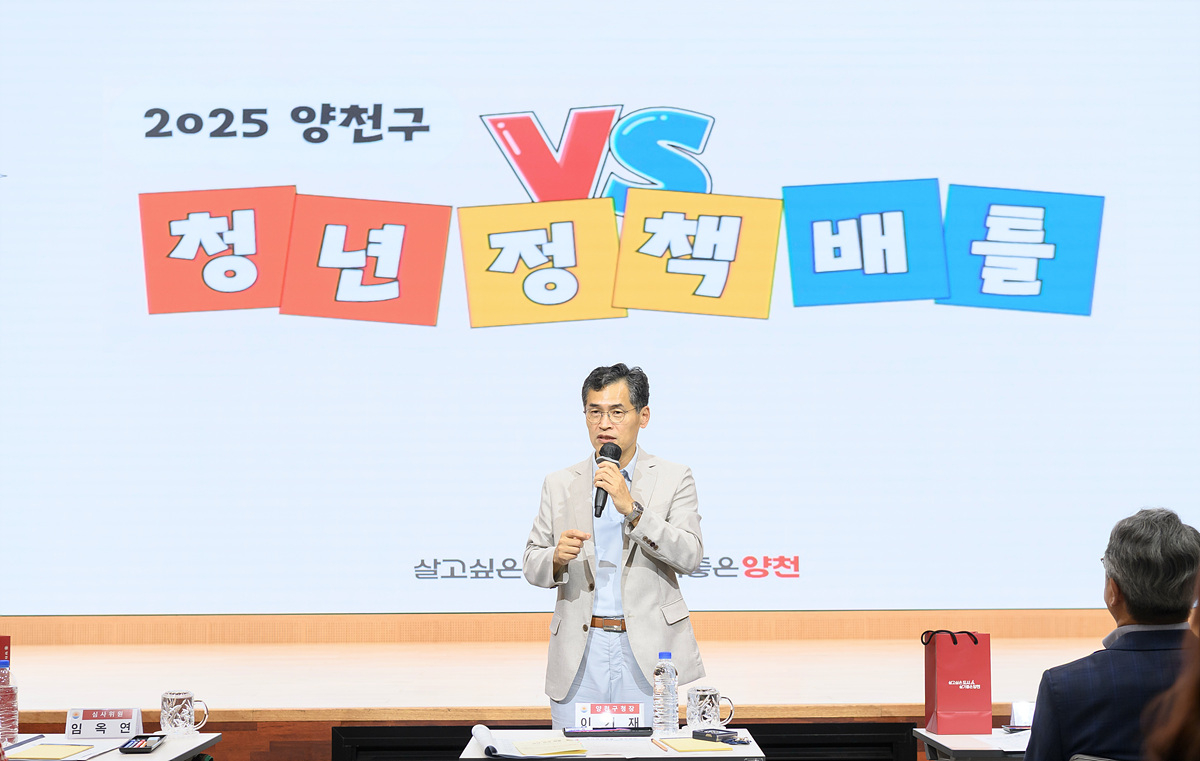
Yangcheon-gu will host the "2026 Youth Policy Competition — Youth Policy Restaurant" on Oct. 14 at the Yangcheon Digital Media Center, aiming to expand young residents' participation in district governance and identify effective youth policies.
Now in its second year, the Youth Policy Competition is a participatory program designed to surface fresh policy ideas from young people and incorporate them into district administration. Its defining feature is that standout proposals are not left as suggestions — they are developed into actual projects.
This year's final round is themed "A Policy Spread Set by Youth: Youth Policy Restaurant." The district accepted 33 ideas through June across five categories — employment, economy and housing, culture and welfare, education, and civic participation — and selected six teams as finalists after a document screening. Over the past two months, those teams have refined their proposals in consultation with experts, strengthening feasibility and content.
The competition will showcase a range of policies rooted in the everyday concerns of young people. In the first session, three proposals take the stage: "Yangcheon Youth Startup Mistake Journal," which compiles startup failure experiences as learning resources; "Youth Real Education," covering practical skills needed for independent living such as housing, daily life and health; and "Yangcheon Seasonal Restaurant," aimed at easing food costs and addressing nutritional imbalances among youth.
The second session features three more proposals closely tied to young people's daily lives: "Yangcheon Youth Map," which documents local landmarks through a young person's lens; "Recruit Fearless Youth," which expands performance and exhibition opportunities for young artists; and "Youth Who Ran," which uses running to help young people build social networks.
Final judging will be conducted jointly by a panel of internal and external expert judges, who account for 60 percent of the score, and an audience panel of 40 young people, who account for the remaining 40 percent. Prizes include 1 million won for first place, 500,000 won for the runner-up, 200,000 won each for three merit awards, and one encouragement prize — all accompanied by certificates. The district plans to work with relevant departments to develop this year's top proposals into actual projects and incorporate them into youth policy.
Three winning proposals from last year's competition are already being carried out as official programs this year, bringing tangible change to young residents' lives: "Sinwol, One Cup of Culture," a youth cultural program using storefronts in Sinwol-dong; "Together Yangcheon Kit," which provides newcomer single-person households with a bundle of practical living information; and "Youth Pop-up Day," which supports young entrepreneurs and cultural artists in finding new markets.
"Young people need policies that cover all aspects of life — employment, housing, culture — if they are to build stable, independent lives in their communities," Yangcheon-gu District Mayor Lee Gi-jae said. "We will continue to actively reflect the voices of youth in our policies and expand practical support so that young people can take on challenges and grow right here in the district."
seouldream01@heraldcorp.com