Military moves to clear mines as MDL discrepancies pose ongoing challenge
Joint Chiefs TF formed this year; officials say inter-Korean military talks not a prerequisite
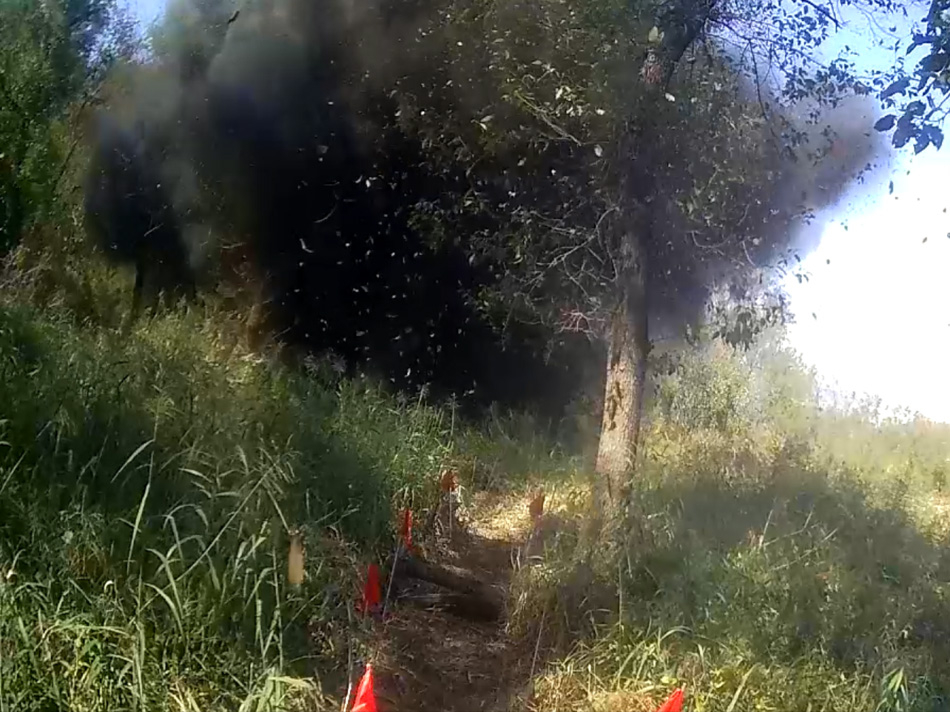
South Korea's military has been running a task force since early this year to work with the United Nations Command on unifying their respective standards for the Military Demarcation Line, officials confirmed Tuesday, as the two sides seek to resolve a long-standing discrepancy seen as a source of instability in the Demilitarized Zone. The military also announced plans for additional operations to remove North Korean mines planted south of the MDL, though differences in how the line is drawn and ensuring troop safety remain unresolved challenges.
Woo Gyeong-seok, the Ministry of National Defense's policy planning director, said at a regular ministry briefing Tuesday that "the Joint Chiefs of Staff has been running a TF since early this year and holding close discussions, because the MDL standards held by the UN Command and the South Korean military must first be aligned before we can address matters related to North Korea."
The Defense Ministry proposed inter-Korean military talks to North Korea in November last year to discuss the MDL baseline issue, among other matters. With no response from Pyongyang, Seoul has been working to resolve the discrepancy between its own military and the UN Command first. However, Woo said that while aligning the MDL before holding military talks "would be more efficient, I don't think it is an absolute prerequisite," adding that the timing of future talks would be determined by comprehensively weighing the security situation and other factors.
The MDL discrepancy stems from differences between the line as drawn on maps and the physical markers installed in the field. Of the 1,292 markers erected at the time of the 1953 armistice, only about 200 are currently identifiable. The South Korean military uses a map-based MDL established by the US National Geospatial-Intelligence Agency in 2004, while the UN Command uses coordinates generated through its own 2016 survey. North Korea is believed to recognize its own MDL based on the physical markers and other field references.
Woo said that applying the UN Command standard would shift the line northward in some sections and southward in others compared with the existing South Korean standard, but that "in terms of total extent, they are similar." He added that the military is also factoring in how North Korea perceives the line and the potential impact on actual operations.
The military and the UN Command are also conducting a special investigation to confirm several suspected North Korean minefields south of the MDL. The military plans to carry out additional removal operations in sequence, but officials declined to say how closely the two sides' assessments align on whether each minefield crosses the line. Asked whether South Korea could act unilaterally if the two sides' judgments differ, officials said they would "consult closely."
The Defense Ministry clarified that when the minister described the mine removal operation as "the first in history," he was referring specifically to the physical removal of mines that North Korea had recently planted south of the MDL — not to DMZ mine clearance in general. Officials said the operation is distinct in nature from mine removal conducted during previous remains-recovery efforts.
On calls to hold commanders accountable for failing to prevent North Korea from planting the mines, the ministry said it is not separately reviewing any investigation or disciplinary action against relevant commanders. Defense Ministry Spokesperson Jeong Bit-na said "it does not appear to be a matter of holding a specific individual responsible," adding that frontline units are carrying out operations in accordance with established principles and standards.
The military rebuffed allegations of negligence, saying it had fired warning shots more than 50 times this year. Officials acknowledged, however, that there were cases in which North Korean troops confirmed their position after warnings and then moved north, as well as cases in which work continued in areas where North Korea apparently judged — by its own standard — that no line had been crossed. Joint Chiefs of Staff Operations Director Yang Jin-hyeok said "the MDL our military applies remains unchanged," and denied that the baseline had ever been moved southward.
A difference of views between the South Korean government and the UN Command also persists over whether North Korea's so-called border fortification activities themselves constitute a violation of the armistice agreement. Seoul considers them a violation on the grounds that they neutralize the buffer zone, while the UN Command has taken a different position on activities north of the MDL. The Defense Ministry said it would continue consultations while respecting the UN Command's authority to administer the armistice.
rimsclub@heraldcorp.com