
A 700-meter stretch of Janghan-ro transformed Saturday into a performance venue, roller-skating rink, camping ground and rest area — drawing crowds with street theater, mime, a car-trunk flea market and the chance to lie on the asphalt reading comic books.
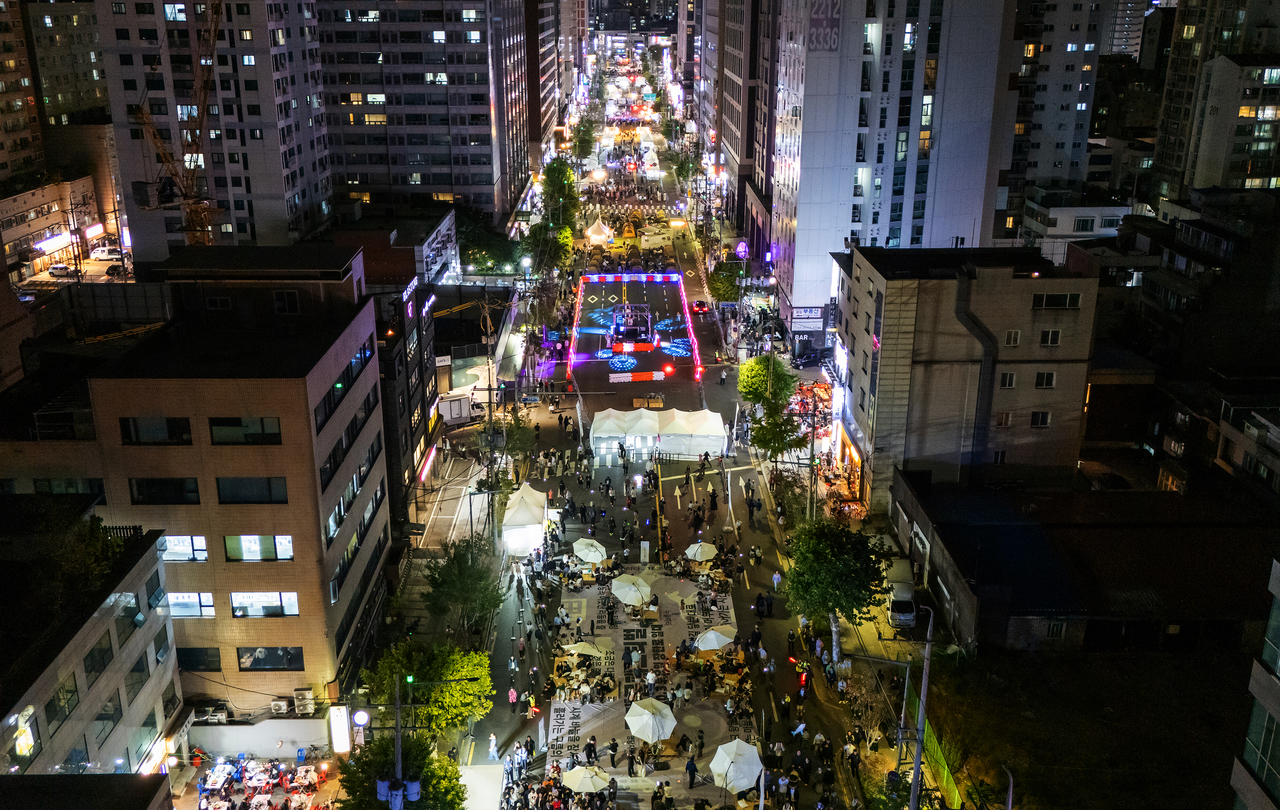
A road once traveled by warhorses, then by the modern automobile industry, was taken over by culture this year.
Dongdaemun-gu in Seoul said it successfully wrapped the 2026 Dongdaemun Festival, held Saturday along Janghan-ro, with strong turnout from residents and local artists.
The defining feature of this year's event was the transformation of Jangandong's local identity into festival programming that residents could experience firsthand. The asphalt normally shared by cars gave way to a performance stage, a roller-skating rink, and spaces for camping and relaxation. Two debut programs — a roller rink dubbed "DDM Rolla-jang" and a car-trunk market called "The Day My Car Becomes a Shop" — drew particular attention as signature offerings rooted in the neighborhood's character.
The roller rink turned a stretch of Janghan-ro into an open recreational space where visitors skated to DJ music. The road, long the heart of South Korea's largest auto-parts and retail district, became an unlikely cultural venue for the day. Residents glided freely across lanes normally filled with traffic. "I've always driven past this road from inside a car," one Jangandong resident said. "Actually skating down it made Janghan-ro feel completely new."
At the car-trunk market, participants opened their vehicles as miniature shops and exhibition spaces. Trunks displayed clothing, books and collectibles alongside personal mementos, and visitors did more than browse and buy — they swapped stories and found new ways to enjoy the street. "Opening up my car like a shop and talking people through what I had made it easy to strike up conversations," one vendor said. "That was the best part."
Circus acts, mime performances and street theater unfolded at various points along the road. Rather than waiting in assigned seats, festivalgoers stumbled upon performances as they walked and paused to take them in. Families and individuals lingered at the "Lazy Floor" and "Urban Camping" zones, spending unhurried time on a road they would ordinarily pass through without a second thought.
Local artists and residents gave the festival much of its energy. Thirteen artist teams from the district performed in a relay showcase, and four choral groups — the district's women's chorus, the boys' and girls' chorus, the senior Yegeurina Chorus and the Dongdaemun-gu Fathers' Chorus — took the main stage. Six community organizations also ran hands-on activity booths along Janghan-ro. With local artists and residents filling both the stage and the program, the Dongdaemun Festival grew from a spectator event into something the neighborhood built together.
The evening main stage brought the day to a peak. Musical actor Choi Jeong-won warmed the crowd with familiar numbers including "All That Jazz" and "Dancing Queen," lifting the atmosphere before rock band Jaurim closed the festival with a string of beloved hits, their powerful vocals and band sound providing a fitting finale. The energy that local artists, residents and street performers had built through the day carried seamlessly into the night, completing a program that spanned generations and genres.
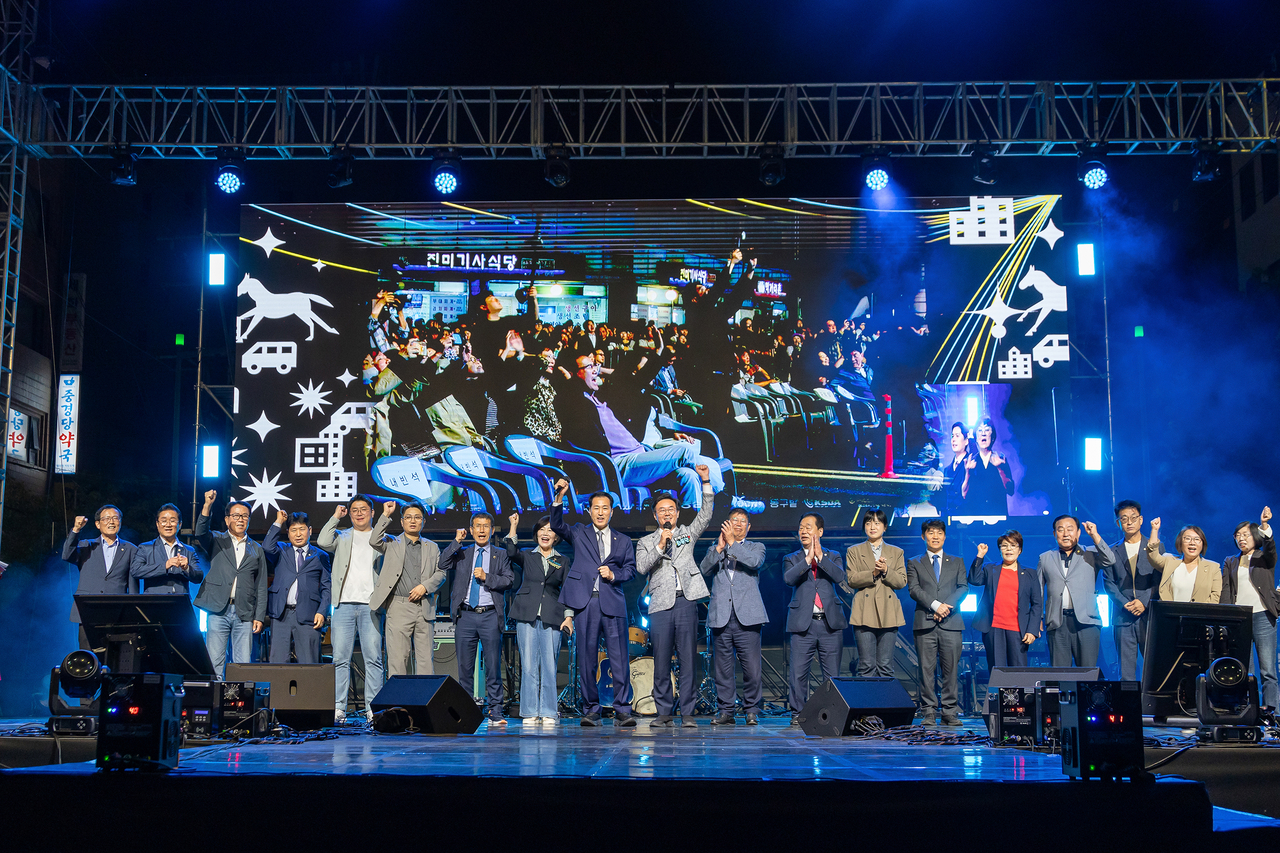
The festival's energy extended beyond the event grounds. As in previous years, organizers directed visitors to nearby restaurants and shops rather than setting up dedicated food and beverage stalls or food trucks. A "DDM Neighborhood Meal" promotion offered festival merchandise to anyone who presented a receipt from a nearby business at the operations center, channeling foot traffic toward the local commercial district. "You could really see more people on the street than usual, and more customers coming into the shop," said a merchant near Janghan-ro. A festivalgoer echoed the sentiment: "Spending the day going from performance to performance, I felt like I was discovering my own neighborhood for the first time."
Dongdaemun-gu District Mayor Choi Dong-min said Jangandong is a street that holds the history and transformation of Dongdaemun-gu. "This year's Dongdaemun Festival is meaningful because it translated Jangandong's stories into cultural content that residents could experience and enjoy directly," he said. He added that the district would continue building festivals grounded in Dongdaemun-gu's unique resources and stories, so that residents can enjoy culture and the arts close to their everyday lives.
seouldream01@heraldcorp.com




