Foreign visitors to duty-free stores are up, but cosmetics sales have fallen sharply
Decline linked to drop in daigou buyers and shift to other retail channels
Lawmaker Moon Jin-seog calls for measures to make duty-free stores a gateway for the popular cosmetics industry
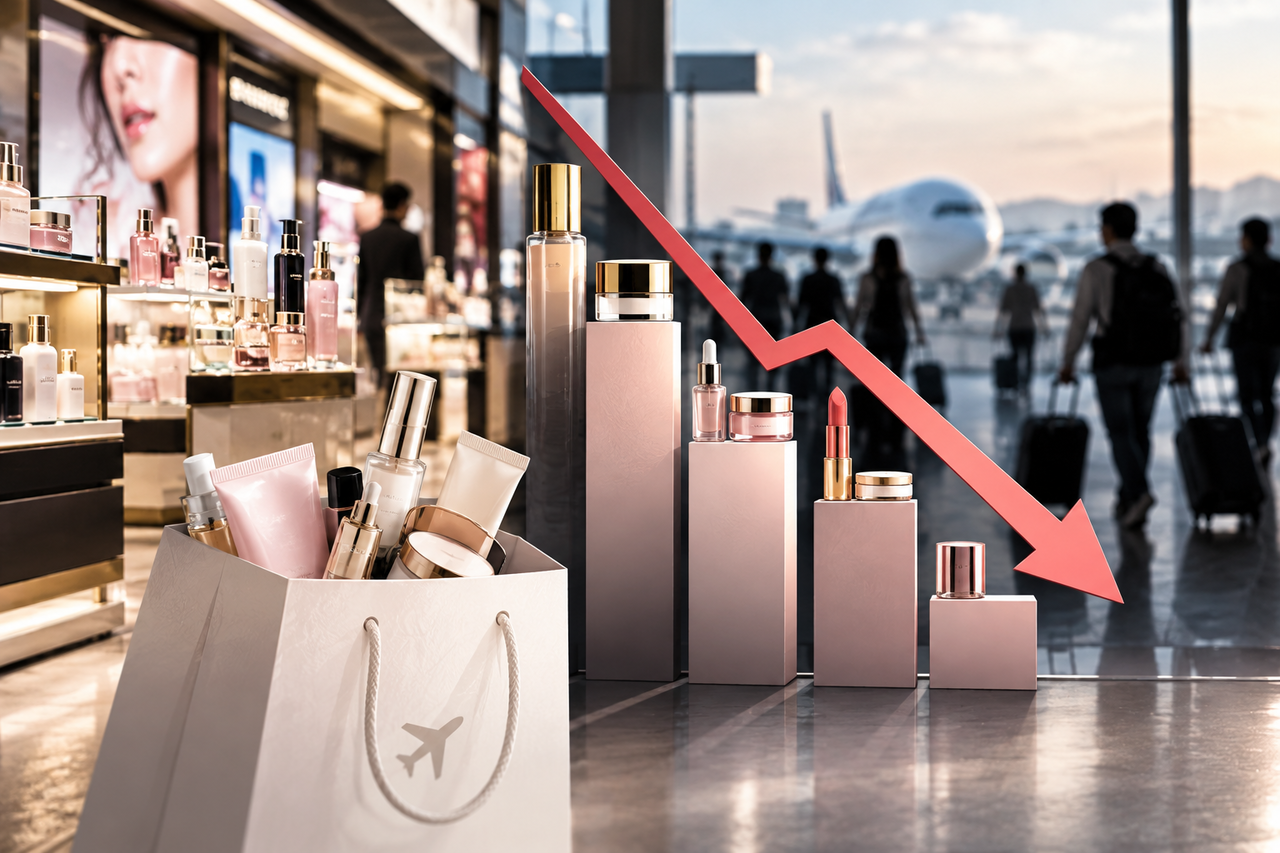
Foreign visitors' cosmetics purchases at duty-free stores have fallen more than 60 percent over four years, even as tourist arrivals and the popularity of Korean beauty products continue to grow, according to data obtained from the Korea Customs Service. Analysts say the trend points to a shift in where foreign shoppers are buying cosmetics — away from duty-free stores and toward other retail channels.
Data submitted to the office of Moon Jin-seog, a Democratic Party of Korea lawmaker on the National Assembly's Land, Infrastructure and Transport Committee, show that foreign visitors' duty-free cosmetics sales fell from 13.8 trillion won ($10.1 billion) in 2021 to 4.92 trillion won in 2025 — a drop of 8.87 trillion won over four years.
The decline has been steady year by year. After peaking in 2021, sales fell to 13.22 trillion won in 2022, then to 7.94 trillion won in 2023, 7.19 trillion won in 2024 and 4.92 trillion won in 2025. Sales in the first half of this year came to 2.62 trillion won.
Cosmetics' share of total foreign duty-free spending has also shrunk significantly — from 81.1 percent in 2021 to 52.8 percent in 2025 — signaling that the near-total dominance of cosmetics in foreign duty-free consumption has given way to a more diversified spending pattern.
Industry observers attribute the shift to the decline of Chinese daigou traders — bulk buyers who once drove large-volume cosmetics purchases — and a rise in individual tourists who spread their spending across more channels. Foreign shoppers are increasingly turning to Korean cosmetics stores in city centers and tax-refund retail outlets, meaning that growth in tourist arrivals no longer translates directly into higher duty-free cosmetics sales as it once did.
Foreign duty-free spending in the first half of this year spread across multiple categories beyond cosmetics: bags and luggage at 588.3 billion won, jewelry and precious metals at 403.9 billion won, perfume at 297.5 billion won, clothing at 244.2 billion won and tobacco at 162.6 billion won. Cosmetics still account for the largest share, but the overwhelming concentration seen in previous years has weakened.
Meanwhile, the number of foreign visitors using duty-free stores is rising again. Korea Customs Service data show that the total number of foreign duty-free shoppers — across downtown stores, departure halls, arrival halls and designated outlets — grew from about 6.02 million in 2023 to about 9.33 million in 2024 and about 10.92 million in 2025. About 6.65 million foreign visitors used duty-free stores in the first half of this year alone.
Moon urged against reading the sales decline simply as a sign of a downturn. "We need to look at this from the angle of changing purchasing channels, not just a slump," he said, adding that the government should "devise measures to make duty-free stores a gateway for popular cosmetics brands to reach overseas markets."
thanks@heraldcorp.com