![Korean Sport & Olympic Committee President Yoo Seung-min speaks at a press conference wrapping up South Korea's performance at the 2026 Aichi-Nagoya Asian Games, held at Korea House in Nagoya, Japan, on Sunday. [Yonhap]](https://wimg.heraldcorp.com/news/cms/2026/10/04/rcv.YNA.20261004.PYH2026100401740001300_P1.jpg)
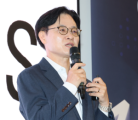
Korean Sport & Olympic Committee President Yoo Seung-min has criticized remarks made by some athletes at the 2026 Aichi-Nagoya Asian Games regarding their military service exemptions, saying the comments were "out of step with public sentiment."
Speaking at a press conference at Korea House in Nagoya, Japan, on Sunday, Yoo said the committee provides athletes with education on conduct, social media use and interview skills from the moment they enter the athletes' village, but that controlling spontaneous individual remarks remains difficult. He added that baseball players, who do not stay at the athletes' village, are particularly hard to manage on an individual basis.
"In some ways, what athletes post on social media can be seen as personal expression," Yoo said, "but there are times when remarks come out that are out of step with public sentiment. I think the athletes themselves will have learned something from this controversy."
Earlier, the South Korean men's U-23 football team, led by head coach Lee Min-sung, claimed gold Saturday at Toyota Stadium in Aichi Prefecture, Japan, defeating Japan 1-0 in the final. The victory entitles the players to enlistment as arts and sports personnel under South Korean law, sparing them a career interruption or a delay in pursuing opportunities abroad.
Of the 23 players in Lee's squad, 20 will receive the military benefit. The remaining three — Lee Young-jun (Grasshopper), Lee Seung-won (Gangwon) and Kim Jun-hong (Suwon Samsung) — had already completed their service through the Armed Forces Athletic Corps.
The controversy erupted after several players openly referenced the exemption following the match.
Team captain Lee Gi-hyeok, born in 2000, told a broadcast interviewer after the game that he had been just nine days away from his enlistment date had the team failed to win gold. "For the players, this was a tournament where the military exemption mattered enormously, but for me personally, enlistment was also right around the corner," he said.
Lee said he had jokingly reminded his teammates of the stakes throughout the tournament. "The players kept telling me, 'If we don't win a medal by Sunday the 4th, you're enlisting nine days later,'" he said. "I wanted it so badly, and the weight of that was so heavy — so shedding that burden makes this all the more meaningful."
Lee also held up his gold medal toward cameras and shouted with a smile, "I'm not going to the army."
![Park Seung-su (Newcastle) drew criticism after posting a photo of himself wearing a military discharge cap on his social media following his gold medal win at the Asian Games. [Captured from Park Seung-su's social media]](https://wimg.heraldcorp.com/news/cms/2026/10/04/news-p.v1.20261004.d702720674524e739b88c6dc14efdc41_P1.png)
Park Seung-su (Newcastle), the youngest member of the squad at 19, also drew criticism after posting a photo of himself wearing a military discharge cap on his social media.
The incidents have amplified an ongoing public debate over the fairness and appropriateness of military service exemptions for athletes, with the players' direct and celebratory references to the benefit drawing particular scrutiny.
Regarding the controversy, Yoo said the committee would work to help younger athletes find ways to carry themselves with greater dignity in interviews, public statements and social media posts. "We cannot control our athletes in advance, but we will make every effort to better convey the kind of attitude that fits this environment," he said.
Yoo also described the 2026 Aichi-Nagoya Asian Games as "the tournament where we filed the most protests ever," and said the committee would use the experience as a lesson as it prepares for next year's Chungcheong Universiade.
He acknowledged that South Korea's medal count fell short of its tally at the 2022 Hangzhou Games, but argued the team had achieved meaningful results in diversifying its medal-winning sports and finding new sources of gold despite structural disadvantages — including the removal of events such as roller sports, baduk and shooting's running target, as well as a reduction in taekwondo sparring bouts.
South Korea sent 790 athletes across 41 of the 43 sports on the program and finished third overall, collecting 39 gold medals, 43 silver and 68 bronze for a total of 150 medals.
carrier@heraldcorp.com