
Data submitted to National Assembly lawmaker for national audit shows sex-related violations may rank first when improper relationships are included
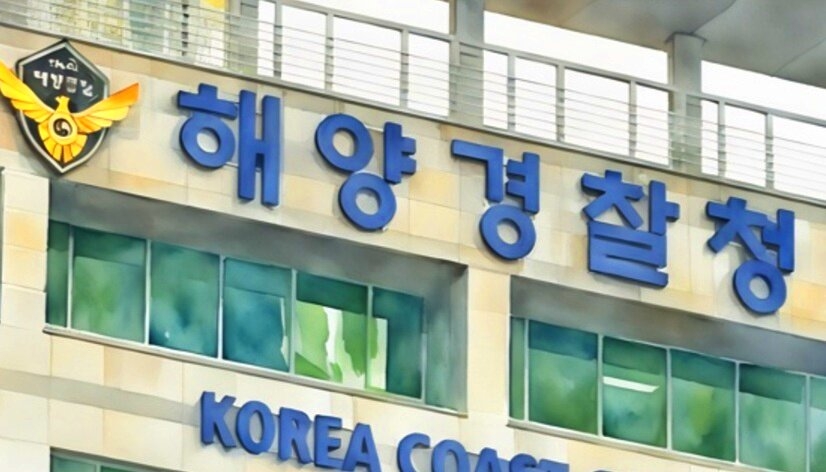
Three categories of serious misconduct within the Korea Coast Guard — gapjil, drunk driving and sexual violations — accounted for 166 cases over the past five years, or 31.4 percent of all disciplinary infractions recorded during that period.
Sexual misconduct alone stood at 53 cases, representing 10 percent of the total. When improper romantic relationships — which carry a high risk of escalating into sexual assault — are added, the combined share of sex-related violations rises to 13.4 percent, surpassing dereliction of duty, the single most common infraction at 12.5 percent.
The figures come from data the Korea Coast Guard submitted to Rep. Moon Geum-ju of the Democratic Party of Korea, a member of the National Assembly's Agriculture, Food, Rural Affairs, Oceans and Fisheries Committee, ahead of this year's national audit. An analysis of the data shows that a total of 530 disciplinary cases were filed and acted upon within the Korea Coast Guard from 2022 through late August this year.
Since 2023, more than 100 cases have been recorded each year. This year, 77 cases had already been detected as of August, showing no sign of abating.
"The prevalence of sexual misconduct, gapjil, drunk driving, dereliction of duty and even criminal offenses within an agency entrusted with maritime security and public safety is clear evidence that civil service discipline has seriously deteriorated," Moon said. She urged the Korea Coast Guard to immediately adopt sweeping reforms, including a strict "one-strike-out" policy for the three major categories of serious misconduct, stronger collective accountability in senior personnel evaluations, and the routine scheduling of cross-unit inspections and unannounced checks. "The annual service-management plans drawn up as a formality have proven entirely ineffective," she added.
By category, dereliction of duty led all infractions at 66 cases (12.5 percent), followed by violations of dignity standards at 62 cases (11.7 percent), abuse of authority including gapjil at 57 cases (10.8 percent), drunk driving at 56 cases (10.6 percent) and sexual misconduct at 53 cases (10 percent). The three major categories of gapjil, drunk driving and sexual misconduct combined accounted for 31.4 percent of all cases.
Of the 530 total disciplinary cases during the period, 230 — or 43.4 percent — resulted in heavy penalties, including removal from office, dismissal, demotion or suspension.
Senior civil servants at the inspector rank or above, who are responsible for supervising subordinates, were implicated in 129 cases, or 24.3 percent of the total, prompting criticism that the management layer's capacity for self-regulation has in effect collapsed.
Criminal-type violations that undermine public trust in a law-enforcement agency were also widespread, including assault (7.2 percent), theft (4.0 percent) and embezzlement (1.1 percent). Basic service-discipline breaches such as improper receipt of overtime pay (4.7 percent) and unauthorized absence from duty posts (2.2 percent) were similarly prevalent.
abc@heraldcorp.com




