Yun Su-min, NH NongHyup Bank senior real estate specialist
Survival strategies in an era of extreme real estate policy
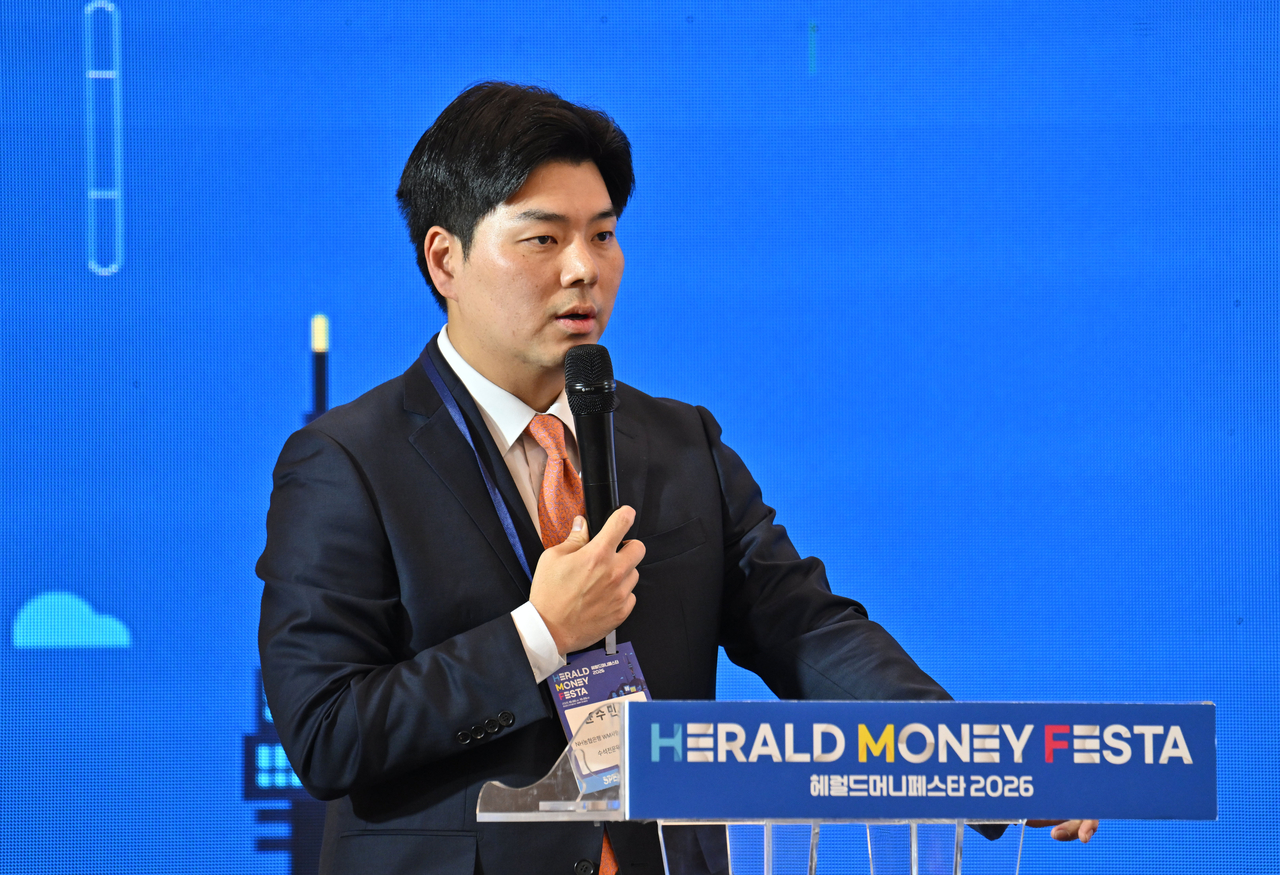
"The prospect of flagship apartments in the standard unit size in Dongtan and Gwanggyo breaking the 3 billion won mark is not at all without basis."
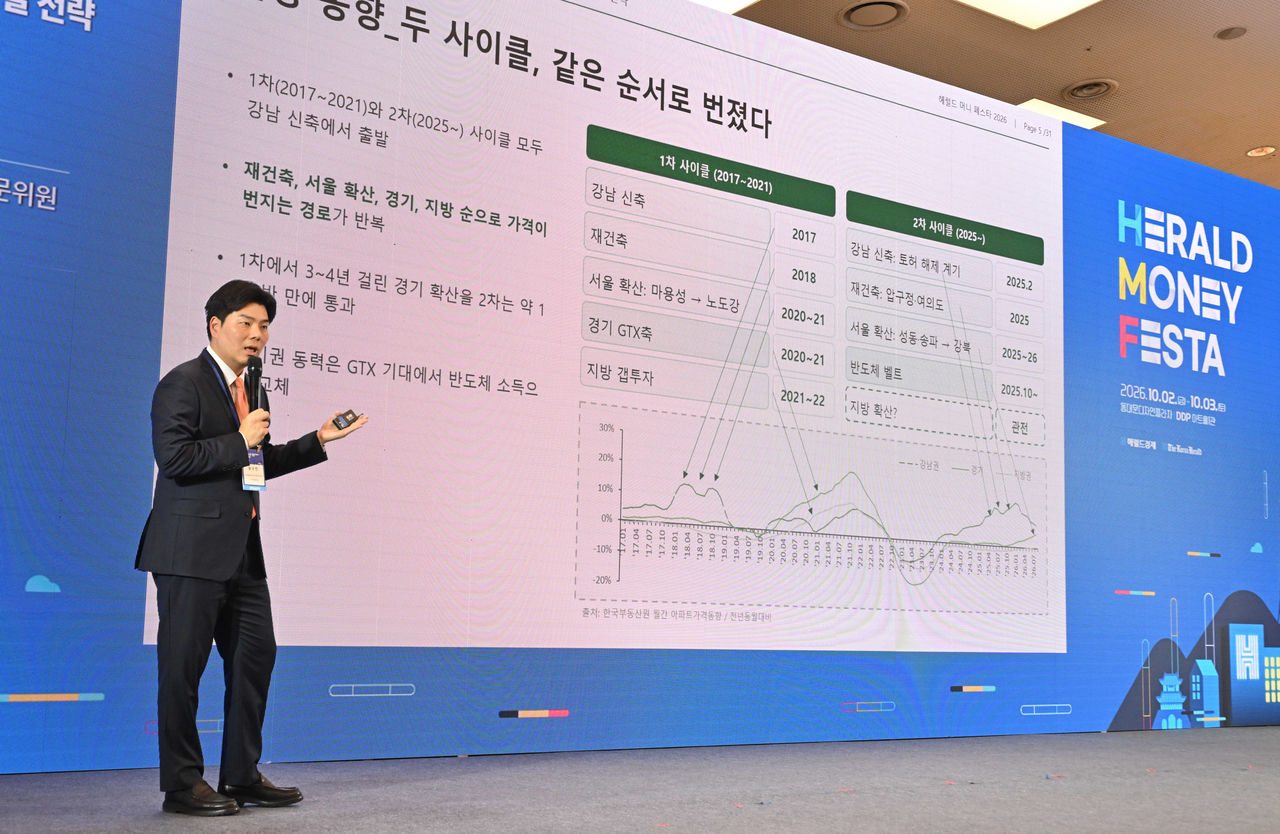
Yun Su-min, senior real estate specialist at NH NongHyup Bank, said performance bonuses paid to employees of Samsung Electronics and SK hynix, combined with demand for housing close to work, could push up home prices across southeastern Gyeonggi Province. He also said that as high-end listings pile up in the Gangnam area and the price gap with districts such as Mapo and Seongdong narrows, homeowners with sufficient capital should consider trading up.
Yun made the remarks Friday at Art Hall 1 of Dongdaemun Design Plaza in Jung-gu, Seoul, where he delivered a lecture titled "Survival Strategies in an Era of Extreme Real Estate Policy" at Herald Money Festa 2026.
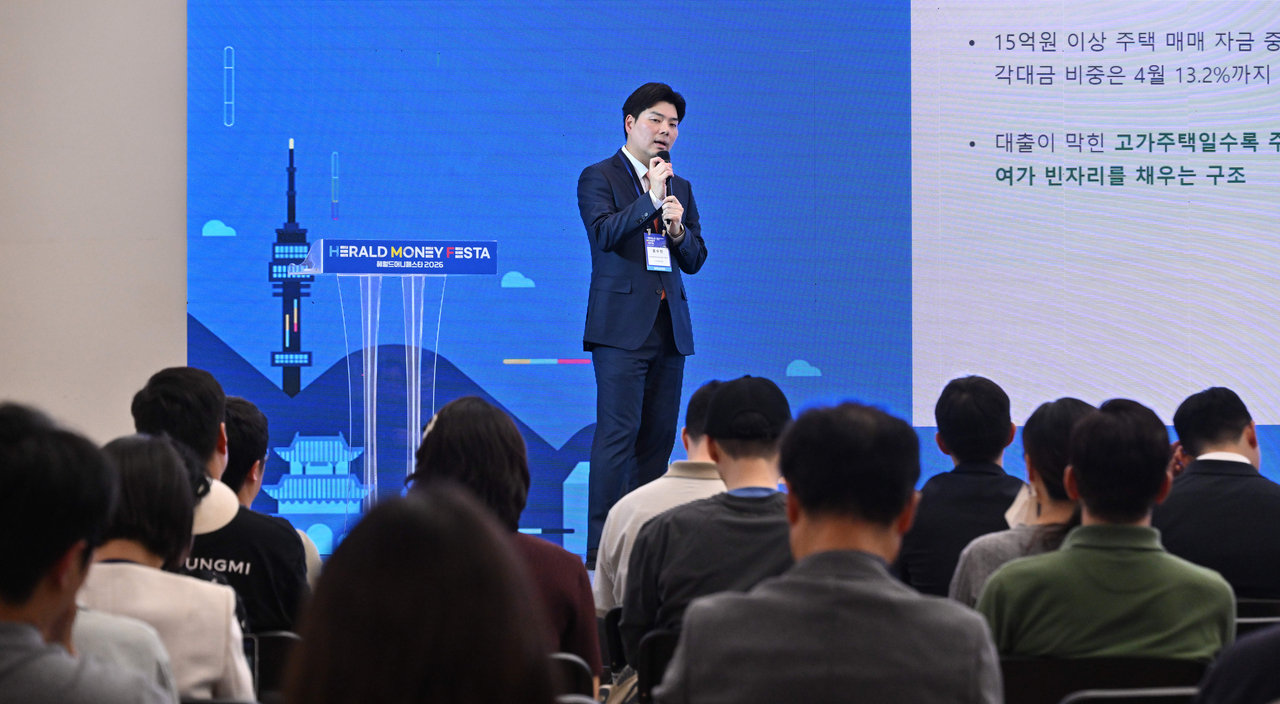
Yun said the results of the upcoming apartment subscription for Banpo Dieh Classit in Seocho-gu — slated for later this year — would be a pivotal moment that determines the direction of Gangnam home prices, which have entered a period of correction. He noted that large pools of capital waiting for the so-called "lottery pre-sale" of roughly 1,800 units subject to the price ceiling on new apartments could flow into prime Gangnam apartments once that subscription concludes.
"If the total amount of money that moved from deposits and real estate into the stock market stood at 694 trillion won ($510 billion) as of the end of April this year, then the amount that shifted from the stock market into housing between January and July was a mere 8.03 trillion won," Yun said. "That means there is still a great deal of capital that could enter the housing market whenever an opportunity arises."
He pointed to the accumulation of listings in the Gangnam area since the tax reform proposal in August, calling the current moment the ideal time for single-homeowners to consider trading up. "The price gap between what you might call upper-mid-tier districts — Mapo, Seongdong and Gwangjin — and the top-tier Gangnam three districts has narrowed," Yun said, adding that for those who can secure financing, "this is the best time to make a move to Gangnam."
He highlighted the second and third quarters of next year as the key window for single-homeowners eyeing a trade-up. Yun said that is when the details of the tax reform proposal are expected to be finalized and additional tax-motivated listings could come onto the market as sellers look to realize capital gains.
"Asking prices in the Gangnam area have already fallen nearly 10 to 15 percent from their peak, so it is not a bad time to enter," he said. "That said, it is worth considering only for those who plan to live there for a long time and who have their own equity rather than borrowed money."
Yun said the strong buying momentum in the southeastern Gyeonggi semiconductor belt, where bonuses from chipmakers are driving up home prices, is likely to continue. "For employees of Samsung Electronics and SK hynix, commuting from Jamsil actually means giving up proximity to work — a kind of physical sacrifice," he said. "That is why predictions that the sale prices of flagship apartments in the standard unit size in Dongtan and Gwanggyo — which offer genuine proximity to those companies — could break 3 billion won are not without basis at all."
For those without a home who are weighing whether to buy, Yun advised making decisions based on the "cost of waiting" against the standard of "rational housing consumption." He said that while this year's move-in supply and relocation demand are roughly in balance, by 2028 the volume of households needing to relocate — around 40,000 — could surge to more than double the projected move-in supply of about 15,000 units. "Rising jeonse prices could increase the cost of waiting," he said. "If a property meets your criteria — proximity to work, long-term residency and so on — and falls within your budget, you should consider it as a rational decision rather than holding out for a large capital gain."
He added that he does not recommend overleveraged buying by those without a home, given how steeply prices have risen. "Looking at past cycles, a bull market always has an end, and a downturn is an inevitable future that is hard to avoid," he said.
On the broader Seoul apartment market, Yun said regulatory policy has trapped the market in what he called a "cycle of numbers," where loan limits effectively set price ceilings by district. "Today's end-user buyers without a home tend to prefer relatively low-interest policy loans, so they gravitate toward homes priced at 600 million won ($441,000) or 900 million won," he said. "Because loan limits have been lowered, transactions in lower-priced apartments at those thresholds — the maximum buyers can afford — are structurally bound to increase."
Friday's lecture drew a diverse audience, from prospective first-time buyers and multi-property owners to single-homeowners considering a trade-up. A woman in her 30s who attended said she came to get a read on market trends as she prepares to buy. "The home I'm targeting isn't in Gangnam, but it was great to get a three-dimensional view of the overall market and what wealthier buyers are doing," she said.

hope@heraldcorp.com