Ministry of Health and Welfare discusses measures to entrench public adoption system and protect adoptees' rights; matching review committee to meet twice monthly
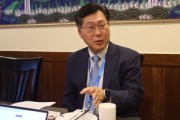
![Health and Welfare Minister Jeong Eun-kyeong speaks at the third Adoption Policy Committee meeting held Friday at the National Child Rights Center in Jung-gu, Seoul. [Ministry of Health and Welfare]](https://wimg.heraldcorp.com/news/cms/2026/10/02/news-p.v1.20261002.f1ed49b2b8eb4de28dd4f5f4d6ace294_P1.jpg)
Since the public adoption system was overhauled last July, the government has been transferring adoption records to the National Archives for permanent preservation and has expanded dedicated staffing to accelerate the rollout of an adoption information disclosure service.
The Ministry of Health and Welfare said it held the third Adoption Policy Committee meeting Friday at the National Child Rights Center in Jung-gu, Seoul, where officials reviewed key progress and discussed measures to substantively protect the rights of adoptees and their families.
The government had previously carried out a sweeping overhaul last July, shifting the entire child adoption process — previously handled by private adoption agencies — to a public system run by the central government, local governments and public institutions.
The shift to the public system funneled all prospective adoptive parents through a single application window, causing a surge in simultaneous submissions and resulting in delays across the adoption process.
In response, the ministry converted the application process to an online system starting March 19, expanded mandatory orientation sessions for prospective adoptive parents from twice to four times a month, and secured additional training venues in Daejeon, Daegu and other regional cities.
The ministry also hired 13 additional staff to conduct home environment assessments of prospective adoptive parents and doubled the frequency of the subcommittee that reviews matches between prospective parents and children, from once to twice a month.
Around 240,000 volumes of adoption records currently held in temporary storage — transferred from private adoption agencies — will be moved to the National Archives. Before the transfer, the records will undergo testing for harmful bacteria and pests and selective disinfection, with completed files to be moved in sequence.
Delays in the adoption information disclosure service are also being addressed.
The number of staff dedicated to information disclosure has been expanded from five to 20. The ministry has also changed its approach to providing information: rather than waiting out the lengthy process of confirming birth parents' consent, it will now release records with personal information de-identified first, with fuller disclosure to follow.
The government plans to eventually link the service to post-adoption support, including assistance for reunions with birth parents, to provide practical help for adoptees searching for their roots.
"The ultimate goal of public adoption is to build a society where every child grows up healthy and happy in a loving home, and where adoptees can fully discover and be respected for their identity," Health and Welfare Minister Jeong Eun-kyeong said. "We will actively reflect the voices from the field and continue to improve the overall process with greater urgency, so that children can find a warm family at the right time."
Meanwhile, the government aims to gradually reduce overseas adoptions to zero by 2029 under the third Basic Plan for Child Policy, covering 2025 to 2029.
thlee@heraldcorp.com