- DGIST spinoff MFR wins Posco unmanned automation project
- Autonomous driving and 3D vision-equipped robotic arm cut collision, fall risks
![Lee Seung-ryeol, CEO of MFR, a startup founded by a DGIST researcher. [Provided by DGIST]](https://wimg.heraldcorp.com/news/cms/2026/10/02/news-p.v1.20261002.12625cb47ee64d179bcf90cedc42f1cc_P1.jpg)
An AI robot is now taking on the dangerous tasks once performed by human workers in a steel mill where massive steel plates weighing several tons move through the facility — jobs that carried constant risks of collision, falling objects and falls from height.
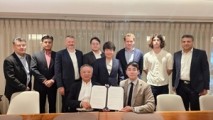
The Daegu Gyeongbuk Institute of Science and Technology (DGIST) announced Friday that MFR, a startup founded by one of its researchers, had won a contract to supply unmanned automated robots for the shipping yard at a Posco steel mill.
The project centers on Posco's initiative to automate the placement of spacers between thick steel plates — known as heavy plates — during the shipping process. The goal is to replace human workers with robots for inserting spacers between the plates as they are loaded for dispatch.
Previously, workers had to perform this task in areas where multi-ton loads were in motion, exposing them to serious risks of collision and being struck by falling material. Those working at elevated positions also faced the danger of falls.
The robots supplied by MFR combine sensor-fusion-based autonomous driving with AI and 3D vision-based robotic arm control. They detect and navigate around obstacles inside the steel mill warehouse on their own as they move to their target positions.
![A diagram of MFR's automated spacer-placement robot system for heavy steel plates. [Provided by DGIST]](https://wimg.heraldcorp.com/news/cms/2026/10/02/news-p.v1.20261002.fe8d51409df44586a373dbfbad3cb5da_P1.png)
Once the robot arrives at the work site, its 3D vision and AI systems analyze the shape and position of the stacked steel plates in real time. The robotic arm then places the spacers at the precise locations required. A variable lifting mechanism and multi-axis control technology allow the robot to operate at heights that would be difficult or dangerous for humans to reach.
The robot also features automatic charging and wireless remote monitoring. Workers can check the robot's status and track the progress of operations from outside the hazard zone without entering it.
MFR plans to use the Posco project to verify the safety and practical performance of its technology in a real steel mill environment, then expand into fields where automation has been difficult — including heavy-load handling and elevated work. The company is also pursuing entry into domestic and overseas steel mills, large industrial plants and specialty manufacturing markets.
"It is significant that we have met Posco's safety and technical standards and entered the final stage before actual deployment," MFR CEO Lee Seung-ryeol said. "We will build a model for safely automating high-risk tasks and move in earnest into both domestic and international markets."
nbgkoo@heraldcorp.com