- 3D structure of VEGF-C and VEGFR-3 binding mapped for first time
- Receptor clustering identified as new treatment target beyond binding blockade
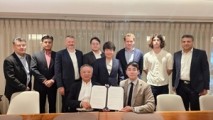
![The joint research team that conducted the study. [Provided by KAIST]](https://wimg.heraldcorp.com/news/cms/2026/10/02/news-p.v1.20261002.bb312a3b62c44581a4b5bdf085261478_P1.jpg)
A new treatment strategy has been proposed for hard-to-treat lymphatic disorders — from severe limb swelling caused by lymphedema to cancer metastasis, in which tumor cells spread to other organs through lymphatic vessels. Korean researchers say they have identified a hidden amplifier switch that intensifies the signals driving lymphatic vessel growth.
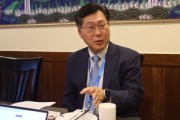
KAIST announced Friday that a joint research team led by Professor Kim Ho-min of the Department of Biological Sciences and Dr. Lee Sang-gyu of the Institute for Basic Science mapped the three-dimensional binding structure of the lymphangiogenic protein VEGF-C and its receptor VEGFR-3, revealing the mechanism by which the resulting signal is amplified.
Lymphatic vessels act as the body's drainage system, collecting excess fluid from tissues. When they fail to function properly, lymphedema develops; conversely, when they proliferate excessively around tumors, they can become pathways through which cancer cells spread.
The research team used cryo-electron microscopy to analyze the three-dimensional structure of the VEGF-C–VEGFR-3 complex. They identified a "cis-clustering" arrangement in which two VEGFR-3 receptors first pair up and the resulting complexes then aggregate laterally. Through experiments that modified the contact sites between complexes and used light to control receptor clustering, the team confirmed that this process is the key mechanism amplifying lymphangiogenic signaling.
![An AI-generated image illustrating the hidden amplifier switch in lymphangiogenic signaling, discovered via cryo-electron microscopy. [Provided by KAIST]](https://wimg.heraldcorp.com/news/cms/2026/10/02/news-p.v1.20261002.8cc75393eeaf4bf4a674f4cecc9bc05f_P1.jpg)
The significance of the research lies in its shift away from simply blocking the binding of VEGF-C to VEGFR-3, instead identifying receptor clustering as a new therapeutic target. The findings open the door to a two-pronged treatment approach: promoting clustering to boost signaling in lymphedema patients, while blocking it to suppress excessive lymphatic vessel formation in cancer.
However, the study did not directly confirm therapeutic effects against lymphedema or cancer metastasis. Further validation — including the development of candidate compounds and animal testing — will be needed before the findings can translate into actual treatments.
The research team plans to incorporate AI-based protein design technology to develop candidate compounds, including antibodies and miniature binding proteins, capable of selectively regulating receptor clustering.
"We have found the hidden amplifier switch in lymphangiogenic signaling that had gone undetected until now," Professor Kim said. "This will serve as a foundation for developing new treatment strategies for related diseases, including lymphedema and cancer metastasis."
The findings were published in the international journal Advanced Science.
nbgkoo@heraldcorp.com