Deal covers SB41 and SB44, targeting US, European and Canadian markets; Samsung Bioepis handles development and production while Teva leads sales; contract valued at minimum 41.7 billion won
![Samsung Bioepis. [Samsung Bioepis]](https://wimg.heraldcorp.com/news/cms/2026/10/01/news-p.v1.20260130.e3e83a23d0894e59b099862188f78ed4_P1.jpg)
Samsung Bioepis is teaming up with global pharmaceutical company Teva to push two new immunology biosimilar candidates into North American and European markets.
Samsung Bioepis announced Thursday that it signed an early-stage research, development and commercialization partnership with Teva Pharmaceutical International for the two immunology biosimilar candidates on Wednesday.
The deal covers SB41, a biosimilar of AstraZeneca's severe eosinophilic asthma treatment Fasenra (benralizumab), and SB44, a biosimilar of Novartis's hereditary recurrent fever syndrome treatment Ilaris (canakinumab).
Under the agreement, Samsung Bioepis will oversee product development, regulatory approval, production and supply, while Teva will handle sales in the United States, Europe and Canada. Teva also secured options to expand the sales territories for SB41 and SB44 and to pursue additional partnerships covering Samsung Bioepis's broader biosimilar pipeline.
The two companies have been steadily deepening their collaboration. After launching the rare disease treatment Epysqli in the United States last year and more recently entering a sales partnership for the ophthalmic treatment Opuviz in Canada, the latest deal brings their combined pipeline to four products.
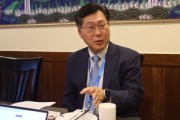
"Building on the success of our partnership with Teva, we are moving forward with collaboration on two new candidates," Samsung Bioepis President Kim Kyung-a said. "By strengthening our pipeline across diverse therapeutic areas, we will continue to expand the supply of biosimilars for patients and healthcare systems around the world."
Samsung Bioepis currently markets 11 products globally. With the addition of SB41 and SB44, the company has expanded its biosimilar development pipeline from seven to nine candidates.
The partnership is a strategic move to spread the commercialization risk associated with new immunology and rare disease pipeline candidates — which carry high development complexity and strong patent barriers — by working with a partner that has an established global distribution network, while also positioning the company to capture early footholds in global markets for its next-generation pipeline.
silverpaper@heraldcorp.com