Vaccination rate among those 65 and older stands at 34.2%, lagging far behind flu coverage despite mandatory program status; hospitalized patients skew heavily elderly as chronic disease risk multiplies fatality; Pfizer's Comirnaty shown effective against circulating variants and safe when given alongside flu shot
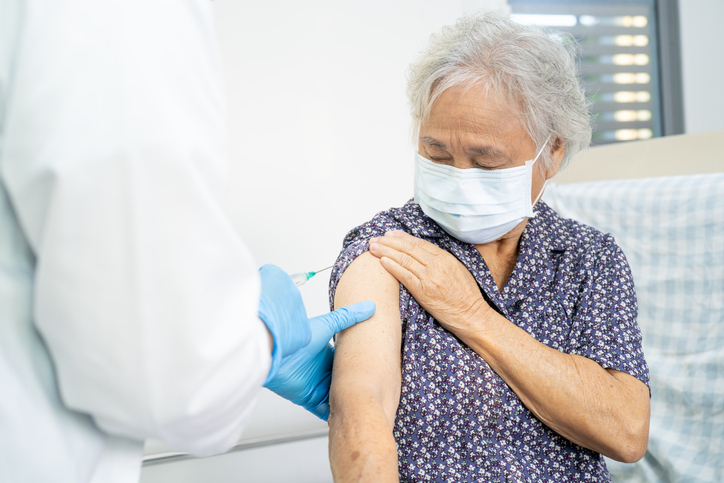
COVID-19 vaccination has been officially added to South Korea's National Immunization Program alongside seasonal influenza starting this year, yet the uptake rate among older adults remains less than half that of the flu shot.
Public vigilance has dropped sharply since the end of the international COVID-19 public health emergency, but medical experts warn that the disease remains more deadly than influenza for older adults and those with underlying conditions, making annual vaccination essential.
According to the Korea Disease Control and Prevention Agency, the COVID-19 vaccination rate among people 65 and older for the 2026–2027 season stood at 34.2% as of Tuesday. That is roughly half the flu vaccination rate of 71.1% recorded for the same age group as of Wednesday.
The same pattern played out in the previous 2025–2026 season, when the flu vaccination rate among those 65 and older reached 78.9% as of Dec. 5 last year, while the COVID-19 rate lagged at 41.9%.
30-day post-hospitalization death rate 5.24 times higher than flu among elderly
The disease burden COVID-19 places on older adults far exceeds that of seasonal influenza. In week 36 of this year (Aug. 30–Sept. 5), people 65 and older accounted for about 60 percent of all COVID-19 inpatients at hospital-level sentinel surveillance facilities.
Large-scale international tracking studies confirm the same risk profile. A national registry cohort study covering about 5.9 million people across Denmark from May 2022 to June 2024 found that even after the transition to endemic status, the annual hospitalization rate per 100,000 people aged 65 and older was 768.85 for COVID-19 — 4.43 times higher than the 175.20 recorded for influenza (adjusted incidence rate ratio).
The gap was even wider for deaths within 30 days of hospitalization: COVID-19 accounted for 91.73 deaths per 100,000 people aged 65 and older, compared with 17.32 for influenza — a ratio of 5.24. About 75.5 percent of all COVID-19 hospitalizations and roughly 92.7 percent of deaths within 30 days of admission occurred among people 65 and older.
The high prevalence of chronic disease among South Korea's older population adds another layer of risk. A 2023 survey on the elderly conducted by the Ministry of Health and Welfare found that 86.1 percent of people aged 65 and older in South Korea had at least one chronic condition lasting three months or more.
A domestic study of COVID-19 patients using National Health Insurance Service big data found that, compared with patients without underlying conditions, the risk of death was 2.33 times higher for those with kidney disease, 1.42 times higher for those with diabetes, 1.36 times higher for those with heart disease and 1.24 times higher for those with hypertension.
Patients with weakened immune systems due to cancer treatment, organ transplants or immunosuppressant use, as well as residents of long-term care facilities and other infection-vulnerable settings, also face significantly elevated risks of severe illness and cluster outbreaks.
Waning immunity, evolving variants make annual vaccination a must
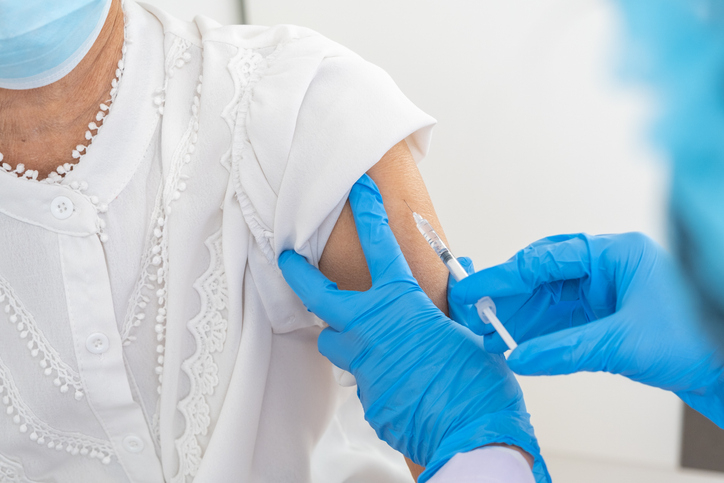
Those findings are why the government launched a free National Immunization Program in mid-October targeting adults 65 and older, immunocompromised individuals, and residents and patients at infection-vulnerable facilities.
Even people who have previously been infected or vaccinated see their immunity wane over time, and the virus continues to mutate in ways that evade existing immune defenses. For those reasons, the World Health Organization and domestic health authorities recommend one annual vaccination matched to the circulating variant.
In clinical settings, there is strong interest in the efficacy and safety of updated vaccines targeting new variants — including Pfizer's COVID-19 vaccine Comirnaty, which has been supplied in more than 5 billion doses worldwide over the years, generating a substantial body of data. Real-world studies have consistently demonstrated the protective effectiveness of variant-targeted vaccines.
An analysis of 2025–2026 season data from the US Veterans Affairs health system found that recipients of the LP.8.1 variant-targeting Comirnaty vaccine had a 57 percent lower risk of COVID-19-related emergency room and urgent care visits and a 54 percent lower risk of outpatient visits compared with unvaccinated individuals.
More than half of the study participants were 65 or older (median age 66), and many had compromised immune systems or underlying conditions, lending further support to the vaccine's real-world protective effect in high-risk groups. An earlier study of 894,560 people over 65 in Denmark during the 2024–2025 season also confirmed that JN.1 variant-targeting mRNA vaccines reduced hospitalizations and deaths.
New XFG-targeting vaccine safe to give alongside flu shot

The 2026–2027 season will use a new vaccine targeting the currently circulating XFG variant. Pfizer's Comirnaty prefilled syringe formulation received approval from the US Food and Drug Administration and, on Aug. 4, from South Korea's Ministry of Food and Drug Safety, based on existing cumulative clinical and real-world data alongside manufacturing, quality and preclinical evidence specific to the XFG variant. It is now being supplied at vaccination sites.
Its safety profile has been validated through clinical trial and post-marketing data from earlier Comirnaty formulations. Common adverse reactions after injection include pain and swelling at the injection site, fatigue, headache, muscle pain, chills, joint pain, fever and diarrhea; most are mild to moderate and resolve on their own within a few days.
However, vaccination is contraindicated for people with hypersensitivity to any of the active or inactive ingredients, and caution is required for patients with acute severe febrile illness, those on anticoagulants, or those with coagulation disorders. Rare post-marketing reports have included myocarditis and pericarditis, extensive swelling of the vaccinated limb, facial swelling in people with a history of filler procedures, paraesthesia, dizziness and erythema multiforme.
Co-administration with the flu vaccine has also been confirmed as safe. A multicenter, randomized phase 4 clinical trial conducted at 12 healthcare institutions in the United Kingdom evaluating simultaneous administration of COVID-19 and seasonal influenza vaccines in adults demonstrated non-inferiority in systemic reaction rates and comparable immunogenicity compared with single vaccination, supporting the option of receiving both vaccines in a single clinic visit.
"For high-risk groups such as older adults and immunocompromised individuals, COVID-19 carries a risk of hospitalization and death comparable to influenza, and it must now be managed as an infectious disease requiring constant attention in daily life," said Choo Eun-ju, a professor of infectious diseases at Soonchunhyang University Bucheon Hospital. "Vaccination rates are too low relative to the disease risk, and a resurgence this winter is a real concern — high-risk individuals must make sure they get vaccinated."
Choo added: "If you have not yet received either vaccine, getting them together will reduce the burden of visiting a healthcare facility. And even if you have already had the flu shot, please go ahead and get the COVID-19 vaccine as well to protect your health this winter."
silverpaper@heraldcorp.com