District Mayor Choi Dong-min joins the celebration at the Korea Institute for Advanced Study's 30th anniversary; Dongdaemun-gu has maintained community ties with the institute since signing an MOU in 2010, including through its Science Academy program.
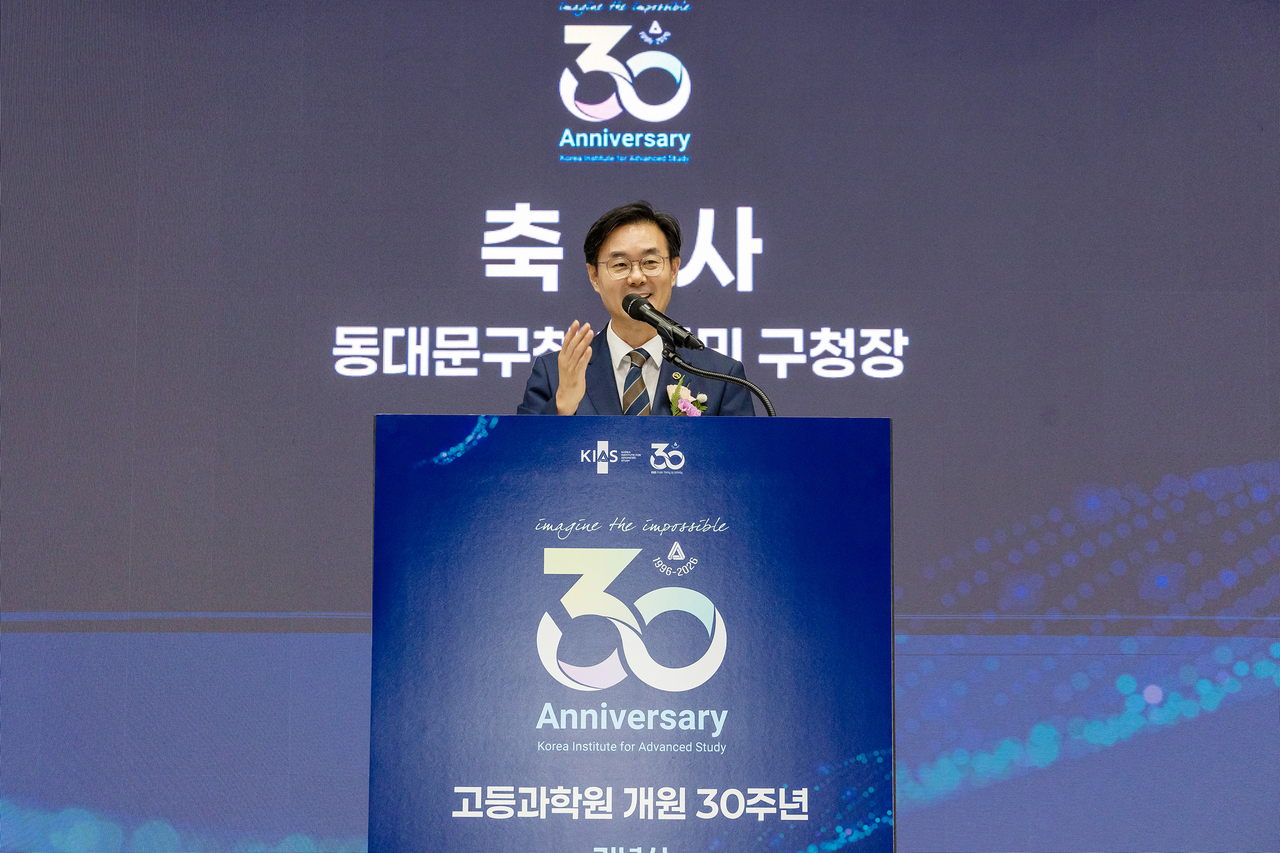
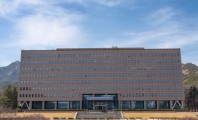
Dongdaemun-gu District Mayor Choi Dong-min attended the 30th anniversary ceremony of the Korea Institute for Advanced Study (KIAS), one of South Korea's leading basic science research institutions, on Wednesday to reflect on the institute's contributions to basic science and offer his congratulations on its continued growth.
KIAS was established in 1996 to provide a foundation for theoretical basic science research and has since grown into a global research hub, bringing together leading domestic and international scholars in mathematics, physics and computational science.
The ceremony was attended by District Mayor Choi, former KAIST President Shin Sung-chul — who served as head of the KIAS founding committee — KAIST President Bae Choong-shik, Lee Jun-bae, director general of the future talent policy bureau at the Ministry of Science and ICT, as well as members of the scientific community and local residents.
The three-day anniversary program, held under the theme "KIAS From Thirty to Infinity," ran from Monday through Wednesday. It opened with a symposium on AI and collective intelligence, followed by a special concert for local residents featuring a fusion of traditional Korean music and classical music, and keynote lectures by world-renowned scholars including Fields Medal laureate Professor Efim Zelmanov. The program concluded with the main ceremony on Wednesday. Many Dongdaemun-gu residents took part, attending lectures and the concert to mark the occasion together.
In his congratulatory remarks, Choi said the decades of rigorous research and inquiry at KIAS had laid a solid foundation for basic science in South Korea. "I hope the next 30 years will illuminate the future of Korean science with new questions and challenges that will astonish the world," he said. He added that he was honored the institute's meaningful intellectual journey continued in Dongdaemun-gu, and pledged to support KIAS's next chapter alongside the district's residents.
Dongdaemun-gu signed an MOU with KIAS in 2010 to foster community collaboration and has since operated a Science Academy program for residents. This past February, the district held a winter-break Science Academy session for elementary school students focused on AI and mathematics, drawing an enthusiastic response from participants and their parents.
The district plans to continue working with KIAS to run programs that give children direct exposure to the kinds of questions scientists ask, helping them develop the ability to think and inquire for themselves.
seouldream01@heraldcorp.com