Ex-ministers call for future response fund anchored in surplus tax revenue; Park Hong-keun cites structural risks including K-shaped polarization
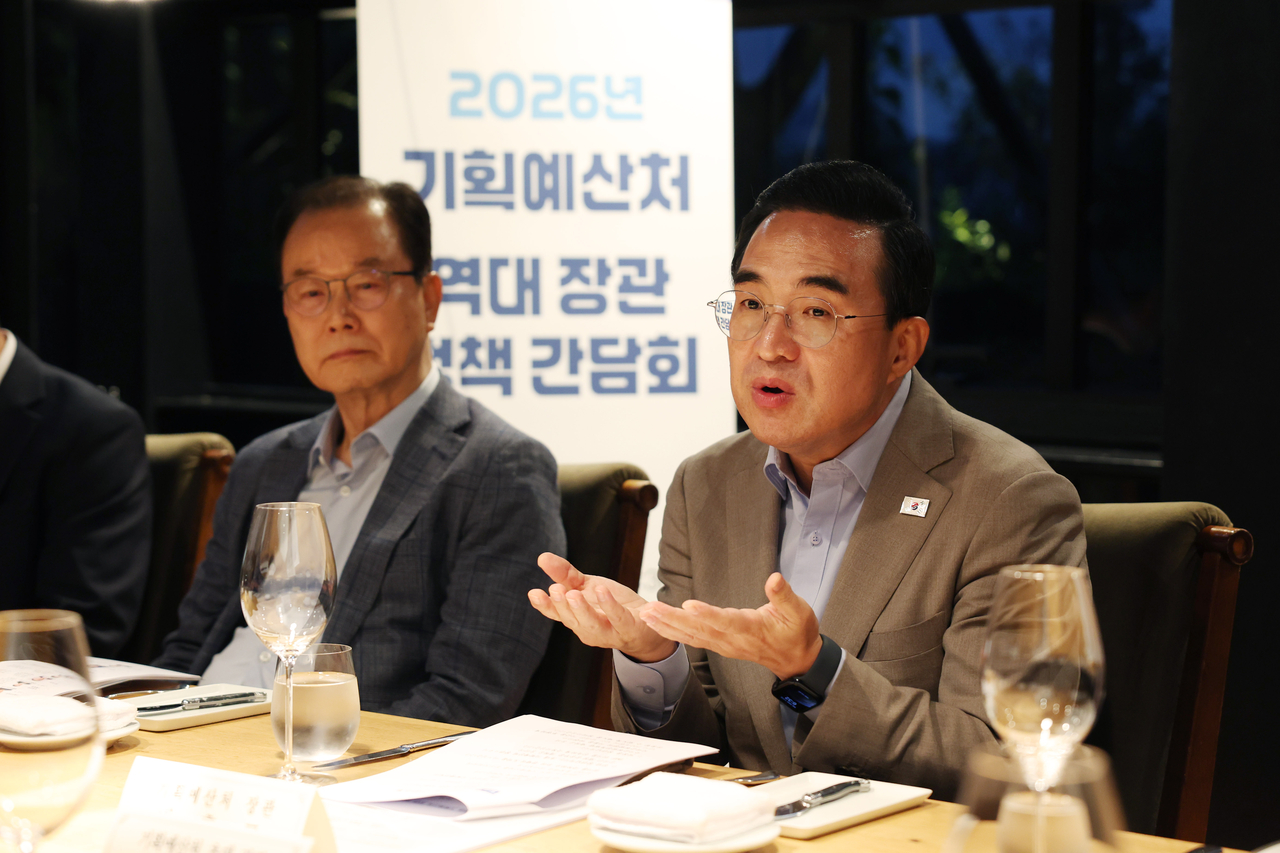
Former ministers of South Korea's Ministry of Planning and Budget called Wednesday for surplus tax revenues generated by the semiconductor boom to be channeled into a future response fund, arguing the windfall should be used to build new growth engines for the country.
The ministry said Minister Park Hong-keun hosted a policy forum with former ministers on Wednesday afternoon in Seoul to discuss fiscal management, structural reform and long-term strategy.
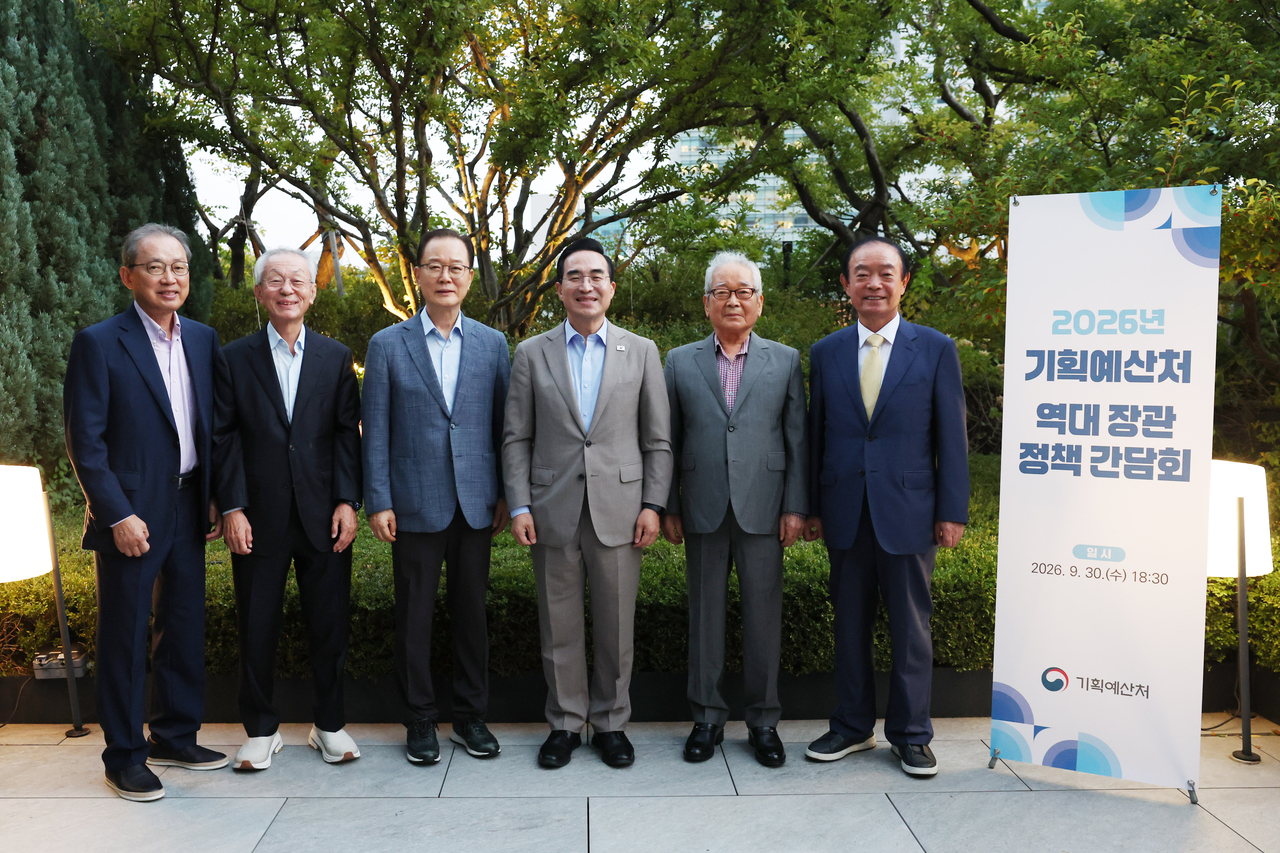
The gathering was the first policy forum with former ministers since the ministry was relaunched. Attendees included Jin Nyeom, who served as the inaugural minister, as well as former ministers Park Bong-heum, Kim Byeong-il, Byeon Yang-gyun and Jang Byeong-wan.
The former ministers said innovation that drives change is essential as AI adoption accelerates and domestic and external uncertainties persist.
They said using surplus tax revenues from the semiconductor boom as a springboard for a future response fund — and opening new avenues for growth — was precisely the kind of work the Ministry of Planning and Budget should be doing. They also urged the ministry to act as a "libero" of government policy, transcending the boundaries of specific sectors and agencies in the national interest.
On the ministry's future direction, the former ministers said strengthening its planning function — not just fiscal policy, but also structural reform and long-term preparedness — was critical. They called on the ministry to balance its "planning" and "budget" roles equally, noting that policy impact is maximized when fiscal policy and structural reform reinforce each other and move in a consistent direction.
On the reform of the education finance grants system, they said they hoped the overhaul would serve as an opportunity for budget to be distributed more evenly across all levels of education, including early childhood, secondary and lifelong learning.
Park said the South Korean economy continues to recover on the back of strong semiconductor exports, but faces structural risks including weakening growth potential and K-shaped polarization. He said the government is pursuing preemptive and bold investment and structural reform to address those challenges, while also planning for a future beyond the next 20 years.
Park said the forum gave him an opportunity to reflect on policies currently under way, and that the ministry would continue to expand growth drivers and address polarization drawing on the experience and advice of the former ministers.
fact0514@heraldcorp.com