[Part 3: Breaking through structural discrimination] ③
Three domestic experts offer their diagnoses and solutions
"Neglecting elderly women's poverty today
will push younger women away from marriage and childbirth"
Boost retirement income, strengthen workplace safety
[Editor's note] South Korea's elderly poverty rate stands at 2.7 times the OECD average — and older women fare worse than older men. For decades, women were expected to devote themselves to family caregiving, setting aside careers outside the home. That career interruption eroded their economic independence and left many struggling to cover basic living costs in old age. The Herald Business examined how the sacrifices women made in their youth are now being "billed back" to them in the form of poverty and insecurity.
![An illustration juxtaposing elderly women with scenes of child-rearing from the past. [Generated with AI]](https://wimg.heraldcorp.com/news/cms/2026/09/30/news-p.v1.20260930.081936ad818d441f962af0050698a378_P1.png)
After documenting cases and identifying the ways that time spent on marriage, childbirth and child-rearing contributes to elderly women's poverty, The Herald Business consulted leading domestic experts to compile a set of solutions. They called for the creation of safer jobs as well as reforms to the national pension system, which they identified as a root cause of poverty among older women.
The experts interviewed were Kim Nan-ju, a research fellow at the Korean Women's Development Institute who authored a report on elderly women's retirement income and employment support that documented the income gap between older men and women; Cheon Jae-young, a researcher at the Korea Employment Agency for the Elderly who conducts a survey on senior employment and social activity support projects; and So Jun-cheol, a research professor at Chonnam National University in South Jeolla Province and author of "The Grammar of Poverty," a life-history study of elderly women who collect discarded cardboard for a living.
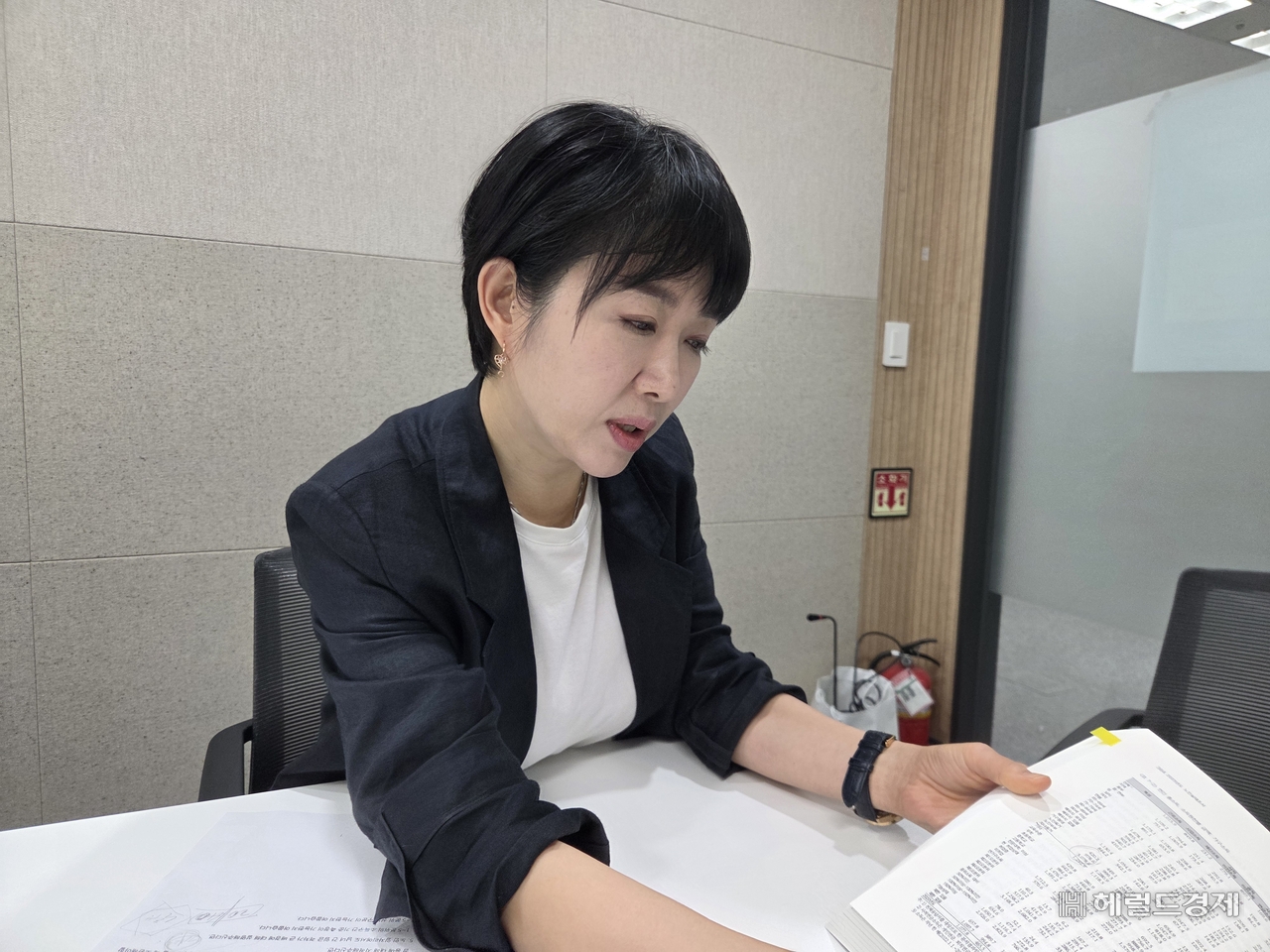
The experts agreed that the poverty facing elderly women today has its roots in career interruptions that occurred in their 30s and 40s. "The poverty of women in their 60s and beyond is the result of the lives they have lived, now coming due," said Kim. "Marriage leads to unpaid domestic labor, which causes career breaks in their 30s and 40s. When women re-enter the labor market, they are channeled into low-wage, part-time and caregiving jobs — and that gap ultimately becomes a gap in retirement income."
She added that the losses extend beyond wages. "Unpaid labor contributed to the household goes unrecognized in value, which also results in losses in the national pension," she said.
Experts also pointed to discrimination rooted in a uniform identity imposed on women. Korean society's definition of womanhood, they said, pressured women to prioritize family contributions and penalized them in the workplace, ultimately driving them into poverty.
"Women now in their 70s were born around the 1950s, a time when a shared identity as 'women' was heavily emphasized," said Cheon. "Industrialization was just beginning, and there were few jobs available to women — most helped their husbands or did housework."
He added that an unspoken workplace norm at the time effectively required women to resign upon marriage. "Even during the Asian financial crisis, it was considered normal for a woman to be let go over a man with the same career record," he said.
"For women now in their 70s or thereabouts, the view that poverty stems from years spent contributing to the family is entirely valid," Cheon said.
The experts also warned that leaving elderly women's poverty unaddressed — a problem that cannot be attributed to individual failure — will drive up social costs. Beyond the growing need for practical support for women outside the social safety net, they cautioned that younger generations of women may learn from their elders and turn away from marriage, childbirth and child-rearing altogether.
![Kim Nan-ju, research fellow at the Korean Women's Development Institute. [Korean Women's Development Institute]](https://wimg.heraldcorp.com/news/cms/2026/09/30/news-p.v1.20260930.4b172b47b9864a619898ff2fe807a36e_P1.jpg)
"The problem is that women in their 20s and 30s are watching elderly women live in poverty," Kim said. "They see how career breaks and the gender wage gap ultimately lead to poverty in old age, and they begin to think the same thing could happen to them."
"It can also influence their decisions about whether to marry or have children," she added. "Younger women choosing not to marry or have children may look like a personal choice, but what matters more is the social environment that produces that choice."
"Women in their 30s and 40s who are not marrying and not having children have learned enough from watching the generation before them," Cheon said.
While women's rights have advanced compared with the past, experts said it remains uncertain whether the poverty facing elderly women will be resolved for future generations. Cheon predicted that elderly women's poverty will become more polarized.
"Women in their 70s today faced severe constraints under a shared identity as 'women,'" he said. "Today, access to parental leave varies widely. If a woman holds a permanent position and can comfortably take parental leave, her chances of a career break are low." Even if she faces disadvantages such as being passed over for promotion after returning to work, she can still prepare for retirement within the formal system, he said.
"The gap with women who are not in that position will be enormous," he said. "When today's women in their 30s and 40s reach old age, the issues raised may be quite different from the current discourse on elderly women's poverty." The divide between women who benefit from formal protections and those who do not, he said, will grow dramatically.
"Elderly women's poverty may be somewhat less severe than it is now, but I cannot guarantee it will improve," Kim said. "A gap in employment rates between men and women still exists today. If the gender employment gap persists, similar problems will repeat."
Experts also pointed to the limitations of current senior employment programs. "Senior jobs today do not guarantee skill development or career growth," said So. "If we do not think about what to do for elderly people who cannot work because of aging or illness, these programs are not a solution. Even to receive welfare support, elderly people living in poverty cannot escape competition."
Experts called for reforms to the pension system alongside improvements to elderly employment conditions — including higher retirement income and better working environments. "Women who are already in their 60s had no income in the past, so even if they enter the labor market now, it is difficult to close the income gap," Kim said. "Policies are needed to immediately raise incomes by improving the treatment of caregiving jobs, where women are concentrated."
So called for protections that strengthen women's social capacity and help them prepare for old age. On caregiving work, where elderly women are heavily concentrated, he said: "Protections must be established for the various forms of marketized caregiving labor and for the workers who perform it. Alongside those protections, it is also necessary to raise women's individual incomes."
Creating safe working environments is equally important, experts said. "If incomes cannot be raised significantly, the government can still act by supporting health screenings or strengthening workplace safety to prevent injuries on the job," Kim said.
"Industrial accident statistics also need to be broken down by gender," she added. "Even if data show that the share of industrial accidents among the elderly is high, without separating the figures by sex it is difficult to know what risks elderly women are specifically exposed to."
"Social insurance and similar protections must be made available to women outside the formal system," Cheon said. "Redesigning the national pension so that more women can enroll is also worth considering."
20ki@heraldcorp.com
newday@heraldcorp.com