Ministry of Education sends guidance to exam supervisors but keeps detection methods secret
Repeat test-takers seen shrugging off penalties; high school internal exams also at risk
Inconsistent sanctions across universities complicate enforcement
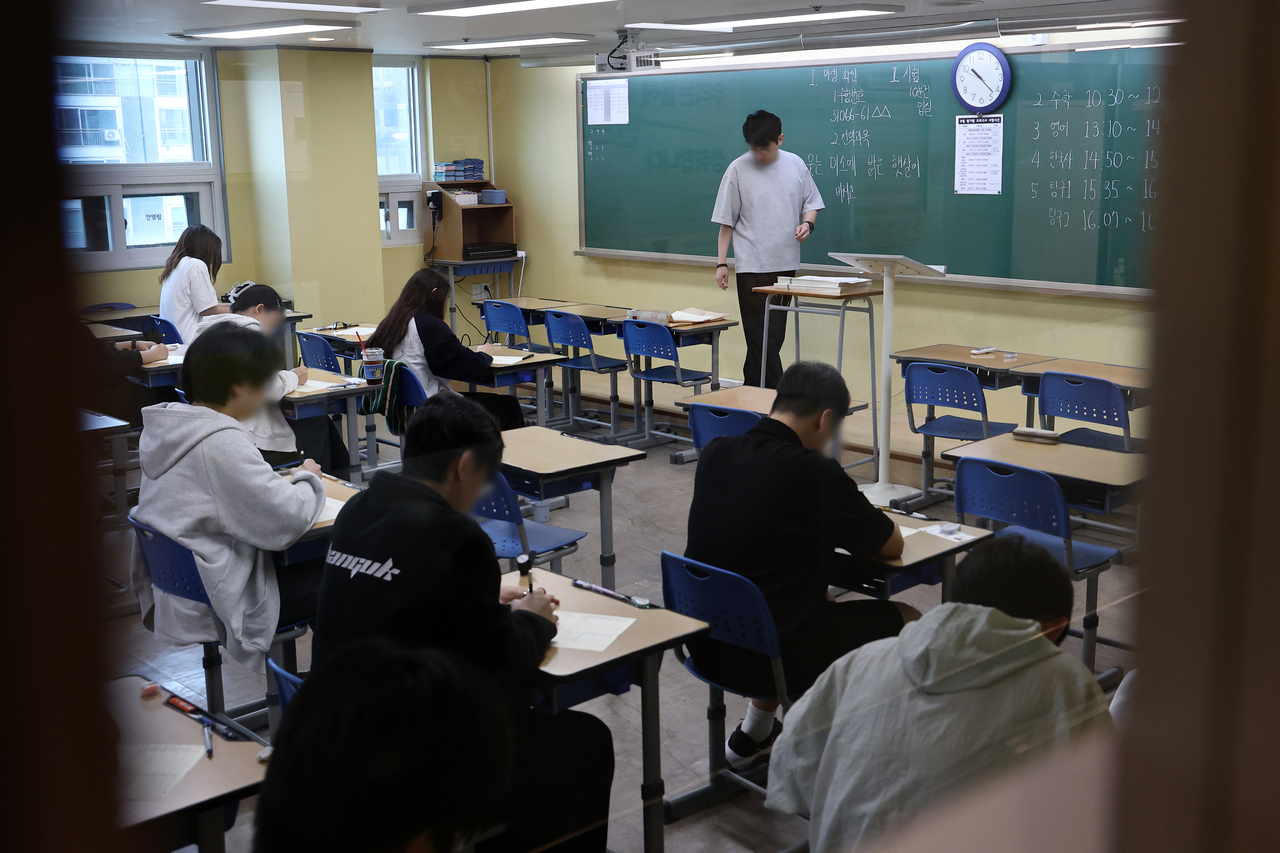
With the 2027 College Scholastic Ability Test just one month away, concerns are growing over the use of AI-enabled smart glasses to cheat. Education authorities have issued guidelines on how to handle the devices, but whether they will work in practice remains uncertain. Among repeat test-takers — students retaking the exam while still enrolled at a university — some have been spotted expressing the view that getting caught is no big deal since they can simply return to their current school.
The Ministry of Education said Monday it had sent a guidance notice on AI smart glasses cheating to exam supervisors and other officials on Thursday. The notice amounted to a set of guidelines on how to respond to cheating attempts on exam day. However, the ministry declined to disclose specific detection methods, citing concern that test-takers could study the procedures and devise ways to evade them.
Cheating incidents pile up at universities

Several students have recently been caught wearing AI smart glasses during university entrance exams. A student caught at the University of Seoul's rolling admissions essay exam on Oct. 3 was immediately removed from the test room and barred from applying to the university for three years. Yonsei University caught a student wearing smart glasses during its own rolling admissions essay exam on Oct. 10 and disqualified the applicant outright.
Because sanctions vary by institution, it is unclear whether a student caught cheating at one university faces any consequences at others. A Ministry of Education official said that when cheating is detected at a university, the penalty "applies only to that institution," adding that "the sanctions for cheating during individual university exams differ from school to school."

On anonymous online communities for university students, some posts have appeared from users who appear to be repeat test-takers expressing intent to use AI glasses during admissions exams. "If I don't get caught, I get into medical school; if I do, I just go back to my school," one user wrote. Another said that for essay or transfer exams, a cheating ban applies only to the university where the student was caught, making it "worth trying." Even accounting for the anonymous nature of the posts, they suggest that some students see the penalties as lacking real deterrent force.
The Korea Institute for Curriculum and Evaluation released exam precautions for test-takers on Thursday, urging them not to bring or wear smart glasses and other prohibited items into exam venues. The institute said anyone found possessing or wearing such items during the exam without surrendering them would be treated as having cheated — their results voided and their eligibility to sit the following year's exam restricted.
newday@heraldcorp.com