- Korea Research Institute of Chemical Technology hosts global R&D forum with experts from Germany, Switzerland, Japan and China
- AI agents to accelerate materials discovery; data standardization and international cooperation to expand
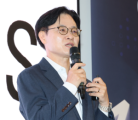
![Shin Seok-min, president of the Korea Research Institute of Chemical Technology, delivers opening remarks at the global R&D forum held Tuesday. [Korea Research Institute of Chemical Technology]](https://wimg.heraldcorp.com/news/cms/2026/09/30/news-p.v1.20260930.7665192315ed4a6baf4cc99689fa167f_P1.jpg)
Self-driving laboratories — research facilities that combine AI with robotics and automation — are emerging as a new paradigm in chemical materials research.
The Korea Research Institute of Chemical Technology hosted a global R&D forum Tuesday at its headquarters in Daejeon, under the theme "Materials Data, AI and Self-Driving Laboratories."
A self-driving laboratory, or SDL, goes beyond using AI to analyze research data. It connects the entire research cycle — from materials discovery and experimental design to execution, results analysis and decisions on follow-up experiments. The approach can dramatically cut the time and cost of conventional materials and chemistry research, which required testing vast numbers of candidate substances one by one, and related work is advancing rapidly around the world.
The forum brought together domestic and international experts from Friedrich-Alexander-Universität Erlangen-Nürnberg in Germany, the Paul Scherrer Institute in Switzerland, the National Institute for Materials Science in Japan, Tsinghua University in China, and Seoul National University, among others. Discussions focused on the future of AI-driven research and development, covering topics from materials data construction and standardization to AI-based discovery of new materials and laboratory automation.
Christoph Brabec, a professor at Friedrich-Alexander-Universität Erlangen-Nürnberg, presented principles for data-driven next-generation semiconductor design. Han Sang-soo, a professor at Seoul National University, outlined the direction for developing self-driving laboratories in materials science and chemistry.
![Experts from home and abroad present at the global forum. From left: Christoph J. Brabec, professor at Friedrich-Alexander-Universität Erlangen-Nürnberg; Han Sang-soo, professor at Seoul National University; Giovanni Pizzi, senior researcher at the Paul Scherrer Institute in Switzerland; Choi Woo-jin, senior researcher at the Korea Research Institute of Chemical Technology; Xu Yibin, senior researcher at the National Institute for Materials Science in Japan; and Xiaonan Wang, associate professor at Tsinghua University in China. [Korea Research Institute of Chemical Technology]](https://wimg.heraldcorp.com/news/cms/2026/09/30/news-p.v1.20260930.2b8b4824f32e4beea6bb18583aada18e_P1.jpg)
Giovanni Pizzi, a senior researcher at the Paul Scherrer Institute in Switzerland, introduced an open materials data infrastructure built around Materials Cloud. Choi Woo-jin, a senior researcher at the Korea Research Institute of Chemical Technology, and Xu Yibin, a senior researcher at Japan's National Institute for Materials Science, presented strategies for standardizing materials data for AI applications and building data infrastructure for battery materials research, respectively.
The forum also highlighted the potential of AI agents — systems in which AI takes over some roles traditionally performed by researchers. Xiaonan Wang, an associate professor at Tsinghua University, presented "closed-loop" research that uses technology evolving from foundation models to AI agents to automatically explore energy materials and systems. In this approach, experimental results are fed back into the AI, which then determines the next experiment — a cycle that repeats continuously.
The institute plans to use the forum as a springboard to strengthen its research capabilities linking materials data, AI and automated experimentation, and to expand international joint research in the self-driving laboratory field.
"Advances in AI and data technology are transforming the very way researchers conduct experiments and discover materials," said Shin Seok-min, president of the institute. "We will share the direction of future chemistry research with world-class researchers and drive new research innovation grounded in data and AI."
nbgkoo@heraldcorp.com