Motor driver, power chips to follow actuator supply deal
Automotive semiconductor expertise to underpin robot designs
Domestic chip firms to join development push; next-gen auto SoC also planned
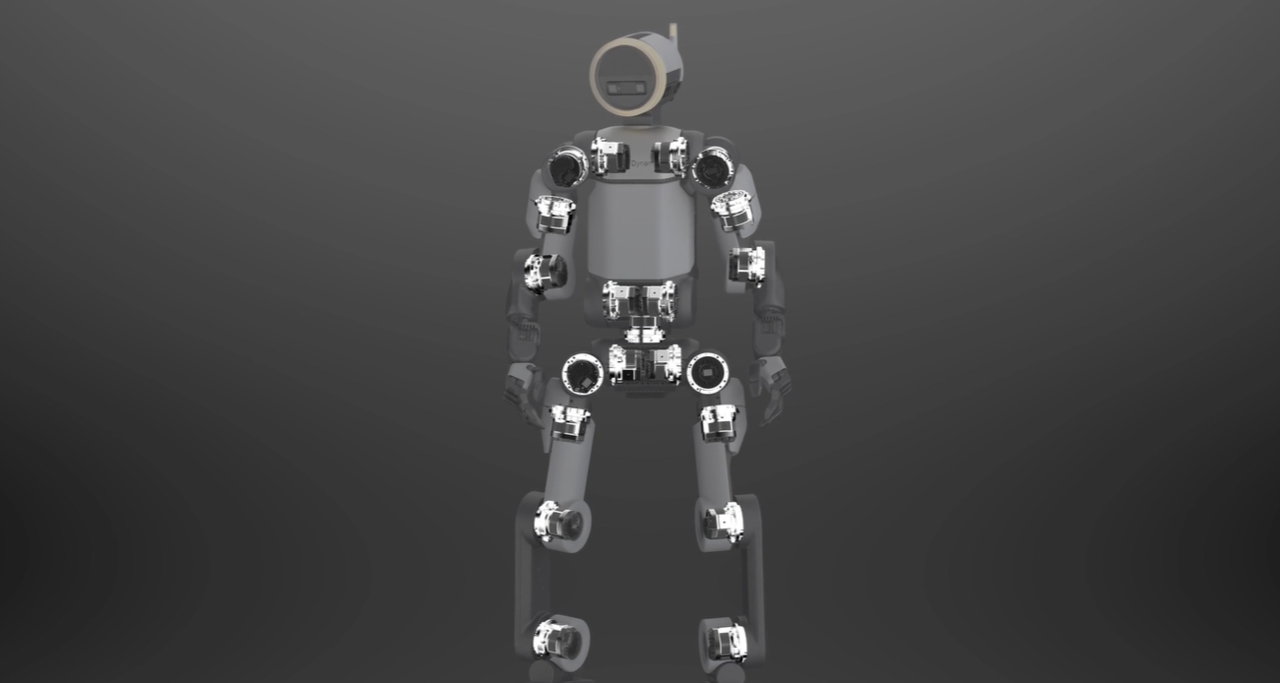
Hyundai Mobis is pushing to develop semiconductors for the Atlas humanoid robot. Having secured a deal earlier this year to supply actuators for Atlas, the company now plans to domestically produce the chips that precisely control those actuators — extending its automotive semiconductor design expertise into robotics to sharpen its competitiveness in core components.
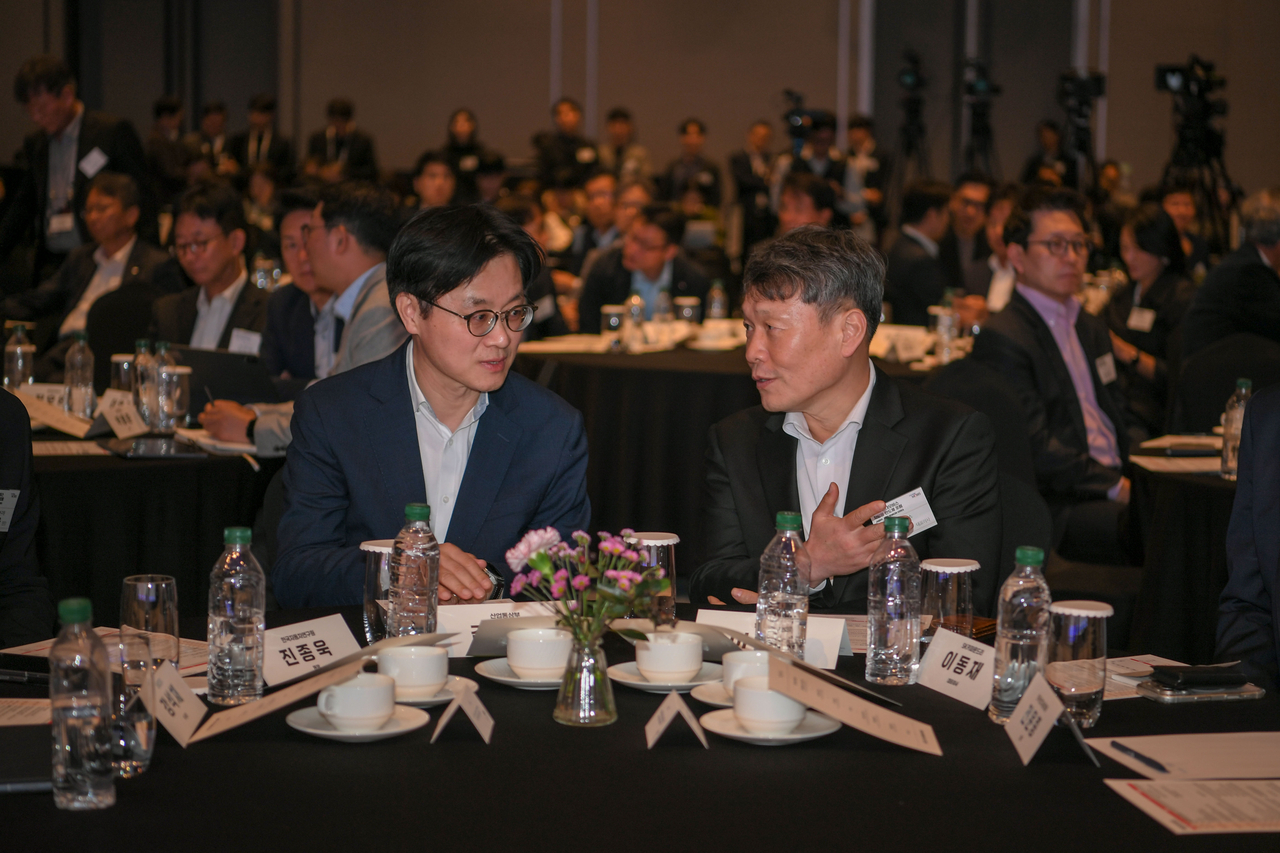
Park Cheol-hong, executive vice president in charge of Hyundai Mobis' semiconductor business, unveiled the company's robot semiconductor development roadmap Wednesday at the second Hyundai Mobis Automotive Semiconductor Forum, "Auto Semicon Korea" (ASK), held at the DoubleTree by Hilton Seoul Pangyo in Seongnam, Gyeonggi Province.
The products under development are two types of integrated circuits: a motor driver IC and a power IC. The motor driver IC precisely controls the robot's movements and force output, while the power IC stably supplies the power each component requires.
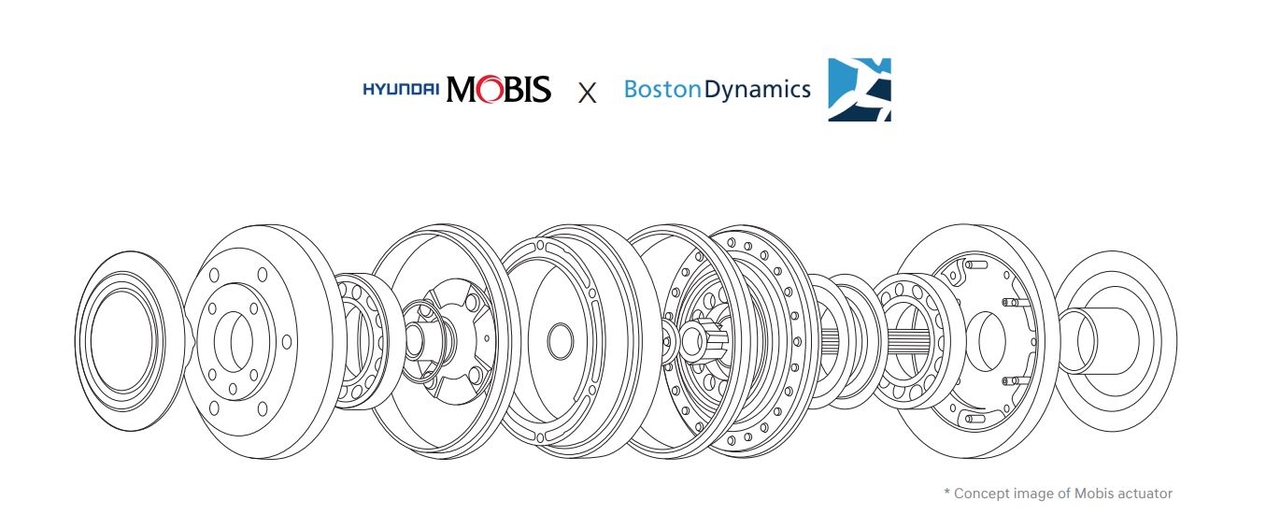
Both chips are intended for use in actuators, the key drive components of a robot. An actuator combines a motor, a reducer and a controller to produce movement, functioning as the robot's equivalent of joints and muscles.
Hyundai Mobis believes its existing automotive semiconductor design technology can be applied efficiently to robot chips, since the core technologies needed to control motors and manage power overlap significantly between automobiles and robots.
"Motor driver semiconductors share common technologies between automotive and robot applications, such as current sensing and speed control," Park said. "By adding design elements for high-precision control on top of that, automotive semiconductors can be converted for robot use."
Power ICs can similarly draw on existing automotive power-control technology. However, because robots must pack multiple components into a confined space, miniaturization and low-power design are critical. Hyundai Mobis plans to leverage its existing automotive semiconductor design assets while developing chips with enhanced precision control and power efficiency suited to robots.
The company also plans to expand collaboration with domestic semiconductor design firms. Rather than relying on foreign chips, it intends to combine technologies held by Korean companies with Hyundai Mobis' own vehicle control and design capabilities to develop products optimized for robots.
Hyundai Mobis has already moved into full-scale production of actuators for Atlas. At CES 2026, held in Las Vegas in January, it established a partnership with Boston Dynamics and agreed to supply actuators when mass production of the next-generation Atlas humanoid robot begins.
Last month, Hyundai Mobis publicly unveiled two robot actuator models under development at its "2026 R&D Tech Day" event at its technology research center in Yongin, Gyeonggi Province. The company is applying motor control and electrification technology developed for automobiles to robot components as it expands into new business areas.
The semiconductor development plan extends that robot components business a step further. Securing design capabilities for the key chips inside actuators — beyond developing the actuators themselves — could help improve product performance and cost competitiveness down the line.
Separately from robot semiconductors, Hyundai Mobis is also expanding its development of next-generation automotive system semiconductors. The company is reviewing plans to develop a system-on-chip optimized for Hyundai Motor's next-generation electronic and electrical architecture, with development starting in 2027 and targeted for completion in 2030.
To that end, the company plans to build a collaborative framework involving domestic fabless firms, foundries, and software and semiconductor design asset specialists. The central challenge is integrating multiple vehicle control functions into a single chip while ensuring both security and functional safety.
kwater@heraldcorp.com