Samsung Fire analyzes health database spanning over a decade
1 in 10 chronic kidney disease patients diagnosed with diabetes simultaneously
Diabetic patients face up to 2.86 million won more in annual medical costs after diagnosis
About 1 in 10 end-stage kidney disease patients receive their first diagnosis only at the terminal stage and immediately begin dialysis, a new analysis has found. Medical costs per patient in the first year of dialysis reached approximately 29 million won ($21,300) — more than double the figure from the year before.
Samsung Fire on Wednesday released findings from its proprietary Health Information Integration Platform, a health database built over more than a decade since 2015, analyzing the risk factors behind chronic kidney disease and how medical costs change before and after diagnosis. The analysis divided total spending into "overall medical costs," covering all conditions, and "complication-related medical costs," covering treatment for complications tied to chronic kidney disease. It defined the period from five years before diagnosis to one year before as the "pre-diagnosis period," and the year of diagnosis through five years after as the "post-diagnosis period."
Chronic kidney disease is a condition in which kidney function declines for more than three months and does not recover permanently. It can progress to end-stage kidney disease if left unchecked. Diabetes and high blood pressure are the leading causes. Because significant kidney deterioration often produces no clear symptoms, the disease is frequently detected late.
Among chronic kidney disease patients in Samsung Fire's health database, about 1 in 10 were diagnosed with both diabetes and chronic kidney disease at the same time. Among end-stage kidney disease patients, about 1 in 10 received their first diagnosis at the terminal stage and began dialysis immediately.
End-stage kidney disease also poses serious survival risks. According to the Korean Society of Nephrology's "2024 End-Stage Kidney Disease Fact Sheet," the five-year survival rate for hemodialysis patients is about 78 percent, and about 74 percent for peritoneal dialysis patients — comparable to the 73.7 percent five-year survival rate for all cancer patients recorded in the national cancer registry. The "2025 National Health Insurance Statistics" show that medical costs for chronic kidney disease in 2024 reached approximately 2.8 trillion won, the third-highest for any single disease after hypertension and diabetes.
The patient population is also growing rapidly. According to public health big data and the Korean Society of Nephrology's "2026 Dialysis Specialist Fact Sheet," the number of chronic kidney disease patients in South Korea more than doubled from about 170,000 in 2015 to 346,000 in 2024. The prevalence rate among those in their 70s and older stood at 25.9 percent, higher than for any age group from their teens through their 60s. Samsung Fire's health database also showed that patients aged 70 and older accounted for 14.2 percent of all patients in 2025, up 10.3 percentage points from 2021.
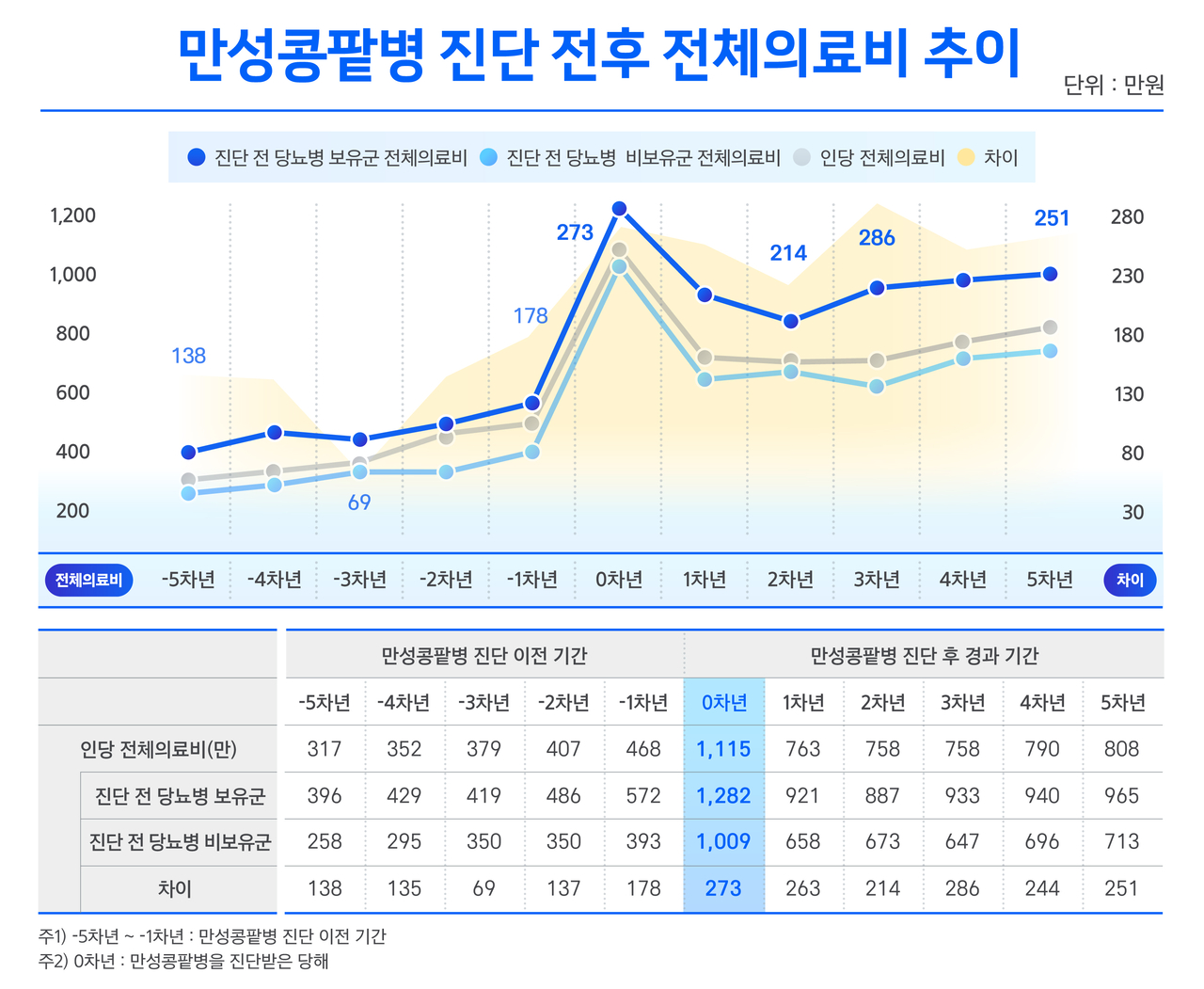
The presence of diabetes made a significant difference in the financial burden patients faced. Samsung Fire's analysis of underlying conditions among 11,740 customers diagnosed with chronic kidney disease found that 32.6 percent had diabetes — the highest share — followed by hypertension at 27.7 percent and hyperlipidemia at 15.3 percent. During the pre-diagnosis period, patients with diabetes incurred 690,000 won to 1.78 million won more in annual overall medical costs than those without. After diagnosis, that gap widened to between 2.14 million won and 2.86 million won per year.
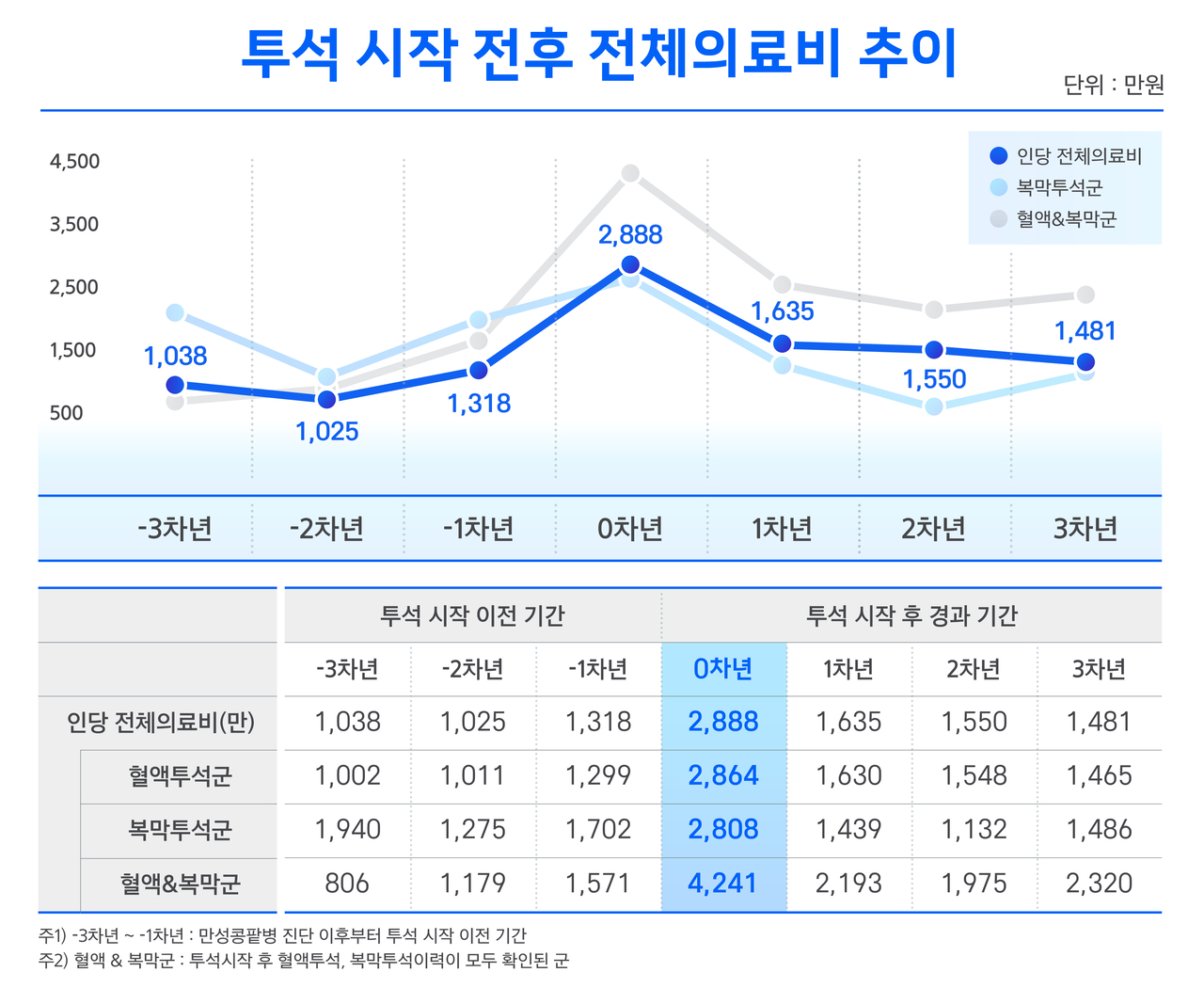
Medical costs jumped sharply once dialysis began. Per-patient overall medical costs in the year immediately before starting dialysis stood at 13.18 million won, but rose to 28.88 million won in the first year of dialysis — more than double. Costs remained elevated above pre-dialysis levels in subsequent years as well. Dialysis also requires preparatory surgery: arteriovenous fistula surgery for hemodialysis patients, and catheter insertion for those on peritoneal dialysis.
Complication-related costs continued to weigh on patients after dialysis began. Complications arising from the worsening of underlying conditions accounted for the largest share, with annual complication-related medical costs ranging from 10.59 million won to 16.96 million won over the five years following the start of dialysis. Patients who experienced at least one complication during dialysis faced annual overall medical costs up to 7.39 million won higher in years one through five after starting dialysis than those who did not.
Experts advise that regular checkups to monitor kidney health are essential. For those who have missed routine screenings, a blood test at a public health center or internal medicine clinic to check the glomerular filtration rate can be helpful. Patients with diabetes are urged to monitor kidney function regularly alongside blood sugar management.
Samsung Fire's Long-Term Future Value Research Institute said the rise in chronic kidney disease cases makes early detection and health management increasingly important. "We will continue to analyze disease trends and changes in medical costs to understand our customers' coverage needs and contribute to healthier lives," the institute said.
The analysis was conducted by Samsung Fire's Long-Term Future Value Research Institute, which the company launched in January. The institute was established to analyze real-world disease patterns, treatment costs and lifestyle changes using the health database accumulated since 2015, and to study the respective roles of public and private insurance. Its inaugural director is Lee Jeong-woo, a specialist in internal medicine who spent eight years handling healthcare policy at the Ministry of Health and Welfare. The institute previously published research on cancer survival rates and the effects of early screening to mark Cancer Prevention Day in March, and released an analysis of liver diseases including fatty liver disease on World Hepatitis Day in July.
won@heraldcorp.com