September monthly loss ratio hits 85.0%, down 9.2 percentage points from a year earlier; autumn travel season and rising repair costs raise concerns about year-end deterioration
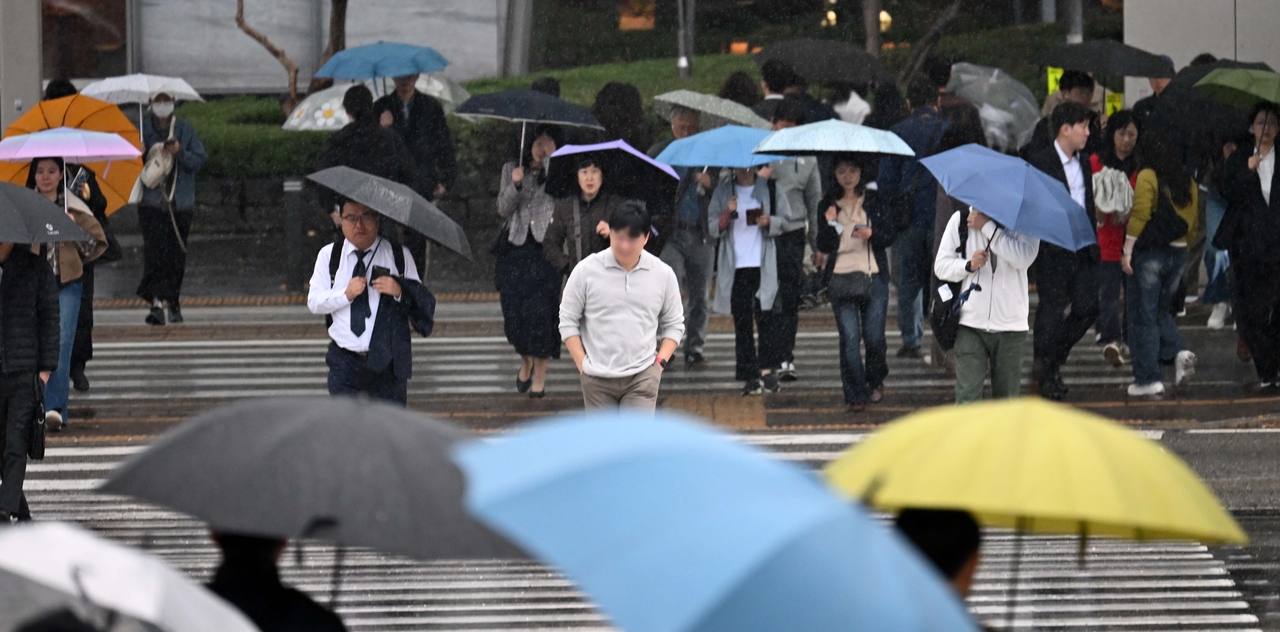
The cumulative auto insurance loss ratios of South Korea's major non-life insurers through September came in slightly lower than a year earlier, driven by a sharp drop in rainfall and reduced highway traffic. However, industry watchers warn that loss ratios could climb again toward year-end as the autumn travel season picks up and cost pressures mount.
According to the non-life insurance industry on Friday, the average cumulative auto insurance loss ratio for the January–September period at the four largest non-life insurers — Samsung Fire, Hyundai Marine & Fire Insurance, DB Insurance and KB Insurance — stood at 84.7 percent, down 0.8 percentage points from 85.5 percent in the same period last year. Through August, the figure had been running 0.3 percentage points above the prior-year level, but the September results pulled it into a year-on-year decline.
Among the four, KB Insurance posted the highest cumulative loss ratio at 85.0 percent, followed by DB Insurance and Hyundai Marine & Fire Insurance at 84.8 percent each, and Samsung Fire at 84.3 percent. Compared with a year earlier, Samsung Fire improved the most, falling 1.5 percentage points, followed by Hyundai Marine & Fire Insurance at 1.2 percentage points and KB Insurance at 0.4 percentage points. DB Insurance was the only one to worsen, edging up 0.1 percentage points. Mid-tier insurer Meritz Fire also improved, with its cumulative loss ratio falling 1.4 percentage points to 82.8 percent.
The improvement was even more pronounced on a single-month basis. The four major insurers averaged a September loss ratio of 85.0 percent, down 9.2 percentage points from 94.2 percent in September last year, when all four saw their ratios soar into the 92–95 percent range. For this September, Hyundai Marine & Fire Insurance led at 86.1 percent, followed by Samsung Fire at 85.3 percent, KB Insurance at 85.2 percent and DB Insurance at 83.3 percent.
The General Insurance Association of Korea attributed the improvement to seasonal factors, including lower rainfall and reduced traffic. September rainfall this year totaled 26.4 millimeters, roughly one-ninth of the 228.8 millimeters recorded in September last year. Highway traffic over the same period fell about 7.1 percent, from about 285.38 million vehicle trips to about 265.03 million, reducing the number of accident claims filed.
Seasonal factors are now expected to work in the opposite direction, however. October marks the peak of autumn foliage season, when leisure travel surges, potentially driving up both the number of accidents and the cost of personal injury per incident. Rising repair shop labor rates and daily wage increases for temporary workers add further cost pressure.
"We are concerned that the peak autumn foliage season in October will increase leisure travel demand, pushing up both accident counts and personal injury costs per accident," an official at the General Insurance Association of Korea said. "With cost-side pressures such as continued increases in repair rates and daily wages for temporary workers still widespread, loss ratios are expected to deteriorate going forward."
won@heraldcorp.com