University-area bars brace for end of 20% draft beer tax relief
Bar owners say they may stop serving draft beer altogether
Closures mount, sales fall as drinking culture fades
"We might as well stop serving draft beer. If prices go up any more, there will be no customers and no profit."
That was the reaction of a 57-year-old restaurant owner surnamed Shin, who runs a bar along Yonsei-ro in Seodaemun-gu, Seoul, when told Monday evening that the government's 20 percent tax relief on draft beer will expire at the end of this year. Shin said that after accounting for spillage and labor costs, the margin on a single glass of draft beer is already razor-thin.
Shin, who has run the restaurant for 40 years, said sales have been falling 15 percent every year as the local commercial district has declined and the student population has shrunk. "With bottled beer you just bring it to the table, but draft beer requires replacing glasses and maintaining equipment," Shin said. "If the price goes up, I'll give up selling it."
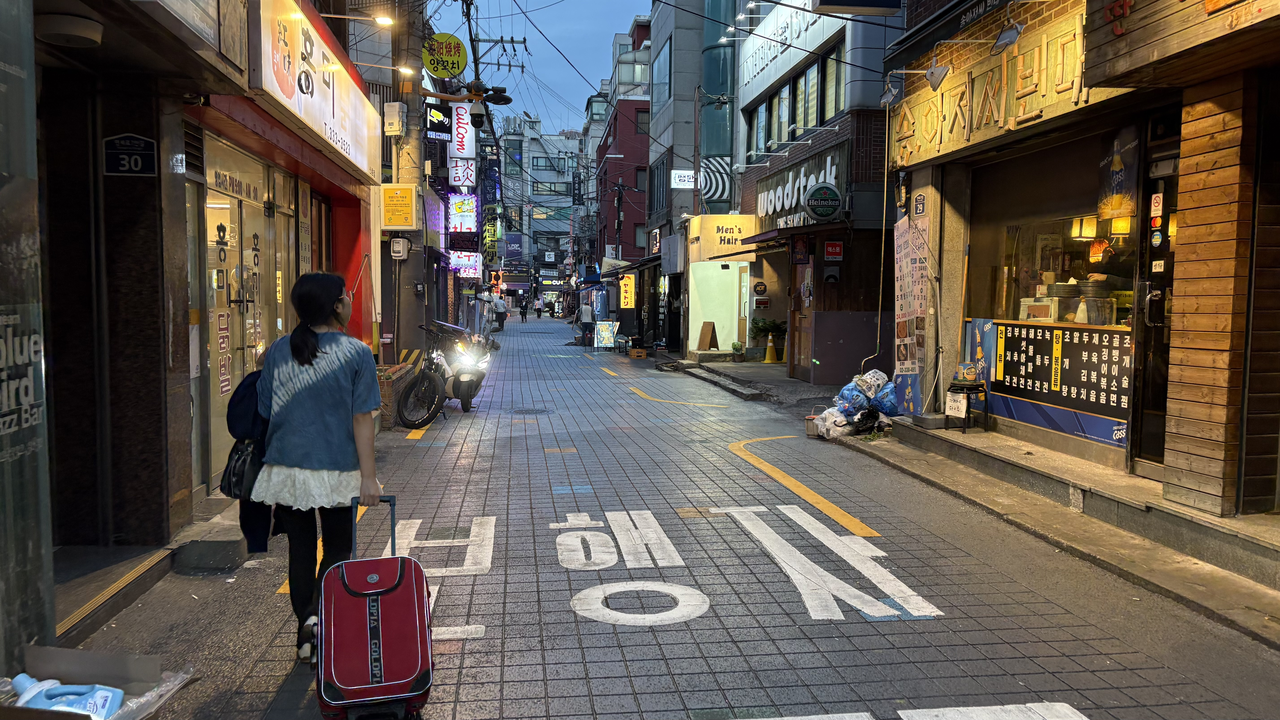
Yonsei-ro was dotted with promotional photos of foaming beer mugs clinking together, but few people were actually out drinking Monday. Delivery motorcycles were the only things moving quickly along the street. One bar advertised beer at 2,500 won a glass, yet the inside was nearly empty. A nearby imported-beer specialty shop had an "open" sign in the window but its door was firmly shut.
A 38-year-old bar owner surnamed Jang, who runs a restaurant in the university district that his family has operated for two generations, said alcohol consumption has been falling steadily since the COVID-19 pandemic and that customers no longer drink until dawn the way they once did, forcing the bar to close by midnight. "In a university district, we have to be careful about raising prices," Jang said. Another owner, a 51-year-old surnamed Park, said: "If taxes go up, I'd probably have to raise the price by at least 1,000 won a glass, but there's a limit to what students around here can afford."
Customers share the concern. A patron who was enjoying draft beer with fried chicken Monday said that if draft beer prices rise further, she would likely cut back on going out to drink or switch to drinking at home.
The government has decided to let the temporary 20 percent liquor tax reduction on draft beer expire at the end of this year, meaning the tax burden at the production stage will increase starting next year. The additional tax is estimated at about 130 won per 500-milliliter glass. The current liquor tax on regular beer stands at 885,700 won ($651) per kiloliter, while draft beer is taxed at the reduced rate of 708,560 won per kiloliter.
Once the relief measure ends, the draft beer tax will rise to 885,700 won per kiloliter, matching the rate for regular beer. When the education tax — levied at 30 percent of the liquor tax — and value-added tax are factored in, the total tax burden at the production stage will increase by more than 200,000 won per kiloliter.
Translated to a 20-liter keg supplied to bars, that works out to roughly 5,000 won more per keg, or about 130 won per 500-milliliter glass. Taking labor and other costs into account, actual retail prices at bars are expected to rise by 500 to 1,000 won per glass.
South Korea's alcohol market is shrinking. A growing health-conscious consumer culture, combined with a post-pandemic decline in company dinners and social gatherings, has dampened demand. The strain on small business owners is mounting. According to the Seoul Metropolitan Government's commercial district analysis service, 656 bars and taverns in Seoul closed in the second quarter of this year, a closure rate of 4.3 percent. New openings during the same period totaled just 328 — fewer than half the number of closures. The closure rate has remained elevated in recent years, at 4.9 percent in 2024 and 4.1 percent in 2025.
Franchise bar chains are also losing ground. Fun Beer King saw its franchise outlet count fall from 349 in 2022 to 339 in 2023 and 327 in 2024. Crown Hof's franchise count dropped to 430 last year from 457 the year before, with only nine new locations opening. Yeokjeon F&C, which operates the Yeokjeon Grandmother Beer chain, posted sales of 104.1 billion won last year, down from 108.6 billion won the year before. Operating profit over the same period fell sharply from 9.9 billion won to 3.6 billion won.
The end of the draft beer tax relief will inevitably hit the alcohol industry as well. Domestic brewers are weighing whether to pass the higher tax burden on to their wholesale prices, but say absorbing the full increase will not be easy given the sluggish market.
Foreign alcohol producers face the same pressure, as the expiration of the relief measure applies equally to imported beer. The concern is that the change could dampen what has been a growing market for imported draft beer, particularly Japanese brands. Total beer imports — including draft — reached $152.94 million from January through August this year, up 5.6 percent from the same period last year.
Some are pushing to keep the tax relief in place. People Power Party lawmaker Kim Eun-hye last month introduced a bill to remove the sunset clause from the liquor tax law, which would eliminate the Dec. 31 expiration date and make the 20 percent reduced rate on draft beer permanent.
An industry official said the matter deserves careful consideration, given how closely draft beer prices affect everyday consumers. "This is a product closely tied to ordinary people's lives, so the impact of the tax burden on consumer prices needs to be weighed carefully," the official said.
siuu@heraldcorp.com