Jung Hee-yong releases survey on real estate policy
Over 7 in 10 people in their 20s and 30s are non-homeowners
70.7% of those in their 30s say loan curbs widened housing opportunity gap

More than six in 10 South Koreans view the current government's real estate policy negatively, according to a new survey. Among respondents in their 30s, the disapproval rate approached 80 percent, and more than half said mortgage lending restrictions have made it harder for non-homeowners to buy a home.
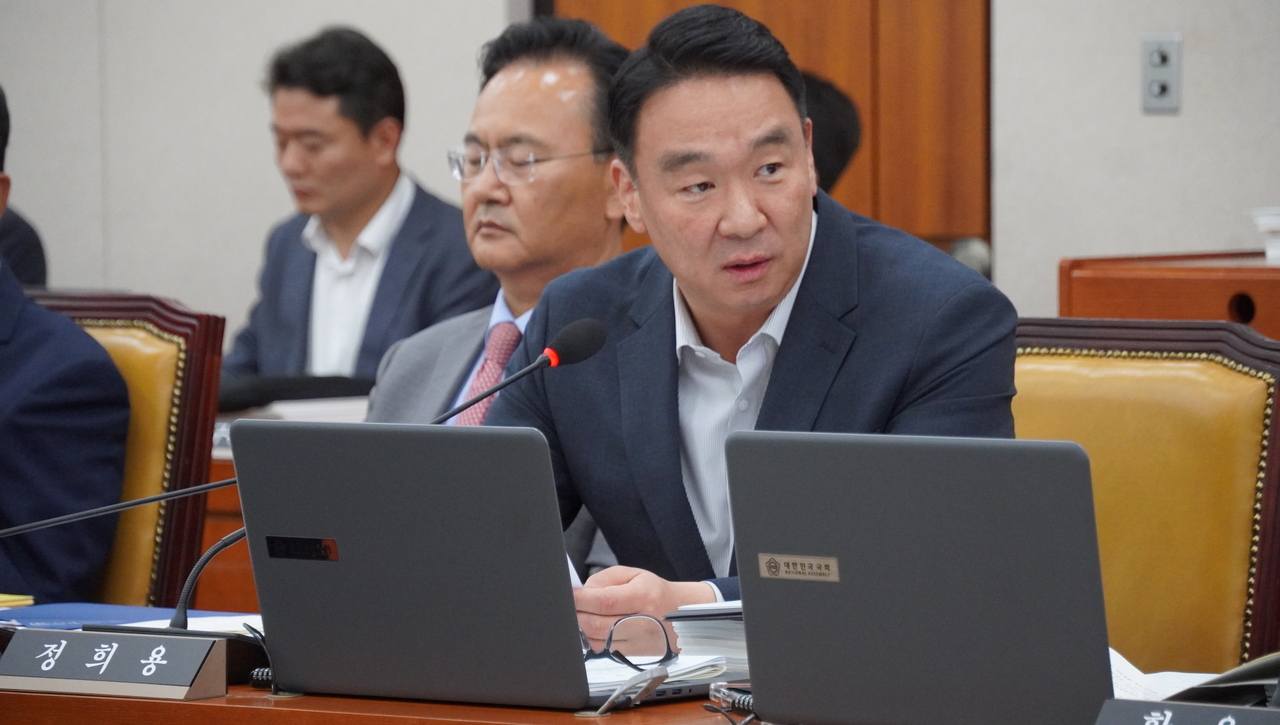
Jung Hee-yong, a People Power Party lawmaker on the National Assembly's Land, Infrastructure and Transport Committee, released the results Tuesday of a public opinion survey on real estate policy conducted by polling firm Mono Research. The survey polled 1,000 adults aged 18 and older nationwide from Sept. 14 to 16.
The survey found that 63.6 percent of respondents said the government is handling real estate policy poorly. Only 23.1 percent said it was doing well.
By age group, those in their 30s recorded the highest disapproval rate at 78.8 percent, with only 17.9 percent giving a positive assessment. Among respondents in their 20s, disapproval also significantly outpaced approval — 53.8 percent versus 31.0 percent.
Homeownership rates among younger generations were also relatively low. The survey found that 72.2 percent of respondents in their 20s and 70.9 percent of those in their 30s said they do not own a home — meaning more than seven in 10 in both age groups are non-homeowners.
Among those in their 30s, the perception that loan regulations have raised the bar for homeownership was particularly pronounced. When asked about the biggest impact of the policy that caps mortgage loan limits based on housing prices, 54.1 percent of respondents in their 30s said it had made it harder for non-homeowners who need loans to buy a home. Only 12.0 percent said the policy had helped curb household debt and stabilize housing prices.
Many respondents also said lending restrictions had widened the gap in housing purchase opportunities. When asked whether the gap between those with ample personal funds and those who rely on loans had expanded, 70.7 percent of respondents in their 30s said it had — the highest share of any age group. Among those in their 20s, 54.8 percent also said the gap had widened.
"These results show just how much fatigue and deprivation younger generations and non-homeowners who genuinely need housing feel toward the current government's real estate policy — particularly its loan restrictions," Jung said. "The fact that even respondents with progressive leanings acknowledge that lending curbs have widened the gap in housing purchase opportunities is proof that this issue can no longer be approached through a partisan lens."
mp1256@heraldcorp.com