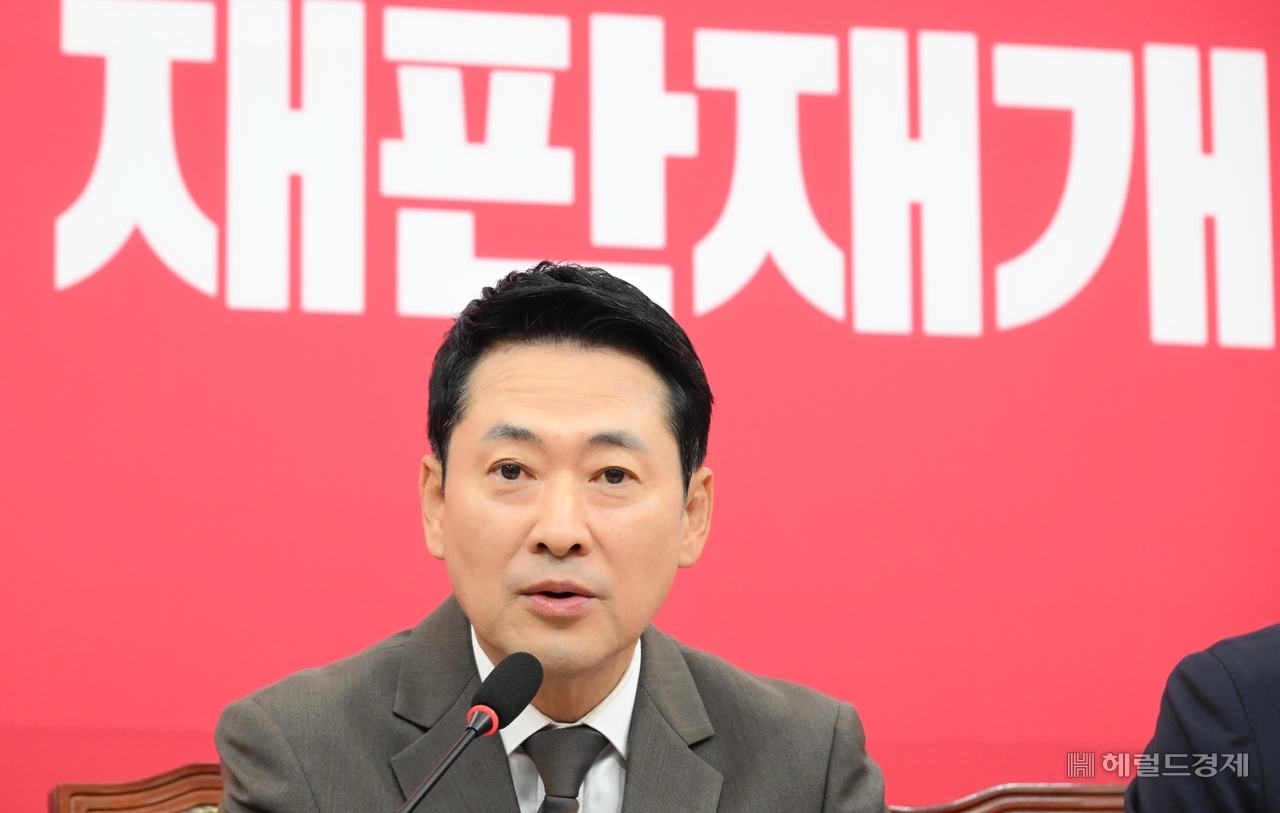
People Power Party leader Jang Dong-hyeok has criticized "The Assassin," a film based on the shooting of first lady Yuk Young-soo, asking whether freedom of expression is "the exclusive domain of the left."
In a Facebook post Monday, Jang said the film had opened during the chuseok holiday and described its premise as "truly absurd" — the claim that President Park Chung-hee was behind the attack on Yuk.
Jang cited a 2002 visit to North Korea by former President Park Geun-hye, during which North Korean leader Kim Jong-il apologized for the shooting. Jang said Kim acknowledged that "lower-ranking officials were involved in the assassination plot and that he had not known of the plot in advance."
"And yet the left makes films like this and calls it 'freedom of expression,'" Jang wrote. "Say one wrong word about the May 18 pro-democracy uprising and you go to prison. But claiming North Korea started the Korean War, or that the Cheonan was sunk by a US submarine — that's 'freedom of expression.'"
He added: "Touch President Roh Moo-hyun and you face a string of complaints and criminal charges. Insulting President Park Chung-hee is 'freedom of expression.' Is 'freedom of expression' the exclusive domain of the left?"
Jang then said he would recommend a film of his own. "Annam City = Andong + Seongnam? It's 'cinematic imagination,' so don't read anything into it," he wrote. "Asura" is a crime thriller set in the fictional city of Annam, centered on a corrupt mayor and detectives. Andong is President Lee Jae Myung's hometown, and Seongnam is the city Lee served as mayor.
Criticism from the PPP had also emerged Sunday. In a Facebook post that day, lawmaker Ju Jin-woo called the film "not cinematic imagination but a morally depraved crime that breaks the hearts of the bereaved family." He argued it "clearly constitutes criminal defamation of the deceased and cannot be justified under the guise of freedom of expression — it must be punished strictly."
Investigators at the time concluded that Moon Se-gwang, acting on orders from North Korea and the General Association of Korean Residents in Japan, known as Chongryon, had attempted to shoot former President Park Chung-hee but missed, and that Yuk, who was standing nearby, was struck by a bullet and killed.
"The Assassin" is a film by director Heo Jin-ho based on the shooting of Yuk Young-soo at a Liberation Day ceremony held at the National Theater in Jangchung-dong, Seoul, on Aug. 15, 1974.
dbsdn1110@heraldcorp.com