
Citywide land transaction permit zone designation approaches its first anniversary
Jungnang-gu recorded the most owner-occupancy violations
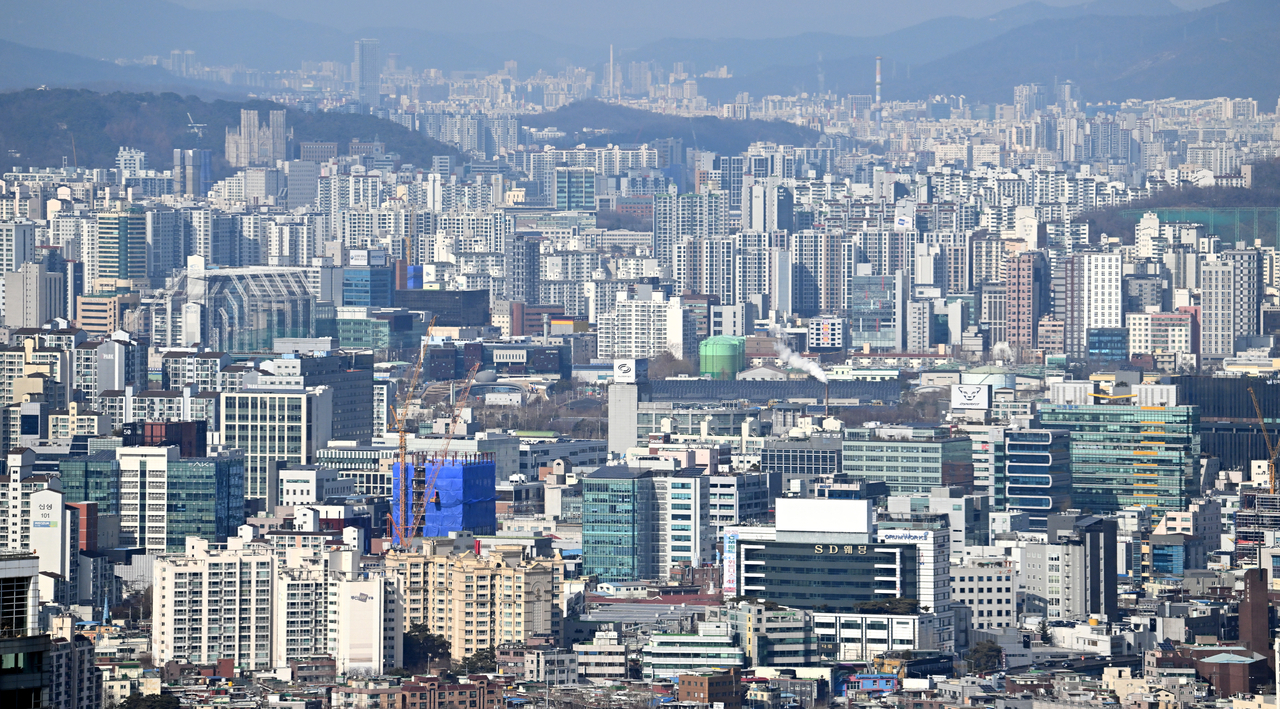
A detached house in Seongsu-dong, Seongdong-gu, Seoul, was left unoccupied by its buyer for 11 months, resulting in a compliance enforcement fine of about 341 million won ($251,000) imposed by the Seoul Metropolitan Government.
As the one-year mark approaches for Seoul's designation as a citywide land transaction permit zone, authorities have identified 28 cases of owner-occupancy requirement violations.
According to data obtained from the Seoul Metropolitan Government by the office of People Power Party lawmaker Kwon Young-se of the National Assembly's Foreign Affairs and Unification Committee, 27 owner-occupancy violations were recorded in Seoul between last October, when the Oct. 15 real estate measures took effect, and August this year. Under those measures, all 25 of Seoul's autonomous districts — along with 12 areas in Gyeonggi Province — were designated as adjustment target zones, speculative overheating districts and land transaction permit zones.
Jungnang-gu recorded the most violations with 10 cases, followed by Songpa-gu with 8, Eunpyeong-gu with 3, Dongdaemun-gu and Seongdong-gu with 2 each, and Guro-gu, Gangdong-gu and Yeongdeungpo-gu with 1 each.
Under the land transaction permit zone rules, buyers who purchase residential property must live in it themselves for two years after acquisition. If a violation is found through regular or unannounced inspections conducted by local governments, authorities issue a compliance order, and if the buyer still fails to comply after three months, an enforcement fine is imposed.

According to the Seoul Metropolitan Government, 24 of the identified violations resulted in compliance after an order was issued. The remaining four cases that did not comply were hit with a combined enforcement fine of 383.7 million won. The fines covered a commercial building in an apartment complex in Yeongdeungpo-gu left unused for 18 months (about 14 million won), a multi-unit house in Seongdong-gu left unused for 12 months (25.6 million won), and a multi-family house in Guro-gu with an unresolved illegal structure issue over 12 months (3.17 million won).
Since the citywide land transaction permit zone designation took effect, about 65,853 permit applications were filed in Seoul between last October and August this year. Of those, 64,226 were for residential purposes and 1,627 for non-residential use.
The four enforcement fines issued in roughly 10 months since the citywide expansion represent a tiny fraction of total permit applications. However, compared with the previous period — when only six fines were issued over about five years from 2020 through April last year — both the number of violations and the total amount fined have increased.
In data obtained from the Seoul Metropolitan Government last May by the office of Democratic Party of Korea lawmaker Moon Jin-seog of the National Assembly's Land, Infrastructure and Transport Committee, six enforcement fines totaling 96.8 million won had been imposed for owner-occupancy violations in land transaction permit zones during that earlier period.
Faced with a surge in permit applications and the resulting supervisory burden, the Seoul Metropolitan Government has asked the Ministry of Land, Infrastructure and Transport for additional staffing. A Seoul city official said the absence of specific guidelines from the ministry has led to inconsistent procedures across districts, adding that some districts require applicants to bring relevant documents for daily verification checks.
hope@heraldcorp.com



