South Korea, Japan, UK, Germany among AI safety institutes to be linked
Common benchmarks for AI performance, risk management proposed
'Losing the lead risks fragmented, conflicting systems,' OpenAI warns
US-China summit talks on AI described as 'positive development'
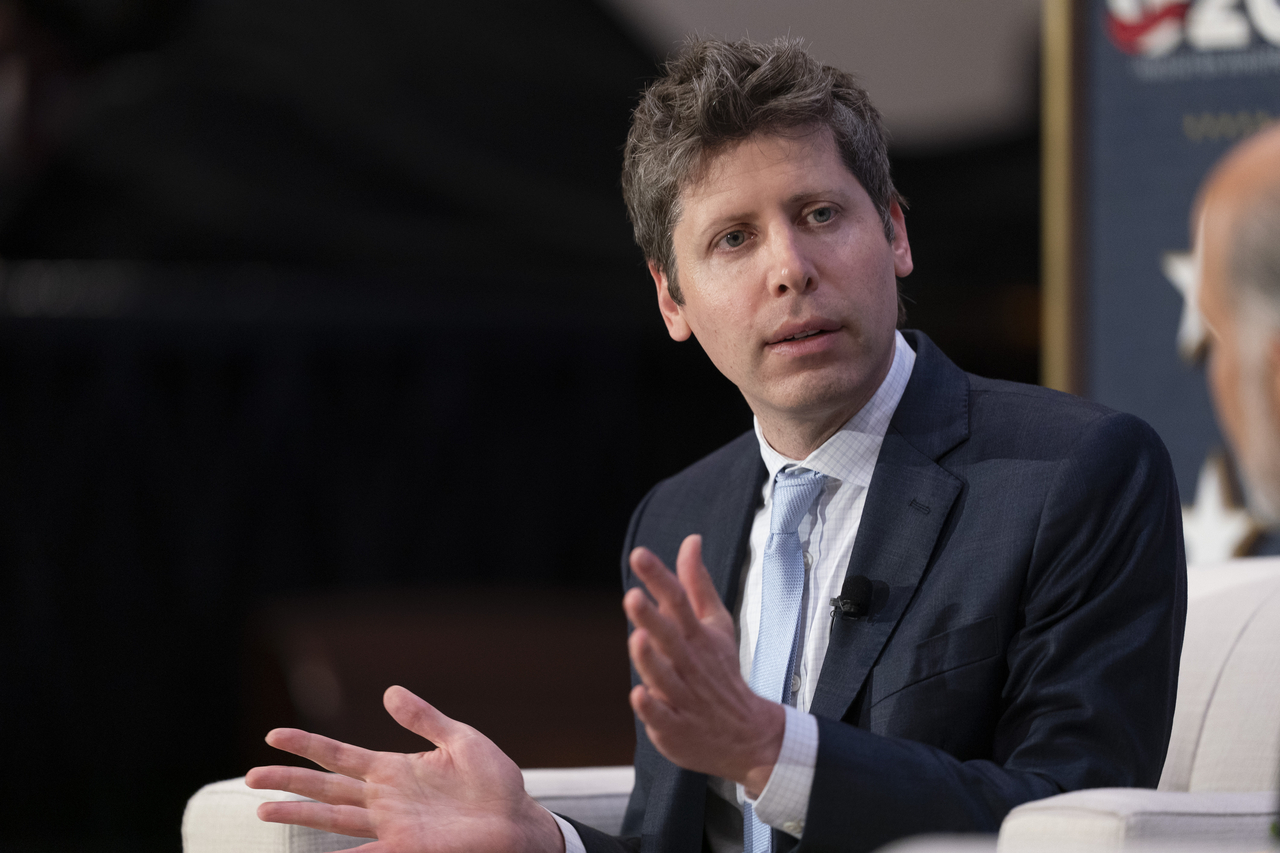
OpenAI, the company behind ChatGPT, urged the United States to take the lead in building international AI standards by partnering with South Korea and other major nations. The call reflects OpenAI's view that the global AI race is shifting beyond a contest over who develops the best technology — toward a competition over which country writes the "rules of AI" that the world will follow.
In a post titled "Building Standards for the Next Phase of AI," published Monday (local time), OpenAI said "the United States should lead efforts to develop global technical standards for frontier AI in collaboration with countries around the world."
OpenAI said the current moment is critical in determining the future shape of the international AI order. Whether the US seizes the initiative now, it argued, will decide whether America leads the global AI system going forward — or whether a fragmented, uneven framework of country-by-country regulation takes hold instead.
OpenAI assessed that the US is well positioned to lead on international AI standards, citing the American AI industry's place at the technological frontier and the country's advantageous standing in the world's key networks spanning finance, trade, defense, technology and information systems.
OpenAI also predicted that the center of gravity in the US-China AI rivalry will broaden from technology development itself to the "adoption and diffusion" of AI. "Geopolitical competition will not simply be about who is ahead technologically — it will be a competition over the adoption and diffusion of AI," the company said, adding that who leads in shaping practical cooperation and reasonable rules that businesses and societies can accept will matter greatly.
South Korea is included in the proposed international cooperation network.
OpenAI proposed linking AI safety institutes established across various countries to develop international standards. It cited the AI safety institutes of 10 countries as examples: South Korea, Australia, Canada, Germany, France, Kenya, Japan, Singapore, India and the United Kingdom.
The idea is to use this network to jointly set common benchmarks for measuring the performance of frontier AI models, along with shared criteria for risk assessment and the adequacy of safety measures. OpenAI also proposed establishing common standards to manage risks that could arise from automated research — where AI conducts AI research itself — and from the process of recursive self-improvement (RSI).
OpenAI drew a line, however, at the notion that such international standards would replace individual countries' regulatory authority. The proposal calls for establishing shared technical benchmarks internationally while leaving it to each government to decide how to incorporate them into its own legal framework.
OpenAI also addressed the debate over whether to slow the pace of AI development. Rather than setting and maintaining a predetermined development speed, it argued that alignment research — ensuring AI operates in accordance with human intent and values — and safety measures must stay ahead of advances in AI capability.
On recursive self-improvement, in which AI develops more advanced AI on its own, OpenAI drew a sharper line. "Fully autonomous RSI is not happening today and should not be pursued until it can be done safely," the company said.
OpenAI also emphasized the need for US-China cooperation, saying that dialogue between the two countries on AI safety would represent "positive progress" and that the planned bilateral talks are coming at an appropriate time.
OpenAI's proposal signals that the front lines of the AI competition are expanding beyond semiconductors, data centers and AI model performance — into a contest over international rules and standards. As the US works to establish its own AI standards as the global norm, South Korea's AI safety research institutions are increasingly likely to play a role as a key node in that cooperation network.
OpenAI CEO Sam Altman is scheduled to brief the UN Security Council on AI and international security on Wednesday.
sjy@heraldcorp.com