Of 290 resident proposals, 154 immediate and short-term items are being fast-tracked; long-term tasks also pledged to completion. Requests ranging from cracking down on mislabeled produce to expanding traditional music experiences and public restroom support are being turned into concrete policy.
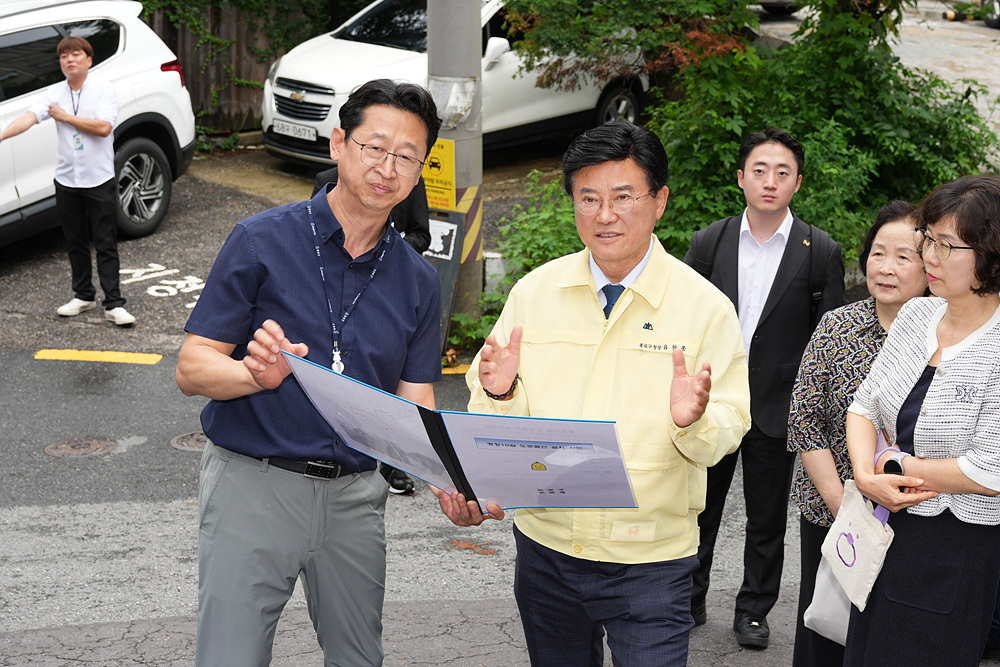
Jongno-gu is moving to formalize a governing approach that ensures every proposal residents raise in the field is tracked and acted upon throughout the current elected term.
As a first step, the district held a progress briefing on resident proposals Thursday. The session reviewed whether suggestions gathered during the "Field District Mayor's Office and Community Dialogue" events — held from July 15 to July 29 — were being translated into actual policies and projects, and discussed concrete implementation plans. For tasks requiring inter-departmental cooperation or budget allocation, the district sought practical solutions.
A total of 290 resident proposals were received, covering a broad range of everyday concerns including roads and drainage, parks and green spaces, urban planning, and cultural tourism.
A review found that 154 proposals — 53.1 percent of the total — were classified as short-term actionable projects. Of these, 76 items designated for immediate implementation and 78 for short-term implementation will be pushed forward quickly so residents can see tangible change.
For the 91 proposals requiring long-term review due to large budgets or complex procedures — 31.3 percent of the total — District Mayor Yoo Chan-jong personally pledged to "see them through to results without giving up, no matter how long it takes." With that commitment, 245 proposals, or 84.5 percent of the total, were classified as actionable. The remaining 45, deemed difficult to accept due to legal or institutional constraints, were subject to a feasibility review and discussion of alternatives.
In practice, the proposals collected from each neighborhood reflect the distinct character of their communities.
In Hyehwa-dong, residents called for the creation of a childcare facility and rest park on a cleared commercial site near Seoul's Munmyo Confucian shrine and Sungkyunkwan. The site has already been cleared, and the Cultural Heritage Administration granted design approval for a park and new restroom in May. The district plans to apply for a revised approval incorporating residents' requested changes to the restroom location, then proceed to tender the project.
In Changsin 2-dong, residents asked for an end to so-called "label switching" — the fraudulent mislabeling of product origins. In response, the district will publicize its tip-off reward program through banners and, starting in November, deploy an enforcement unit with special judicial police authority to conduct regular inspections.
In Jongno 1·2·3·4-ga-dong, residents called for more traditional Korean music experiences along Donhwamun-ro. The district will work with Donhwamun National Gugak Center and private music instruction studios to develop hands-on programs, with a broader revitalization plan for Donhwamun-ro to be drawn up and launched in 2027.
In Sajik-dong, residents asked for expanded public restroom support for merchants and visitors at the Sejong Village Food Culture Street. The district plans to amend a related ordinance in October to establish a legal basis and complete construction before the end of this year.
The briefing was structured around reviewing the status of key proposals, followed by questions and discussion. Particular focus was placed on projects requiring multi-department cooperation or policy-level decisions, as well as the feasibility of difficult-to-accept proposals and the search for alternatives.
Throughout the remainder of the current elected term, the district will conduct periodic reviews to monitor project progress. For proposals that cannot be accepted due to legal or institutional constraints, the district will provide residents with thorough explanations and work to identify alternatives, ensuring accountability throughout the process.
"The candid opinions residents shared with us in the field are the most precious foundation driving change in Jongno," District Mayor Yoo Chan-jong said. "We will push ahead without fail to ensure that resident proposals are translated into real policies and projects."
seouldream01@heraldcorp.com