A veteran policy hand who shaped media relations, transportation and welfare — now an adjunct professor of transportation engineering at the University of Seoul
From setting a record as the city's longest-serving press chief to launching the Climate Card: 'I want to bridge theory and the field'
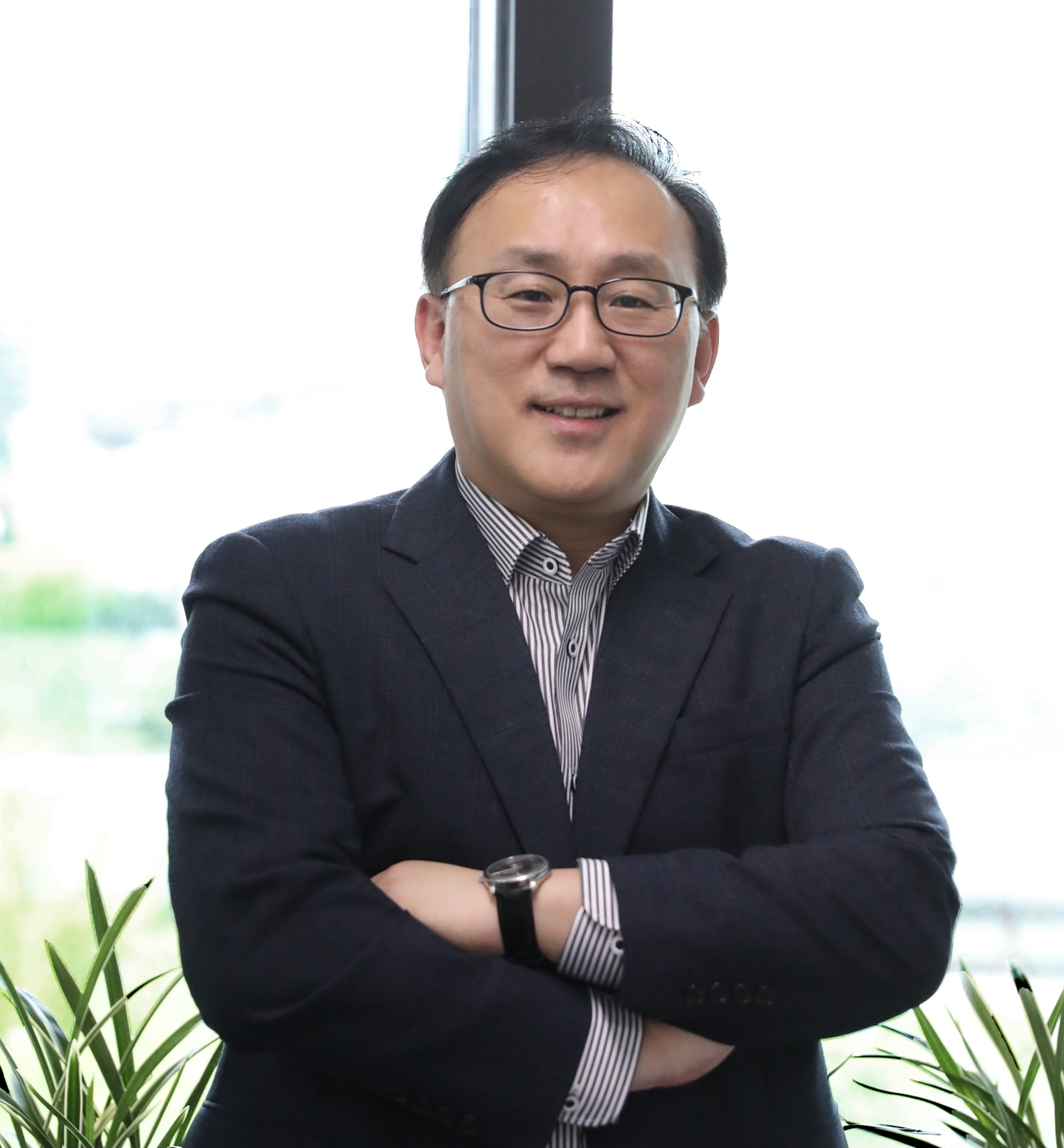
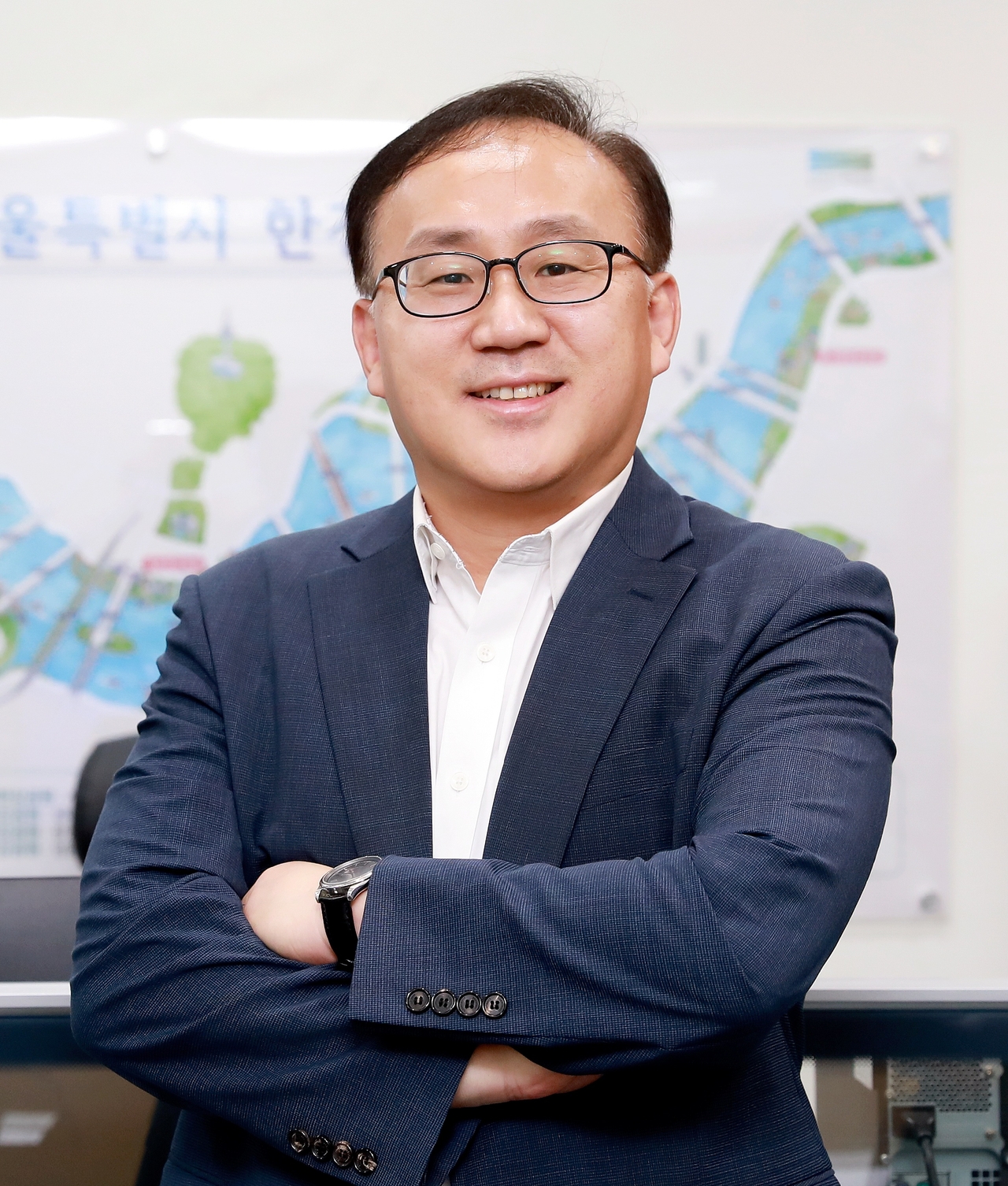
Yoon Jong-jang, former head of the Seoul Metropolitan Government's Welfare Bureau, has embarked on a second career in academia after 33 years as a civil servant.
Having helped build the city's media relations framework, directed its public transportation policy and overseen welfare programs for vulnerable residents, Yoon has joined the University of Seoul as an adjunct professor in the Department of Transportation Engineering.
He did not take the customary break between public service and his next chapter. After retiring July 31, he began teaching in September — a deliberate choice, he said, to keep himself from growing complacent.
"I want to share with students the experience I accumulated on the front lines of Seoul's transportation policy," Yoon said. "I hope to help develop the talent the future transportation sector needs by connecting theory with the realities of policymaking."
A policy veteran who spanned planning, media, transportation and welfare
Yoon was born in 1969 in Nonsan, South Chungcheong Province, in what is now Gyeryong. He graduated from Yuseong High School and Chungnam National University with a degree in public administration, then earned a Master of Public Administration from Seoul National University's Graduate School of Public Administration and from the University of Colorado. He also completed doctoral coursework in public administration at the University of Seoul.
While a senior at Chungnam National University in 1993, he passed the 37th Higher Civil Service Examination and entered public service. He went on to work across the Seoul Metropolitan Government's core functions — planning, media relations, transportation and welfare.
As a section chief, he helped draft policy blueprints in the planning division. After his promotion to senior administrator, he worked to transform how the city communicated with the press. As a bureau director and bureau head, he led major initiatives in transportation and welfare — areas that touch residents' daily lives most directly.
His posts included head of transportation planning, administrative director of the University of Seoul, Deputy District Mayor of Gwangjin-gu, head of citizen communications planning, head of the Han River Project Headquarters, head of the Urban Transportation Bureau and head of the Welfare Bureau — a breadth of experience that earned him a reputation as one of the city's foremost policy generalists.
Serving consecutively as head of both the transportation and welfare bureaus is rare even within the Seoul Metropolitan Government. Both are among the city's most demanding divisions, with large budgets and sprawling programs, and a constant stream of complex public complaints tied directly to residents' daily lives.
By leading the city's two most demanding bureaus in succession, Yoon demonstrated a capacity for quick judgment and determined follow-through that set him apart.
More than three years as press chief — a record that still stands
One role stands out in Yoon's public-service career: head of the Seoul Metropolitan Government's press division.
He served in that post for more than three years beginning in 2011 — an unusually long tenure for a position known for its intensity and the pressure it generates both inside and outside the organization. His record as the city's longest-serving press chief has yet to be broken.
The media relations manual he developed and put into practice at the time is still said to be in use at the city's spokesperson's office. He shifted the focus of communications work away from simply distributing press releases and reacting to coverage, toward actively identifying newsworthy issues and story ideas within policy itself.
"I think that was the turning point when the foundation of media relations changed — toward finding policy issues and story items through genuine communication with journalists," Yoon recalled.
His aim, he explained, was to move the relationship between the city and the reporters who covered it away from a formal hierarchy and toward genuine mutual exchange. A press official trusted by journalists, in his view, is one who reads the flow of policy accurately and can quickly articulate the city's position on any given issue. Yoon is credited with embedding that principle in the Seoul Metropolitan Government's spokesperson's office.
'Father of the Climate Card' — the policy that made his name
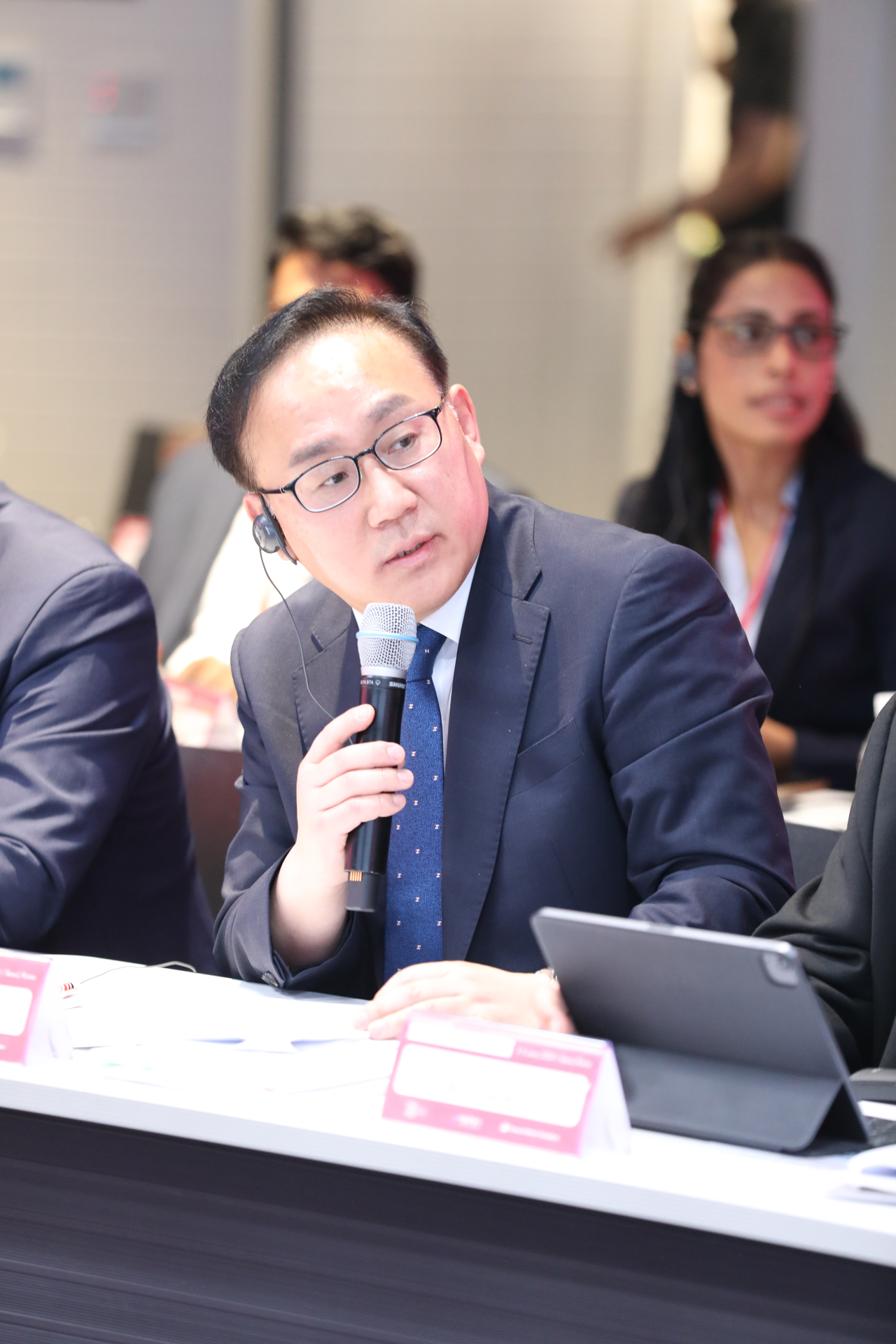
Of all the policies associated with Yoon, none brought him wider public recognition than the Climate Card.
As head of the Urban Transportation Bureau, he oversaw the full sweep of Seoul's transportation policy — urban rail planning, subway management, demand management, fare adjustments, bus public-private partnership reform, autonomous driving for buses and taxis, and cycling and pedestrian-friendly initiatives.
Among those, the Climate Card, launched in January 2024, became one of the city's signature policy brands. The card allows users to ride subways, buses and other public transit freely for a flat monthly fee, and proved popular with young people, students and a broad cross-section of residents. The central government later adopted the model as the basis for its own nationwide transit pass program.
Turning the policy idea into an actual system embedded in residents' daily lives was far from straightforward. Competing interests among different modes of transport had to be reconciled, fare structures and fiscal burdens had to be calculated, and entirely new systems had to be built.
Yoon led the entire process from conception to launch, aligning everyone from the mayor down to frontline staff and driving the project to completion.
Staff who worked on the project recall it as their most passionate and fulfilling period. It is why they still call him the "father of the Climate Card."
The Climate Card reflects his working style: he does not defer decisions when a direction needs to be set, he executes with force once a policy is decided, and he communicates openly with the people doing the work.
Turning a bureau people avoided into one they wanted to join
Yoon moved to the Welfare Bureau in January 2025.
The bureau handles basic livelihood support for low-income households, income assistance for the poor, welfare for the elderly and people with disabilities, support for veterans' organizations and social welfare corporations, self-sufficiency programs for homeless and low-income residents, solitary-death prevention, integrated care, and policy for single-person households.
In terms of budget and program scale, it dwarfs other bureaus. The volume of complex, hard-to-resolve complaints and the sheer intensity of the work make it one of the divisions that Seoul city employees are most reluctant to join.
Yoon set out to change that. When newly assigned staff arrived, he had senior officials greet them personally. He cut unnecessary tasks that had persisted out of habit. By giving clear, prompt direction on pending issues, he reduced the confusion and burden that frontline workers faced.
He also placed a premium on communicating as an equal. Rather than leading with rank, he listened to staff first and made sure that when accountability was needed, it was the managers — not the frontline workers — who stepped forward.
When word of his retirement spread, anonymous workplace forums and internal message boards filled with posts urging him to stay on. Welfare Bureau staff described him as someone whose "judgment on work direction is fast and accurate," who "communicates on the same level as staff," and who is "an executive with both character and ability."
A farewell organized by his staff: 'What you are doing right now matters most'
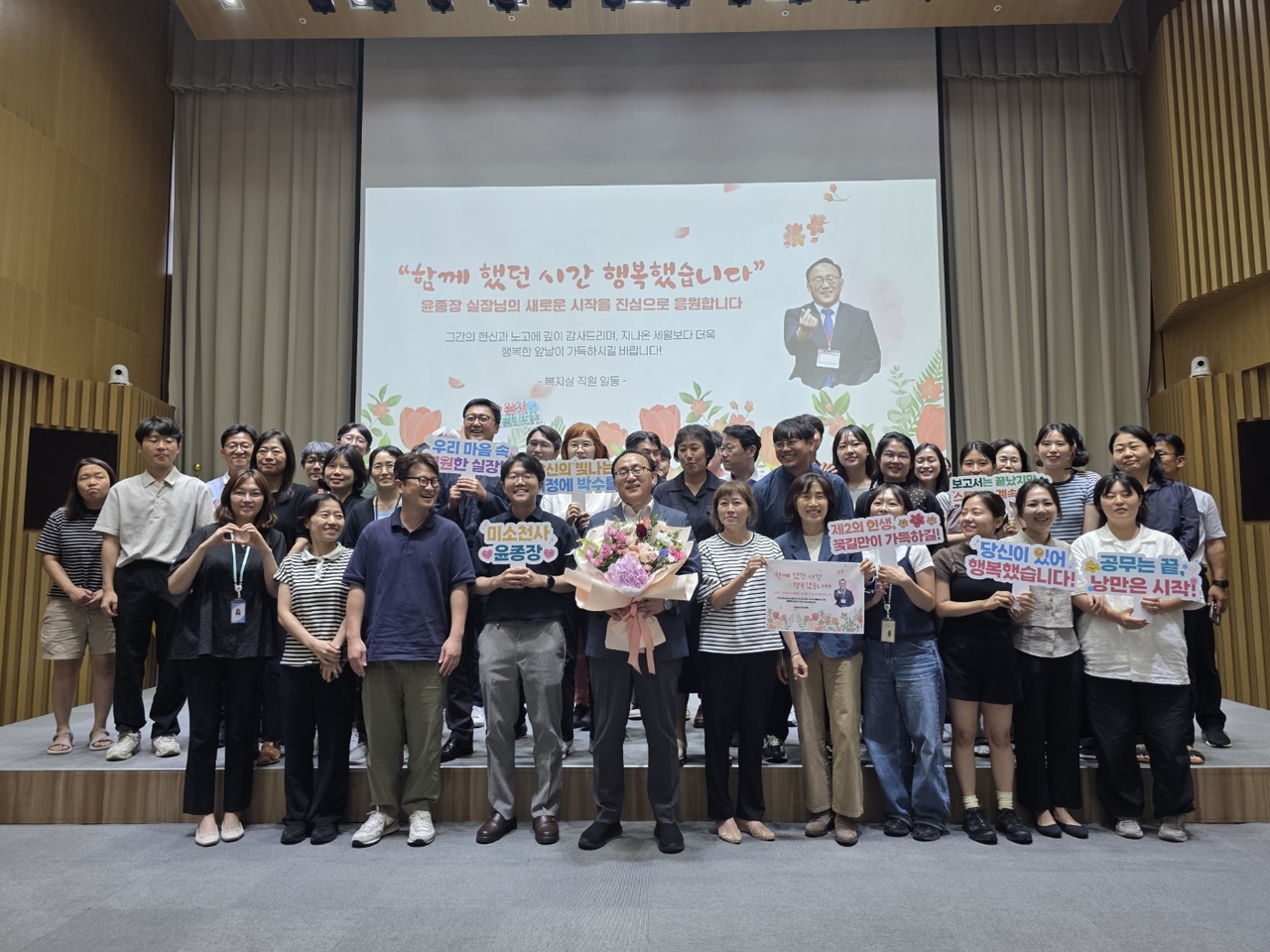
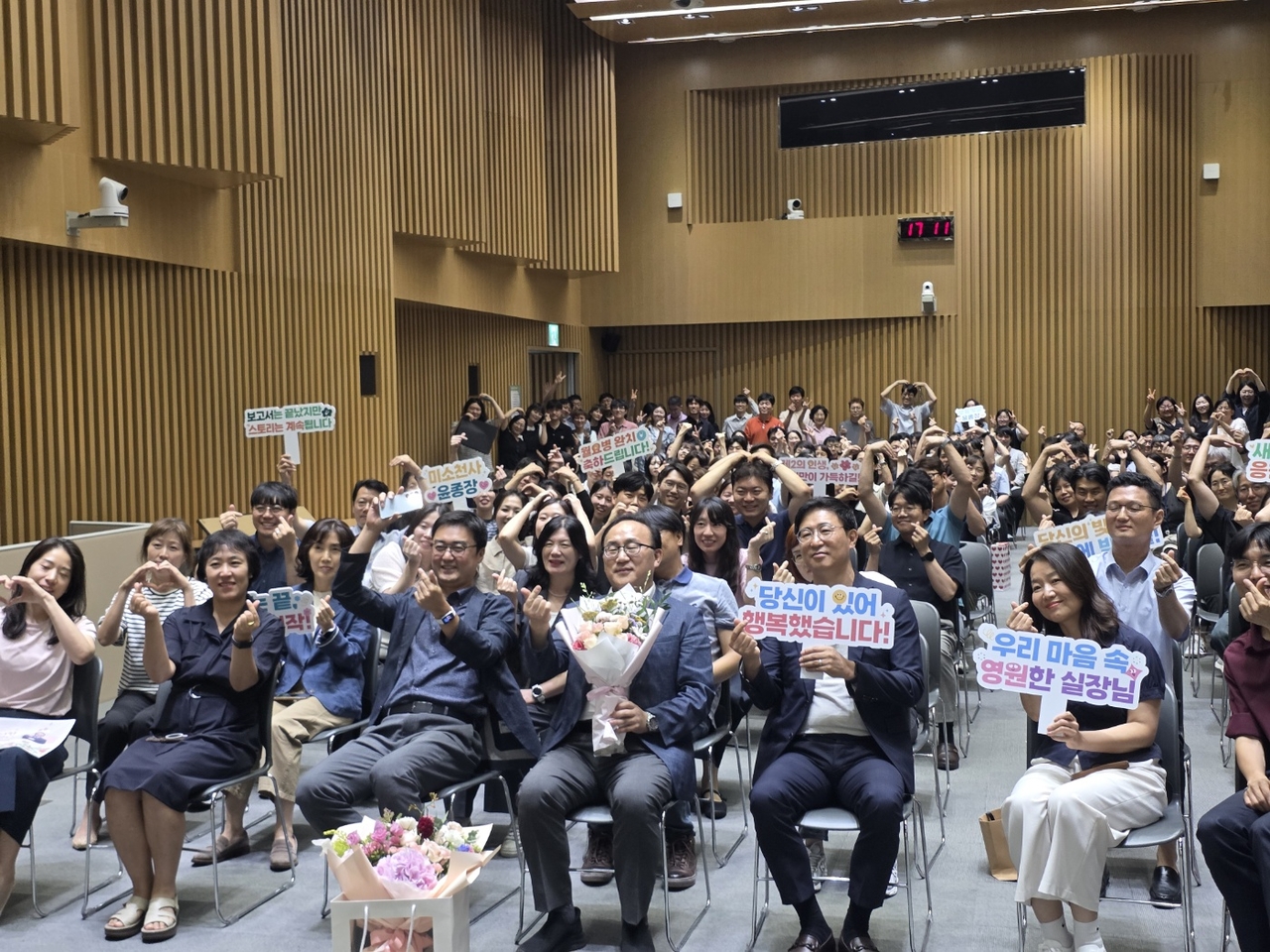
Ahead of his retirement July 31, Welfare Bureau staff organized a send-off ceremony in his honor. Colleagues from the transportation bureau, the communications planning office and the Han River Project Headquarters joined the welfare staff to see him off.
Over 33 years he had moved through many divisions, yet colleagues from across those departments gathered in one place — a scene that captured the arc of his public-service career.
In his farewell remarks, Yoon said his three decades in public service flashed before him. "The place you are standing right now, the work you are doing right now — that is what matters most," he told the assembled staff. "I hope you never let work cause you to miss the people or moments that truly count."
He also urged those present to listen more and show more of themselves. "You have to show your own imperfect side first," he said. "Only when you show vulnerability will the other person do the same — and that is when real communication becomes possible."
The message was that projecting only a polished image makes it hard to earn genuine trust. It was a window into a leadership style that valued human connection as much as swift decisions and strong execution.
Transportation engineering over public administration — bringing the field into the classroom
As he prepared for his second act, Yoon weighed whether to teach public administration or transportation engineering.
Public administration was familiar ground after 33 years in government. But he noted that many of his sunbae — senior colleagues from the Seoul Metropolitan Government — were already sharing their experience and insights through public administration courses. He concluded that adding one more voice there would matter less than carving out a new role in the specialized field of transportation.
That reasoning led him to the University of Seoul's Department of Transportation Engineering.
The experience he built moving through transportation roles — from section chief to bureau director to bureau head — is his greatest asset. Urban rail planning and operations, the introduction of the Climate Card, bus public-private partnership reform, autonomous driving, and taxi, cycling and pedestrian policy are living policy cases that no textbook alone can teach.
Yoon plans to weave that experience into his research and teaching — conveying to students how policies are made, how competing interests are managed, and how a good idea becomes a system that citizens can actually feel in their daily lives.
He is also developing an interdisciplinary curriculum that brings public administration and policy perspectives into a field traditionally centered on engineering and technology. Future transportation professionals, he believes, must understand not only the technology but also how citizens live and how government works.
Yoon Jong-jang — who helped shape Seoul's media relations, led its transportation reforms and worked to transform the culture of its welfare organization — has now set out on a new path: passing on 33 years of accumulated public-service experience to the next generation. His second act, as an educator, has begun.
seouldream01@heraldcorp.com