1,255% illegal loan rate — inside a Credit Recovery Commission counseling session
Borrower took 900,000 won, was told to repay 1.55 million won in three weeks
Threats sent to family, friends and former supervisors
CRC links evidence gathering to collection halt and debt restructuring
4,064 of 5,621 reported claims received initial action
'Direct referral to police, SNS account protection needed'
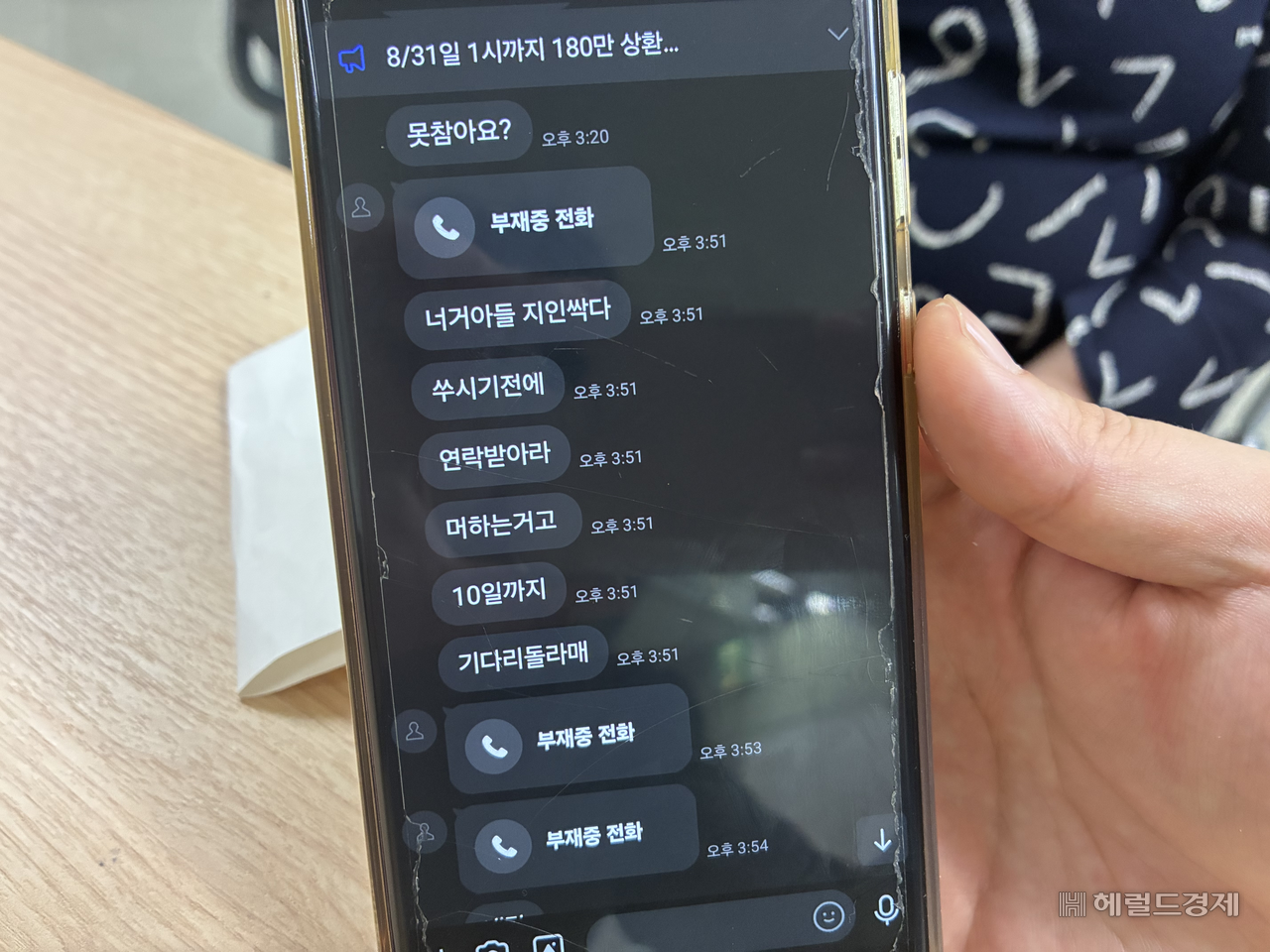
"Can you even eat while you still owe me money? You want me to spread your face everywhere?"
At the Credit Recovery Commission's illegal private lending victim consultation desk in Jung-gu, Seoul, on Thursday, a man in his 20s identified as A showed a counselor the threatening text messages he had received from an illegal lender. The lender had sent intimidating messages — from international numbers — not only to his parents and acquaintances but also to his former supervisor at work.
A borrowed 900,000 won ($652) from an illegal lender in August, agreeing to repay 1.55 million won three weeks later. When he took out the loan, the lender demanded that he send a photo of himself holding his identification card. He said he had repaid the 900,000 won principal before the due date but was unable to send the interest after losing his job.
Choi Ha-rim, a senior examiner at the CRC handling the case, told A that borrowing 900,000 won and repaying 1.55 million won 21 days later amounted to an annual interest rate of roughly 1,255 percent. "That far exceeds the legal maximum interest rate, and the loan contract itself could be declared void," Choi said.
Choi then went through A's phone with him, taking screenshots of every exchange with the creditor from the outset. She searched for related accounts on SNS platforms including Threads and Line, and cross-referenced the chat logs against bank deposit and withdrawal records. She also compiled a list of personal mobile numbers used for illegal debt collection to request service suspension.
"Even if the lender contacts you again, do not reply under any circumstances — just take a screenshot and send it to us," Choi told A. The CRC said it would warn the creditor to stop the illegal collection that day and forward the compiled evidence to the Financial Supervisory Service. Proceedings to appoint a debt-defense representative and apply for a certificate voiding the loan contract were also initiated.
The consultation extended to a review of A's other debts and living situation. After confirming that he was already enrolled in a CRC debt-restructuring program and was currently job-hunting, Choi outlined options for a repayment deferral or restructuring adjustment and explained how to connect him with employment support through a job center. The session had been scheduled for 30 minutes but ran past 40.
Warning alone stops about 10% of illegal collections — counselors even escort anxious victims to police stations
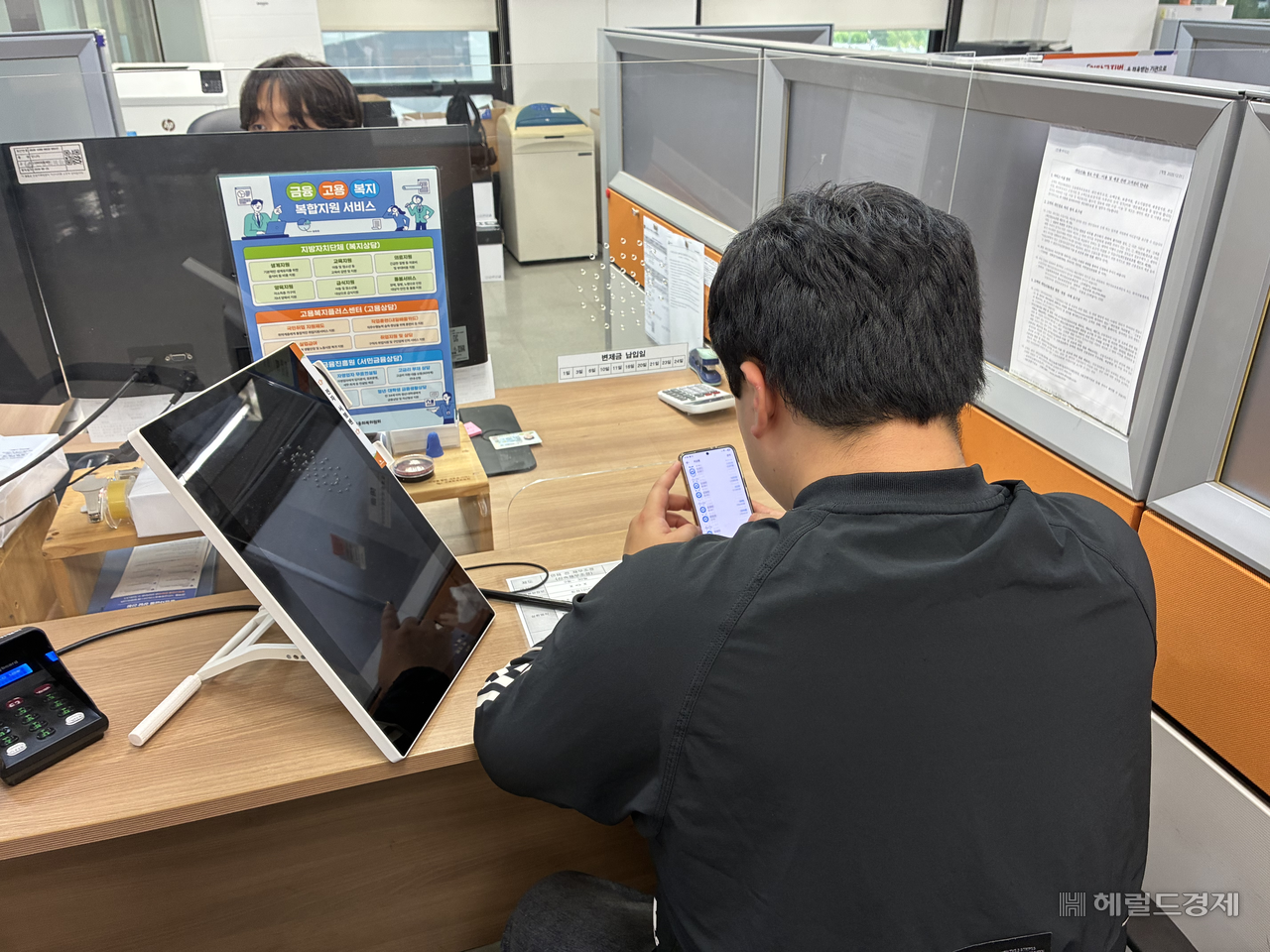
The CRC has been running a full one-stop support service dedicated to illegal private lending victims since March. When a victim files a report with the CRC, a dedicated counselor organizes the evidence, issues an initial warning to halt illegal collection, and then transfers the case to the Financial Supervisory Service.
From there, the FSS processes the complaint, police conduct an investigation, and the Korea Legal Aid Corporation provides a debt-defense representative and litigation support. The CRC separately connects victims with debt restructuring, employment assistance and welfare services.
Systematically organizing the materials victims bring in is also a core part of the counselor's job. Because a single victim may face multiple creditors, or several lenders may share one borrowed bank account, it is often difficult for victims to match chat records with transaction histories on their own. The CRC compiles deposit and withdrawal dates and amounts by creditor, calculates the interest rate, and passes the package to the FSS or police.
"We match the chat logs and bank transaction records one by one and put them into a spreadsheet," Choi said. "That work seems to be the most practically useful thing we do before a case moves to the FSS or the police."
B, a woman in her 50s who also received counseling that day, said the document-organizing process had been the most complicated and difficult part for her. "Here they sorted everything out for me, which was a relief," she said. "I feel much more at ease after the consultation."
In some cases, a CRC warning alone is enough to stop illegal collection. Choi said that in about 10 percent of all cases, creditors back off after being told their conduct is illegal and informed of the consequences, saying they will no longer seek repayment. "There are also cases where the creditor simply cuts off contact after the warning," she added. She noted that many victims are anxious about how the CRC describes them to the creditor, so counselors show victims the actual text of the warning letter before it is sent.
Choi has also accompanied severely distressed victims to police stations in person. "There have been two occasions where I took a taxi with a victim who was shaking too badly to go to the police station alone," she said. "If someone struggles to write a complaint, I help them with the form, and if they are too anxious to wait for a detective to be assigned, I contact the police to help make the connection."
She said it is deeply disheartening to see the risks people take to borrow amounts ranging from a few hundred thousand won to around 1 million won.
"How many people who borrow 1 million won or 500,000 won — handing over their photo, family registry and colleagues' contact information — are actually trying to exploit the law?" Choi said. "Most of them come to us in desperate, urgent situations."
4,064 of 5,621 reported claims receive initial action — 'CRC needs power to refer cases directly to police'
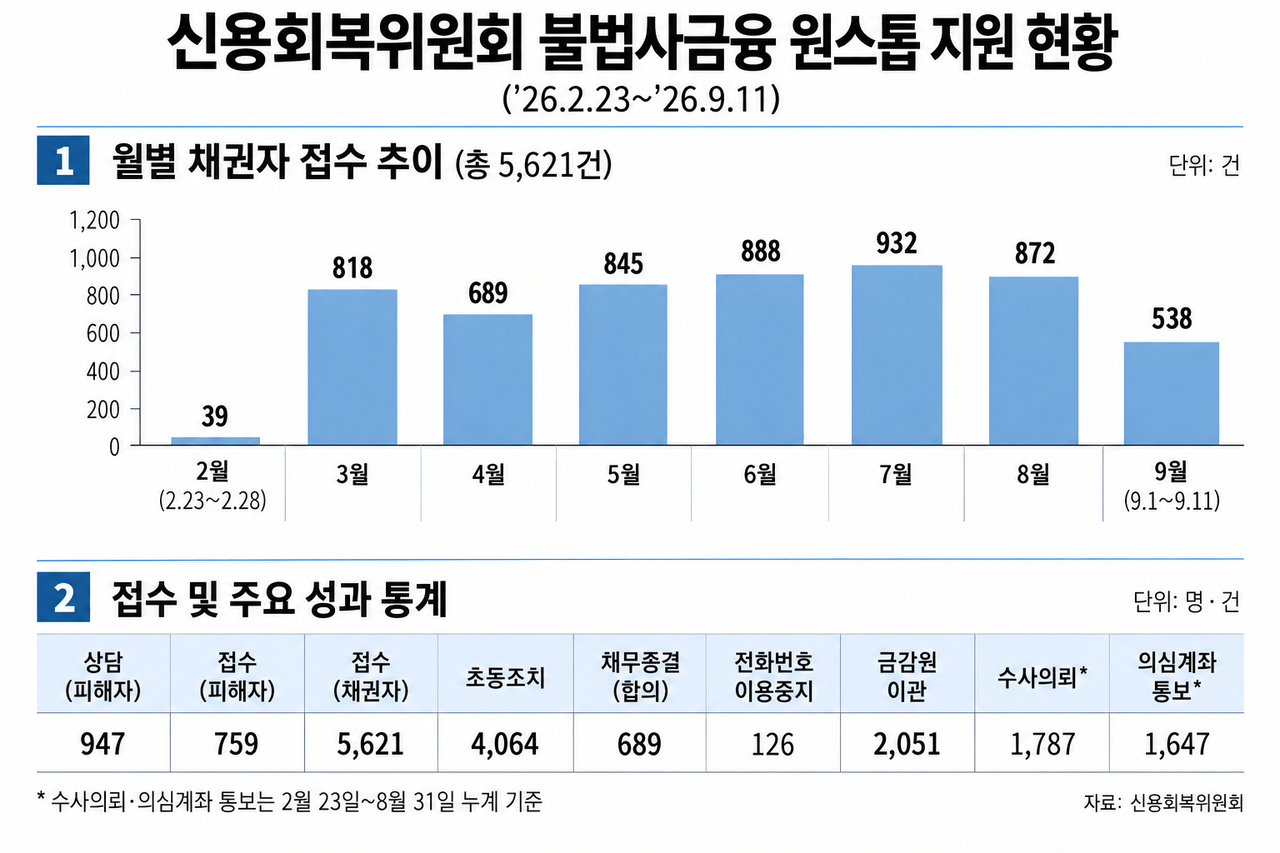
Use of the one-stop support system has grown since it launched. According to the CRC, from March through Sept. 11, 759 victims reported nearly 6,000 illegal private lending claims.
"Many people hesitate to seek counseling out of fear of retaliation from collectors," Choi said. "Please don't try to handle it alone — find the courage to come to the CRC."
Reports are translating into concrete protective action. Of the 5,621 creditor cases filed between Feb. 23 and Sept. 11, the CRC took initial action on 4,064. Debt settlement agreements were reached in 689 cases, and phone numbers used for illegal collection were suspended in 126 cases. An additional 2,051 cases requiring further action were transferred to the FSS. Police investigation referrals totaled 1,787 through the end of last month.
There are also calls from those working in the field for the CRC — which is the first to meet victims — to be given the authority to refer cases directly to police. Under the current structure, the CRC passes case details to the FSS, which then makes the referral to police.
"Depending on the case, it can take time before a referral to police is made," a CRC official said. "There is a need to revise the procedure so the CRC can refer cases directly to police."
Concerns have also been raised about the need to protect the CRC's SNS accounts used for counseling. When the CRC sends warning messages to illegal lenders via KakaoTalk or Line, lenders have been reporting those accounts, causing the counseling accounts to be suspended. "We need a separate safeguard to prevent the accounts used for initial victim protection from being blocked," a CRC official said.
There are also calls for stronger crackdowns on so-called "solution companies" that charge fees to handle illegal debt collection on victims' behalf. "There is a growing number of cases where unlicensed, illegal operators take money, promise to resolve the situation, and then either fail to do so or disappear," a CRC official said. "Intensive oversight and enforcement are needed to prevent victims from suffering further harm."
Victims of illegal private lending can report to the Financial Supervisory Service (☎1332) for assistance. Those struggling with excessive debt can seek help from the Korea Inclusive Finance Agency (☎1397) or the Credit Recovery Commission (☎1600-5500). Note: Loan contracts with an annual interest rate exceeding 60 percent are void in both principal and interest.
snsd@heraldcorp.com
won@heraldcorp.com