![Samgyeopsal. [Image generated with ChatGPT]](https://wimg.heraldcorp.com/news/cms/2026/09/17/news-p.v1.20260917.ce16a2b16ade45d889c140f53638db65_P1.png)
Samgyeopsal is notorious for the thick smoke it produces — but the problem may be far worse than most diners realize.
Place a slab of samgyeopsal on a scorching grill and it hisses to life, sending up a haze of smoke along with the savory aroma that makes mouths water.
Most people know that cooking smoke is not good for the body. What fewer realize is how far that harm extends.
Beyond personal health, the smoke billowing off a grill turns out to have a significant impact on air quality itself.
![This photo is unrelated to the article. [Getty Images Bank]](https://wimg.heraldcorp.com/news/cms/2026/09/17/news-p.v1.20260722.37db04c3601a429ab274f046160707ae_P1.jpg)
The reason: the vast majority of smoke produced during cooking consists of ultrafine particulate matter. Researchers have also found that the chemical compounds in that smoke contribute to the formation of other air pollutants.
Some analyses suggest the contribution is comparable to that of vehicle exhaust — a finding that has prompted calls to treat cooking smoke as a major source of air pollution and to step up efforts to reduce it.
![Shoppers browse the aisles of a hypermarket in Seoul. [Yonhap]](https://wimg.heraldcorp.com/news/cms/2026/09/17/rcv.YNA.20260511.PYH2026051109130001301_P1.jpg)
According to a cooking-smoke management guidebook released last year by the Korea Environment Corporation, more than 95 percent of the smoke generated when grilling meat consists of ultrafine particles with a diameter of 2.5 micrometers or less — classified as PM2.5.
PM2.5 particles are so small that they can remain suspended in the air for extended periods and penetrate deep into the respiratory tract when inhaled, making them one of the most recognized air pollutants.
That means the smoke rising off a grill actively contributes to air pollution. Among the meats commonly grilled in Korea, samgyeopsal — a national staple — was found to generate particularly large amounts of smoke.
![Samgyeopsal. [Herald DB]](https://wimg.heraldcorp.com/news/cms/2026/09/17/news-p.v1.20250721.7955ffed22fc4ce0ab0eba53fb2a2a1e_P1.jpg)
Per kilogram of meat grilled, samgyeopsal produced an average of 0.34 grams of smoke. Beef sirloin came in at 0.32 grams, lamb ribs at 0.31 grams, and pork neck at 0.24 grams. Smoke generation peaked when the meat was flipped on the grill, and the amounts also varied depending on the type of grill and the intensity of the charcoal heat.
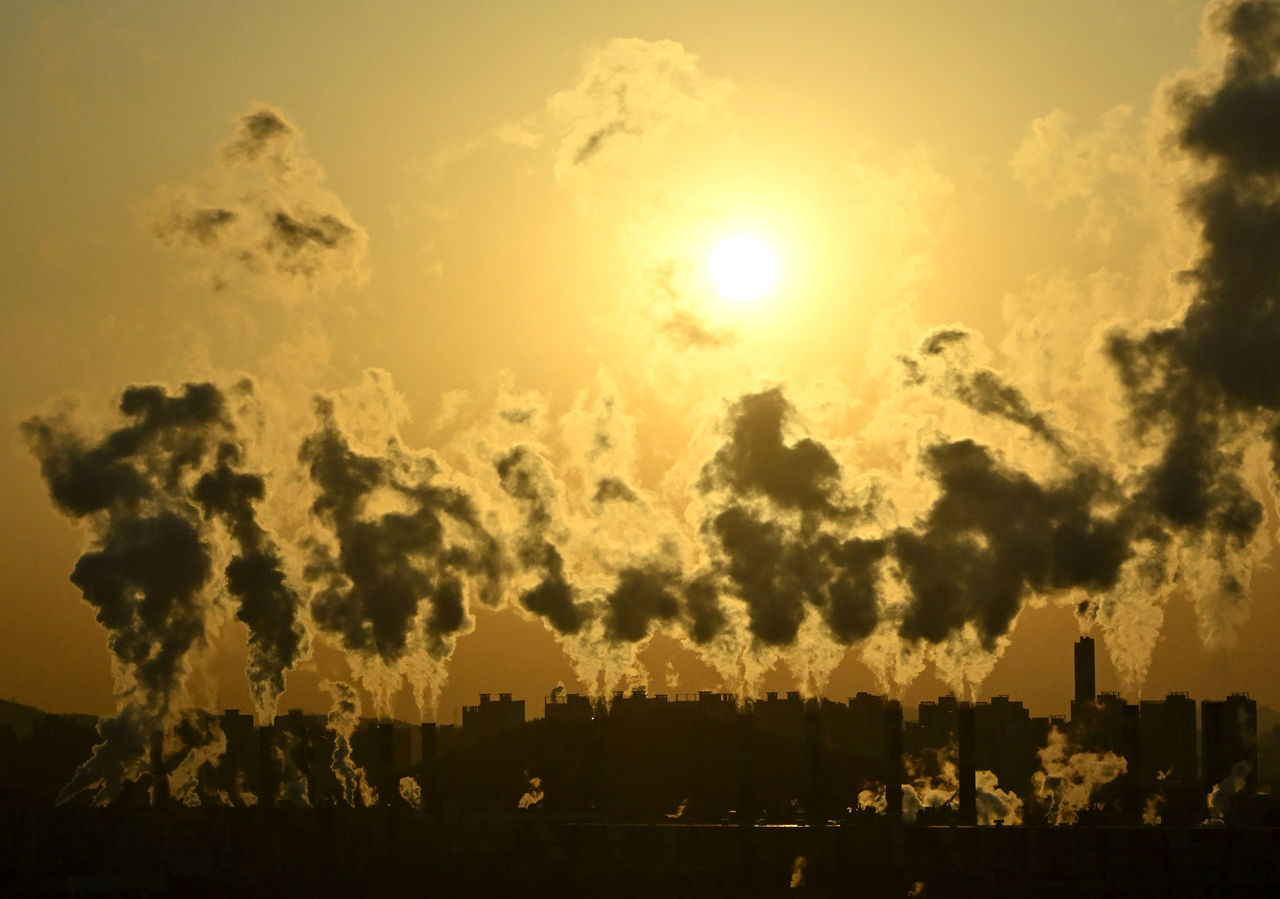
The problem does not stop at particulate matter. Cooking smoke from grilling contains a cocktail of chemical compounds. A paper published last year in the Journal of Korean Society for Atmospheric Environment, authored by researchers including those from the Chungnam Research Institute, found that open-flame grilling releases not only PM2.5 but also carbon monoxide, nitrogen oxides and volatile organic compounds.
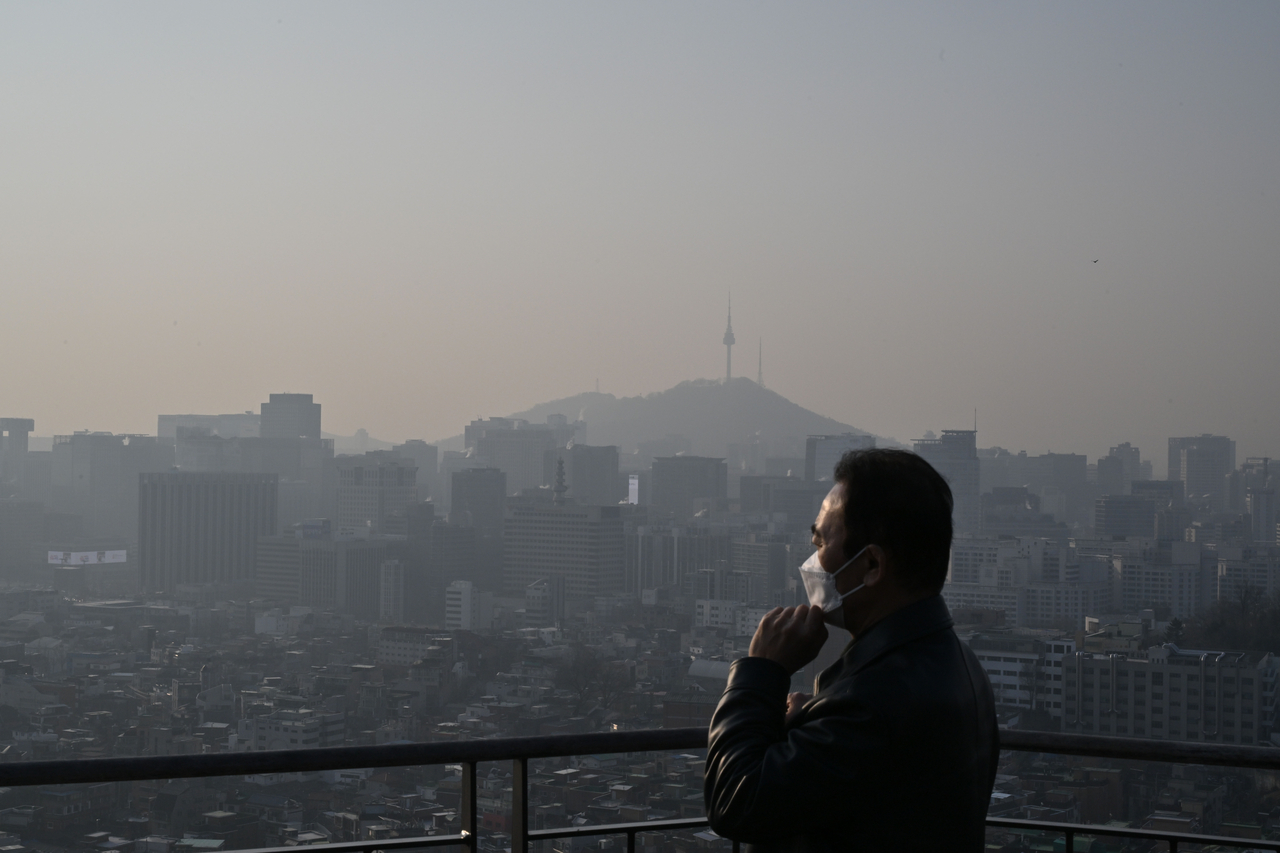
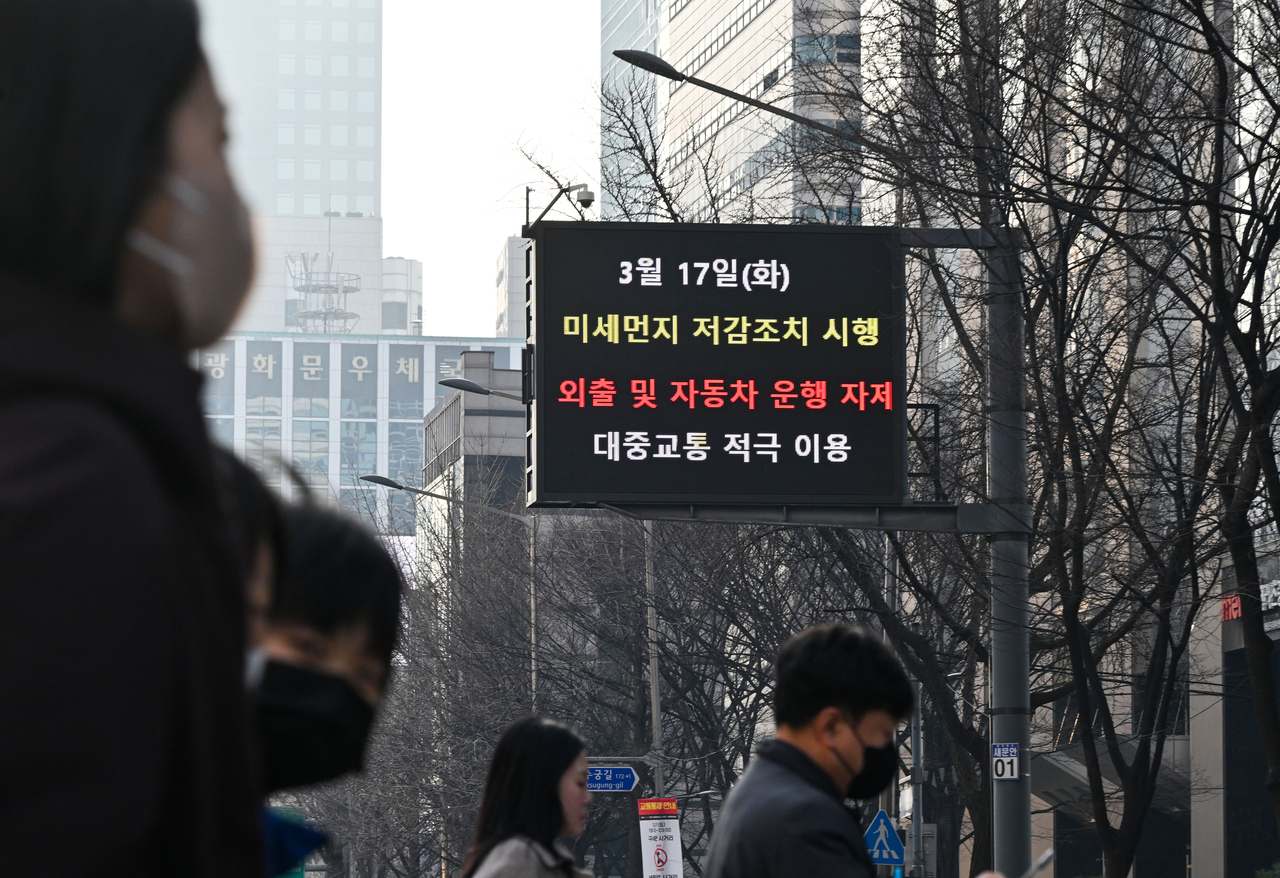
The scale of the impact is substantial. According to the California Air Resources Board, commercial cooking accounts for about 11 percent of all directly emitted PM2.5 in California. The agency notes the effect on air quality could be even greater in dense urban areas where restaurants are concentrated.
The concern goes further still. The invisible chemical compounds released alongside PM2.5 during cooking do not simply disperse — once outside, they react with other substances to generate an additional pollutant: ground-level ozone.
![This photo is unrelated to the article. [Getty Images Bank]](https://wimg.heraldcorp.com/news/cms/2026/09/17/news-p.v1.20260223.1cab77b745ec43f0b367eea6e4a79dae_P1.jpg)
Ozone is not inherently harmful. In the stratosphere, the ozone layer shields the Earth from the sun's damaging ultraviolet radiation. But ozone that forms near the ground, where people live and breathe, is a harmful air pollutant.
At elevated concentrations, ground-level ozone irritates the eyes and respiratory tract and can worsen conditions such as asthma.
The formation process is straightforward. Nitrogen oxides emitted by vehicles and factories combine with volatile organic compounds from sources such as cooking, and when sunlight hits the mixture, a chemical reaction produces ozone.
Volatile organic compounds are a broad category of organic chemicals that evaporate readily into the air. They are released not only from gasoline and paint but also from the high-heat cooking of meat and oils. Cooking smoke, in effect, combines with other pollutants and sunlight to generate new air pollutants.
The magnitude of that contribution is far from trivial. Research published in March last year by the National Oceanic and Atmospheric Administration analyzed the atmosphere over Los Angeles and found that cooking accounted for 26 percent of the ozone produced by volatile organic compounds from human activity.
The fossil fuel sector — covering road and off-road engines such as vehicles and construction equipment — accounted for 29 percent, just 3 percentage points more.
Urban air pollution has long been associated primarily with vehicle exhaust and factory emissions. But the findings confirm that cooking smoke from restaurants, a byproduct of everyday life, can have a comparably significant effect.
As tighter vehicle emissions regulations and the growing adoption of electric vehicles reduce output from conventional pollution sources, the importance of overlooked "hidden emitters" — such as restaurants and household products — is likely to grow.
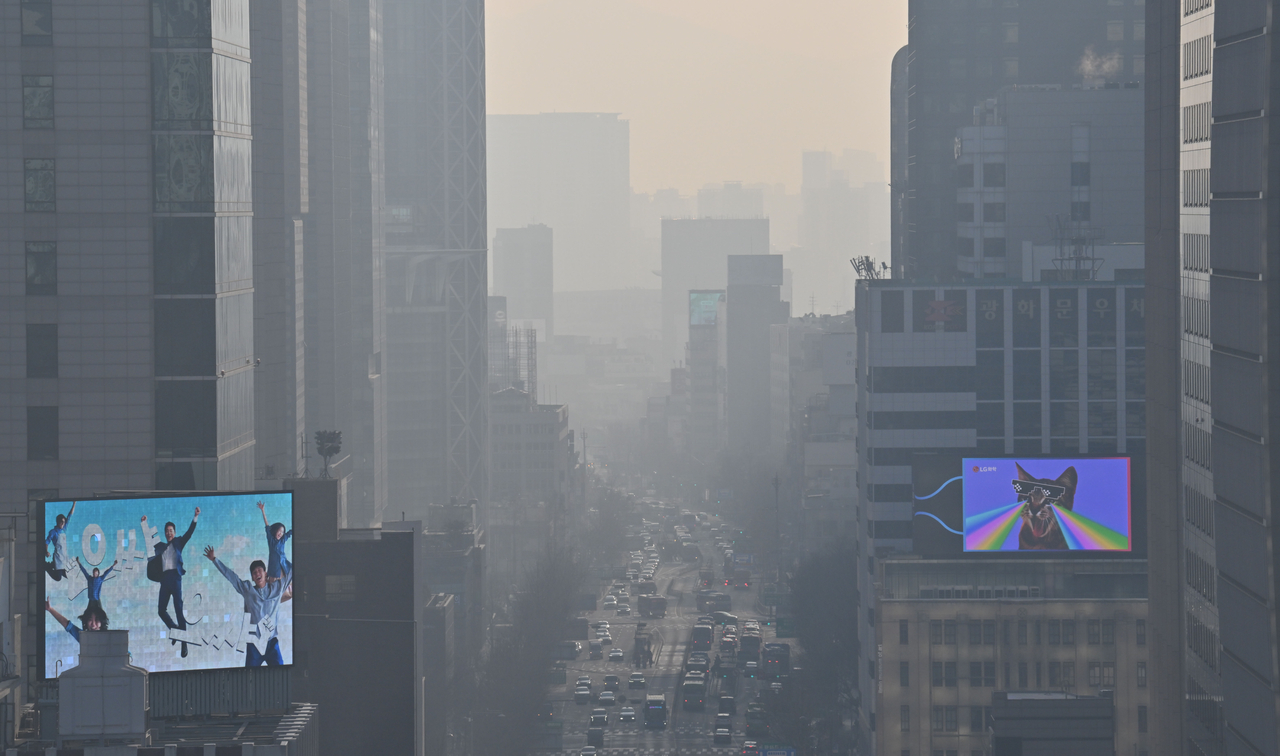
The challenge is that domestic management of cooking smoke remains at an early stage compared with regulations on vehicles and factories. Pollutants generated by cooking at restaurants, institutional cafeterias and food processing facilities in South Korea are still not adequately captured in official statistics.
Vehicles are required to carry particulate filters, and emissions from factory smokestacks are measured and regulated. Open-flame grilling restaurants, by contrast, have long been identified as a significant source of everyday air pollution, yet they are not managed as ordinary workplaces required to install pollution-control equipment — a gap that critics have called a regulatory blind spot.
Kim Jong-beom, a senior researcher at the Chungnam Research Institute, and colleagues recommended in a related report that authorities "consider classifying restaurants as air-pollutant-emitting workplaces based on their size and emission levels, and establish appropriate standards and management criteria."

woo@heraldcorp.com