5 groups launch private consultative body with delivery platforms
Demand cuts to brokerage fees, delivery charges; call for fairer terms
Move follows Fair Trade Commission's rejection of consent orders in June
Five small business associations said Thursday they plan to open direct negotiations with online food delivery platforms, bypassing regulatory and legislative channels to push for lower brokerage fees and delivery charges at a private bargaining table.
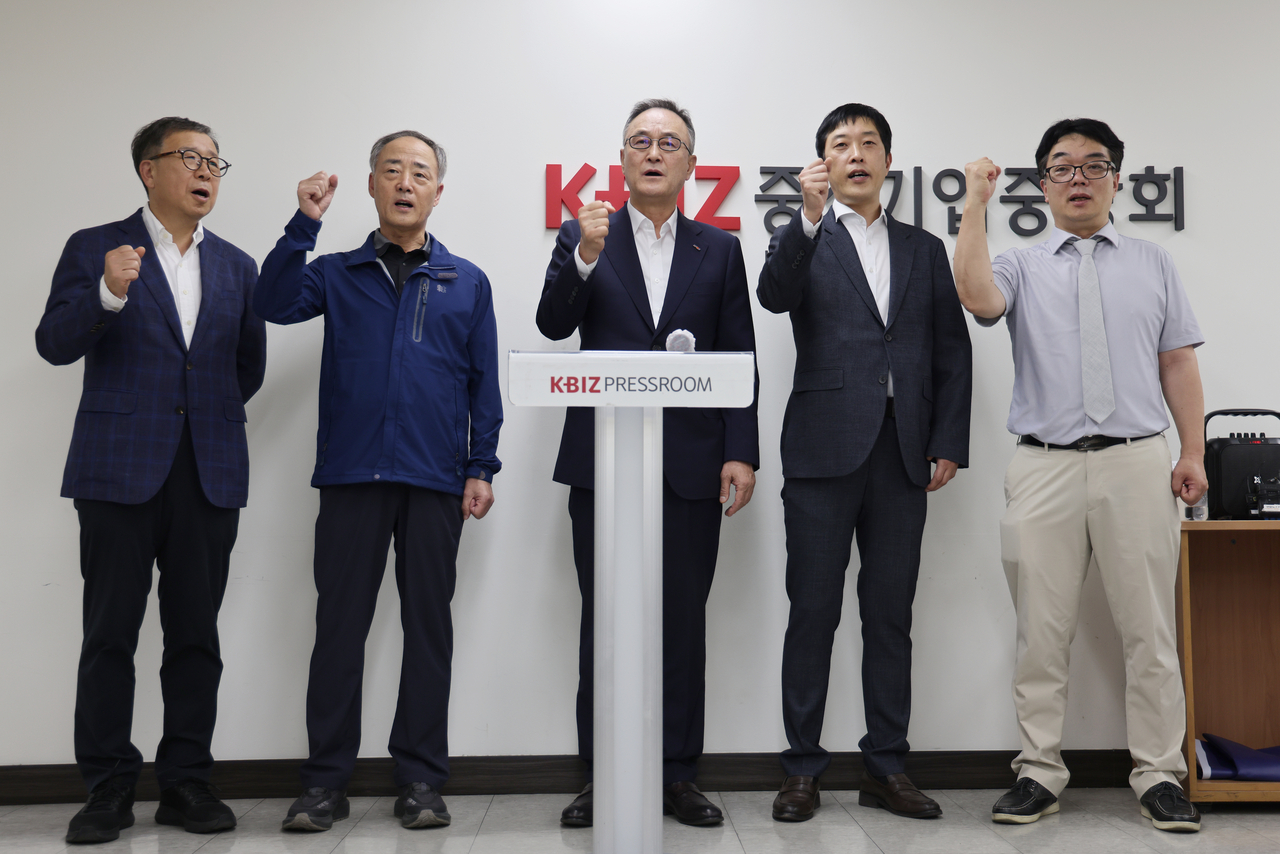
The Korea Federation of Micro Enterprises, the Korea Merchants Federation, the Korea Food Service Industry Association, the Korea Franchise Industry Association and the Korea Cafe Owners Cooperative announced the formation of a private consultative body at a press conference Thursday at the Korea Federation of SMEs in Yeouido, Seoul.
Through the body, the five groups plan to discuss fee structure reforms, improvements to what they described as unreasonable platform terms, and joint goodwill campaigns with major delivery platforms. They called on the platforms to come to the table with concrete proposals that include cuts to brokerage fees and delivery charges.
The groups' decision to pursue direct negotiations was prompted by the Korea Fair Trade Commission's rejection in June of consent order applications filed by Baemin and Coupang Eats. The Fair Trade Commission declined to accept the applications and opted instead to proceed with formal sanctions. At the time, Baemin proposed a goodwill support package worth around 300 billion won ($219 million), while Coupang Eats offered around 60 billion won.
A consent order is a regime that allows a company under investigation to propose its own remedies — such as compensation or market-conduct improvements — in exchange for the Fair Trade Commission closing the case without a formal ruling on whether the law was violated. The small business groups argued that a prolonged formal sanctions process would make it difficult to reduce costs for merchants in the near term.
In a joint statement, the five groups said that what small business owners on the ground urgently need is "not judicial punishment in the distant future, but cost savings starting tomorrow and support measures they can actually feel." They added that they intend to resolve issues related to delivery apps "through equal private cooperation and voluntary dialogue."
The groups also noted that fines collected through sanctions flow into the national treasury, meaning penalties alone would not translate into direct compensation for affected shop owners. They called on the government and the National Assembly to provide administrative and institutional support to ensure that any agreements reached through private negotiations can be applied in practice.
Unlike previous government-led consultative bodies, the new group places direct negotiations between small business associations and the platforms at the forefront. The government had earlier launched a similar body in 2024 as a follow-up to its comprehensive support measures for small businesses and self-employed workers, bringing together Baemin, Coupang Eats, Yogiyo and Ddaenggyeoyo alongside merchant associations.
Ko Jang-su, chairman of the Korea Cafe Owners Cooperative, said that even selling a single beverage or dessert leaves cafe owners with little profit once platform fees and delivery charges are deducted. He demanded cuts to brokerage fees and delivery charges, and called for an end to unfair practices including preferential treatment for the platforms' own services, so-called "flag planting" — the practice of paying to dominate search results in multiple delivery zones — and coercive advertising fees.
The five groups warned that if the consultative body fails to produce timely goodwill measures, they will pursue additional action, including legal remedies. "Platform companies must join the official dialogue table with concrete proposals for reasonable fee reforms and support for shop owners," they said.
hong@heraldcorp.com