Seoul education superintendent-approved school autonomous time subject
Covers classroom and commute hazards to disaster response
Students identify and assess risks themselves
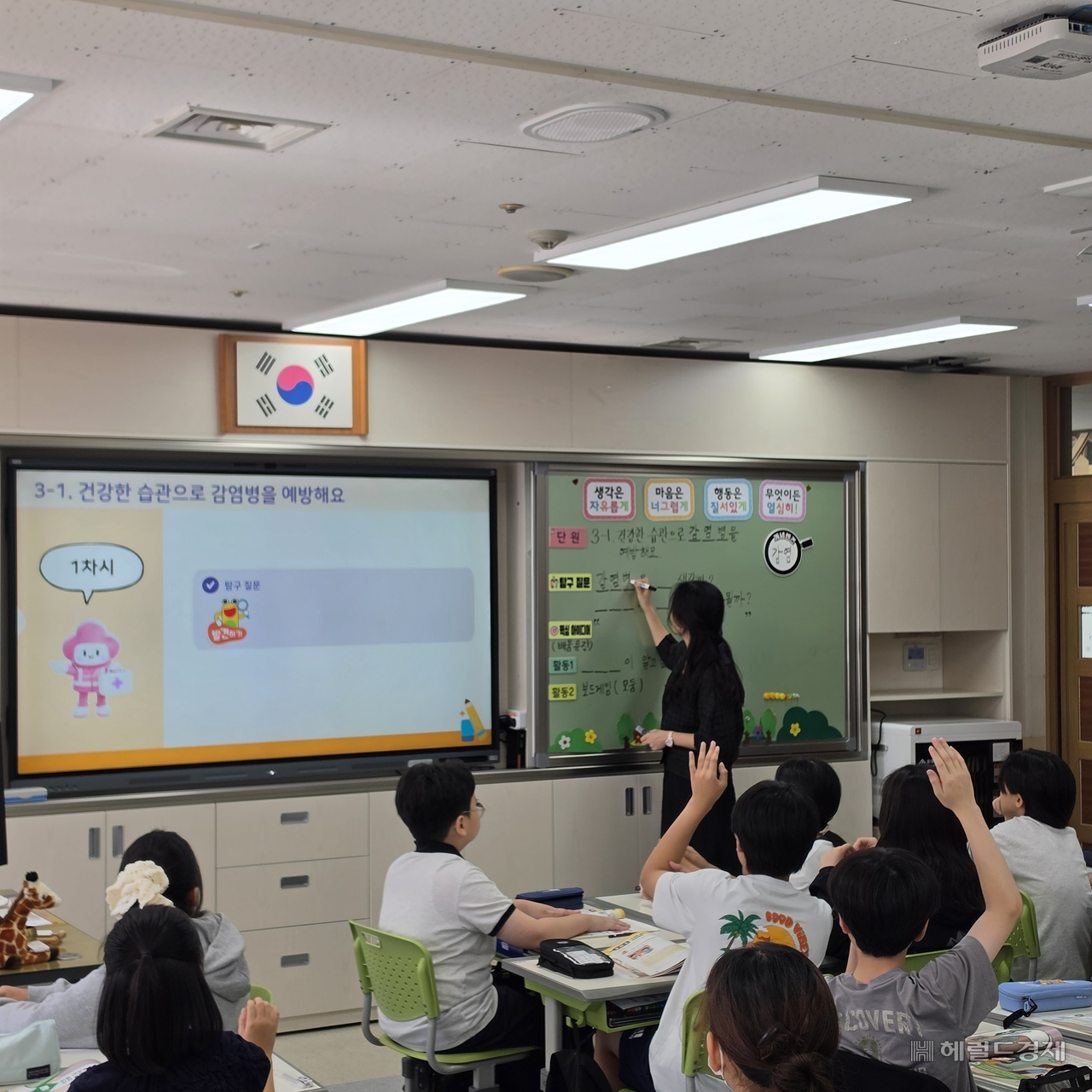
"Keeping healthy habits can prevent infectious diseases."
About 28 fifth-graders at Jamsin Elementary School in Songpa-gu, Seoul, opened their "Safety We Build Together" textbooks Wednesday morning and worked through the everyday habits needed to ward off infectious disease, one by one.
The lesson moved from how infectious diseases spread to prevention and treatment, and on to safety habits students can practice in daily life. Rather than simply memorizing safety rules, students connect the material to their own lives — identifying risks and deciding how to respond.
At the same time, fourth-graders were holding a safety class in the school's first-floor playground. After examining hazardous situations that can arise on a playground — including equipment collapses — students eagerly called out the safety rules they had come up with: "Don't climb on equipment carelessly" and "Check whether the equipment is safe before using it."
Seoul elementary schools are now offering safety education as a formal subject under the school autonomous time framework. Where safety instruction had previously been woven into existing subjects or extracurricular activities as needed, the new approach delivers it through a dedicated subject with grade-level achievement standards.
Jamsin Elementary School announced Wednesday that it is running "Safety We Build Together" as a school autonomous time subject for students in grades three through six in the 2026 school year. The school autonomous time system, introduced under the 2022 revised national curriculum, allows schools to design and operate their own subjects or activities tailored to local and student characteristics.
"Safety We Build Together" was developed by active elementary school teachers, reviewed by safety education specialists, and designated as an approved subject by the Seoul education superintendent. All four grade levels — three through six — have received approval, making it available as a formal subject in schools.
Traditional safety education was often split across cross-curricular themes, extracurricular activities, and relevant units within individual subjects. "Safety We Build Together," by contrast, is organized around three areas — space and safety, lifestyle and safety, and disaster and safety — with grade-specific achievement standards for each.
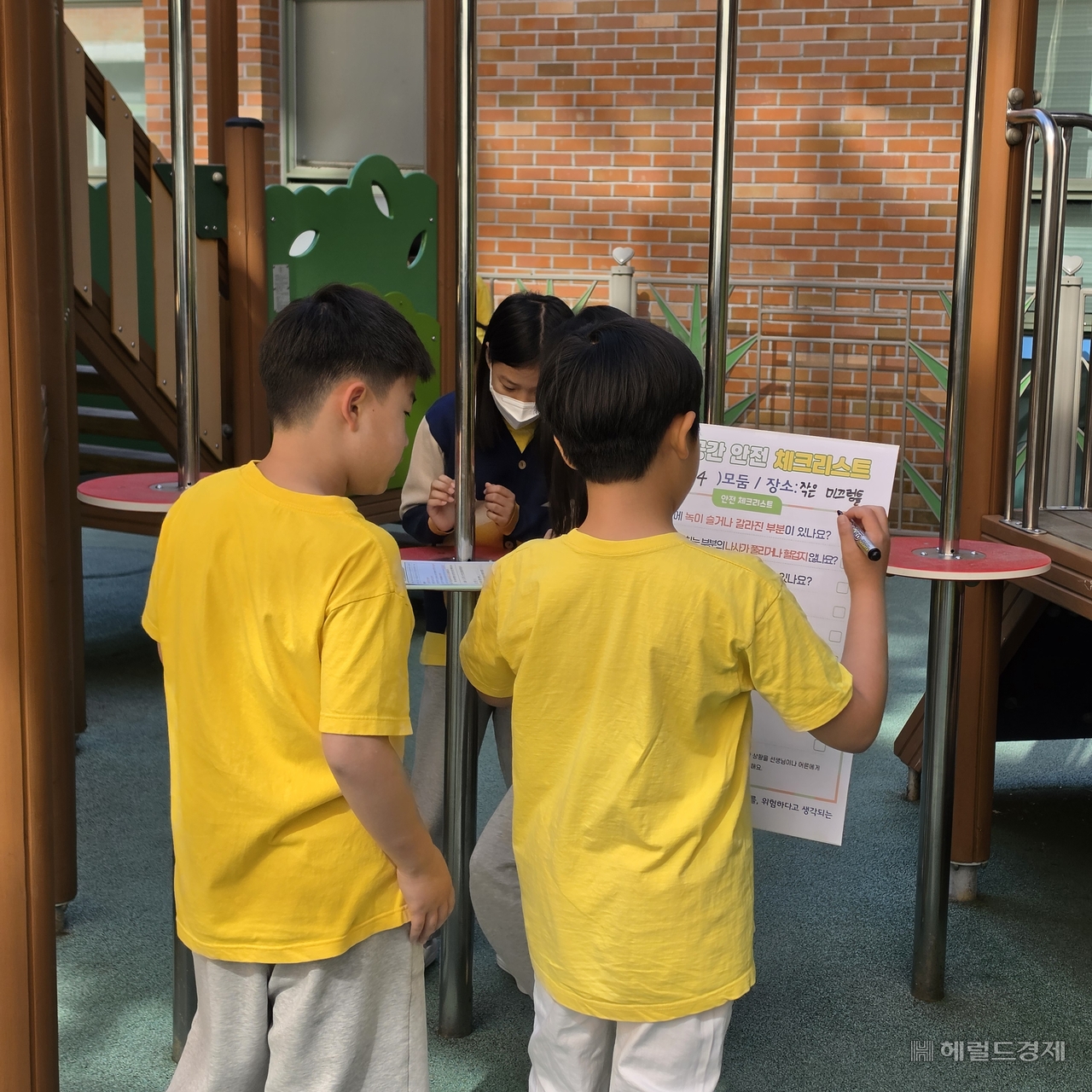
The curriculum moves away from rote memorization of safety rules, focusing instead on having students find, analyze and respond to hazards in their everyday surroundings. Drawing on the concept of risk education, it aims to build students' capacity to understand the nature of a risk and respond according to the situation, rather than treating all danger as something simply to be avoided. Students actively explore hazards at home, at school, on their commute and on the playground.
The content expands as students advance through the grades. Third-graders learn about hazards in classrooms and hallways, pedestrian and electrical and gas safety, and how to respond to heat waves, yellow dust and fires. Fourth-graders broaden their scope to cover cars and digital devices, school violence, and earthquakes, cold snaps and structural collapses.
Fifth-graders study safety at field-trip sites and sports facilities, on public transportation, and in relation to food safety, infectious diseases, heavy rain and typhoons. Sixth-graders go further still, covering personal mobility devices and bicycles, addiction and sexual violence prevention, and responses to social disasters including hazardous substances, floods and wildfires.
"Safety We Build Together" comes with a content framework, achievement standards and assessment guidelines for each grade level. As a Seoul education superintendent-approved subject, it is formally registered in the National Education Information System, and any school wishing to adopt it can apply to use it as a school autonomous time subject.
Bae Hee-suk, principal of Jamsin Elementary School, said safety is only meaningful when the body reacts instinctively in a dangerous moment, not when knowledge alone is acquired. "I hope the use of this subject will expand so that children can build the strength to protect themselves and grow up healthy in a safer environment," she said.
brunch@heraldcorp.com