
Nominee apologizes for lack of explanation on real estate tax overhaul
Also expresses regret over single-stock leveraged ETF controversy
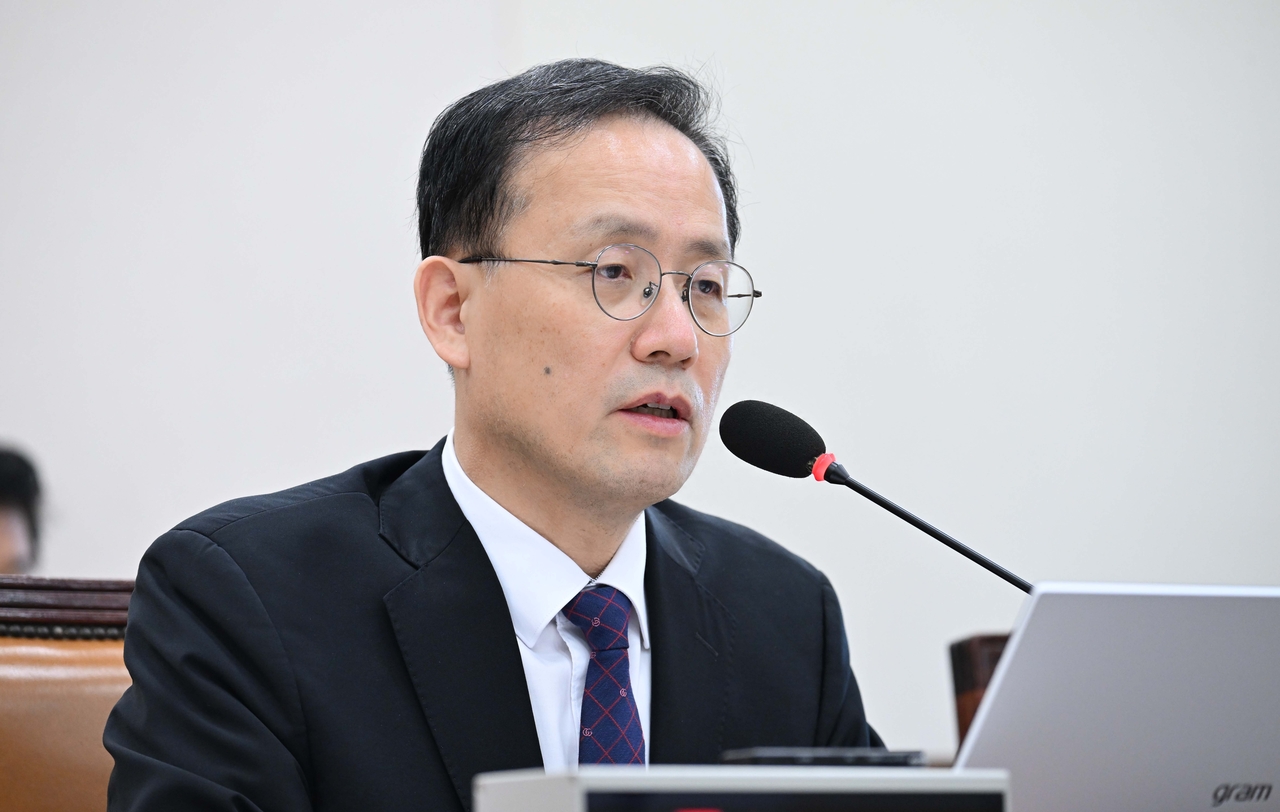
Lee Hyung-il, nominee for deputy prime minister and minister of economy and finance, said Tuesday he plans to apply the scope of "unavoidable circumstances" — which allow non-residency periods to count toward residency requirements — flexibly as needed. He also bowed his head in apology, acknowledging that the government had fallen short in explaining and deliberating on its recently controversial real estate tax reform proposal.
Speaking at a confirmation hearing before the National Assembly's Finance and Economy Planning Committee on Tuesday, Lee said of the scope of the "unavoidable circumstances" exemption: "We plan to hold in-depth discussions in the National Assembly, review specific cases, and apply the provision flexibly as needed."
Revising the scope of "unavoidable circumstances" requires only an enforcement decree amendment, not a National Assembly vote, but Lee's remarks were interpreted as a signal that the government intends to gather broad legislative input and reflect it in the final rules.
Last month, the government announced its tax law revision package and said it would recognize non-residency periods as counting toward residency requirements when caused by unavoidable circumstances, listing examples such as schooling, job changes or transfers, illness, school transfers, overseas stays and caring for elderly parents. Critics subsequently pointed out that a wider range of situations beyond those listed examples should also be recognized.
Lee explained the intent behind the real estate tax overhaul, saying it was built around three goals: "establishing a housing market centered on actual residence, achieving fair and equitable taxation, and creating a sustainable tax system."
Asked whether the government's intent appeared to be reaching the public and markets effectively, he said, "I think we may have fallen a bit short."
Responding to a remark by Democratic Party of Korea lawmaker Jeong Tae-ho, who said he felt disappointed by the tax-related discussions, Lee said, "We went through a process of gathering extensive input, including holding many forums ahead of the legislative notice period. However, I feel deeply sorry that we were not able to deliberate more thoroughly."
On the projected tax revenue increase from the reform package, Lee said, "My understanding is that it amounts to about 3.4 trillion won ($2.53 billion) over five years."
On the controversy surrounding single-stock leveraged ETFs, Lee said the products had generated "broader volatility than intended, becoming entangled with the semiconductor market," and added, "I am deeply sorry to the public."
th5@heraldcorp.com




