First overhaul of unemployment benefit payment structure in 22 years leaves total payout unchanged
Monthly SME wage of 2.2 million won vs. 1.9 million won in benefits: 'About the same after expenses'
Workers quitting SMEs, taking short-term contracts to qualify — small firms fear becoming a 'stepping stone'
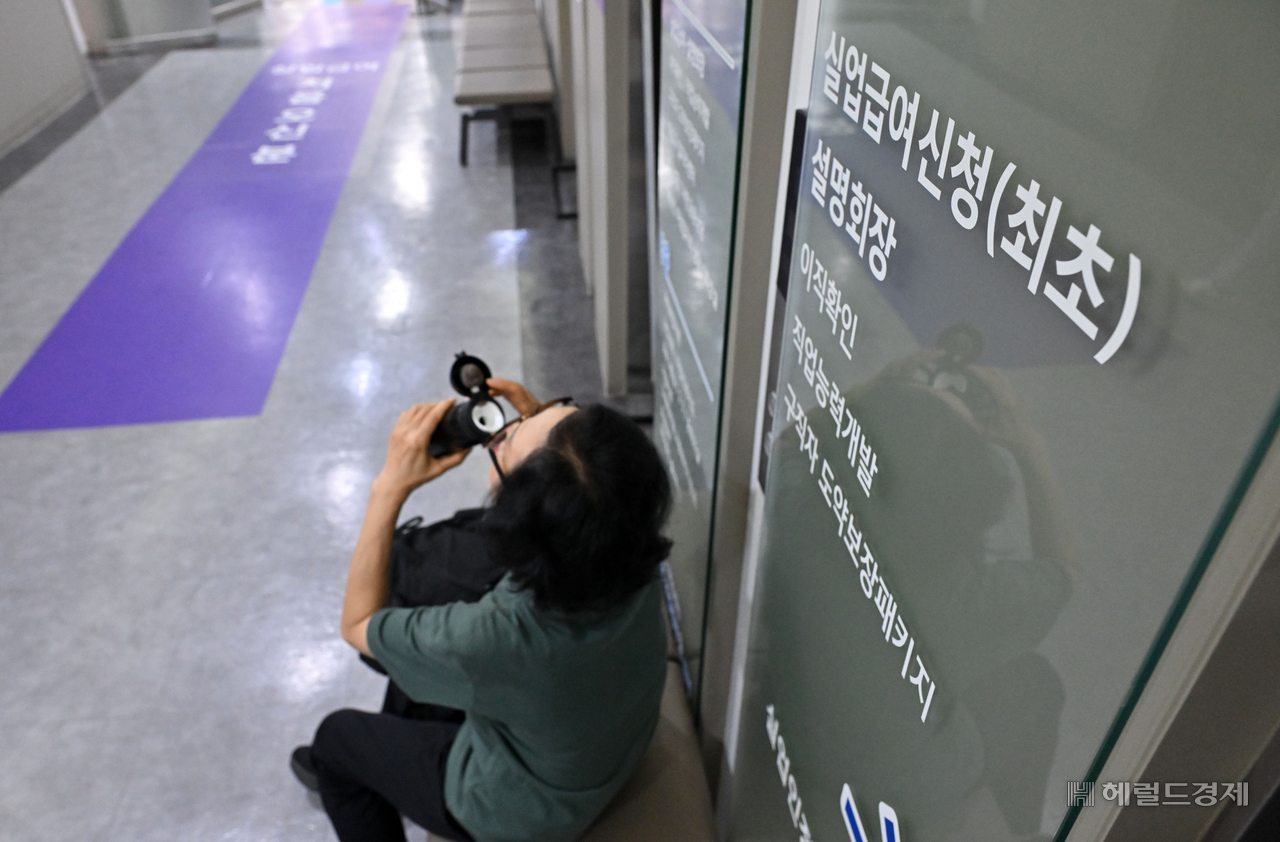
"Why would anyone work at a small company when unemployment benefits are this sweet?"
Kim Min-ji, 29, voluntarily quit her job at a 10-person firm last year after about two years there. Voluntary resignations normally disqualify a person from receiving unemployment benefits — but Kim is currently collecting 1.9 million won ($1,420) a month while she takes a break. She became eligible after working a two-month contract at a movie theater this year and leaving when the contract expired.
A workaround known as "indirect claiming" — quitting a small or medium-sized enterprise voluntarily, then taking a short-term contract job to meet eligibility requirements before collecting unemployment benefits — is circulating among job seekers, deepening fears of a talent drain from the SME sector. To qualify for unemployment benefits, a worker must have been insured for at least 180 days in the 18 months before their most recent job change, and their final departure must have been involuntary. Insured periods across multiple employers are counted together.
Kim's case fits that pattern exactly: she accumulated the 180-day requirement at her previous SME, then became eligible when her movie theater contract ended. Park, 34, also quit an SME voluntarily and has been working a three-month contract at a startup since July. "Once the contract is up, I plan to leave, collect unemployment benefits while I look for a new job, and maybe travel abroad," Park said. Both said the small gap between their SME wages and the benefit amount made it easy to plan their exit.
The government has moved to address the so-called "syrup benefits" controversy. The Ministry of Employment and Labor on Sept. 1 unveiled a plan to overhaul the employment insurance system — the first revision to the unemployment benefit payment structure in 22 years. The central change is a reduction in the monthly payout. Under the current system, benefits are paid for seven days a week, including unpaid rest days; the revised system will pay for six days a week, excluding unpaid rest days. As a result, the monthly floor, currently around 1.98 million won, is expected to fall to about 1.76 million won next year, while the ceiling will drop from 2.04 million won to about 1.81 million won.
Critics note that the total payout remains unchanged, raising questions about the reform's effectiveness. While cutting the monthly amount, the government has decided to keep the total number of benefit days — between 120 and 270 days depending on age and length of insurance enrollment — and the total sum received intact. Because weekly payment days shrink from seven to six, recipients will simply receive the same overall amount spread over a longer period.
In practice, SME wages are not far above unemployment benefits. According to the Korea Enterprises Federation, the average monthly starting salary at firms with fewer than 300 employees was about 2.7 million won in 2023, and about 2.28 million won at firms with fewer than five employees. Companies paying the minimum wage this year offer a monthly salary of about 2.2 million won. The monthly unemployment benefit floor this year stands at 1.98 million won on a 30-day basis, leaving a gap of only about 300,000 won.
"At the SME I worked at, my take-home pay was around 2.2 million won, but unemployment benefits came in at about 1.78 million won tax-free," Park said. "When you factor in taxes, it felt like pretty much the same thing. There was no sense of growth at a small company, so I figured it was better to collect benefits, build up my resume and prepare to move to a bigger firm."
One benefit recipient who lost her job when her SME shut down said the payments felt almost indistinguishable from a paycheck. "Even while I was sitting at home, 1.7 million won — close to a full salary — landed in my account on schedule," she said. "I was almost disappointed I could only receive it for five months. Now I'm at another small company, and I sometimes catch myself hoping it goes under too so I can collect benefits one more time."
The poor benefits and heavy workloads typical of small firms are also pushing workers to prefer unemployment benefits over staying employed. Another recipient said her employer had provided no support for vehicle upkeep, commuting costs or meals. "Once you subtract what you spend just to go to work, there wasn't much difference between the salary and the benefits," she said. "The pay wasn't high, but one person had to handle multiple roles, so the stress was intense. Even getting a bit less money, I was better off on unemployment than at that company."
For SMEs already struggling to find workers, the trend is unwelcome. A report published last year by the Korea Institute for Small and Medium-sized Enterprises found that 87.5 percent of SMEs have difficulty hiring the staff they need. One SME owner said the most junior employee in one department had turned over three times since last year. "A lot of young workers quit easily, whether to switch jobs or just take a break," the owner said. "Small businesses hire a lot of contract workers, so it seems easy for people to work briefly at one of those places after quitting and then collect unemployment benefits."
Small firms that hire short-term contract workers say they also struggle to extend contracts. An official in the small and venture business sector said that even when an employer wants to renew a contract with a well-matched worker, many young employees quietly signal they intend to leave when the term ends. "It seems like most of them join from the outset with unemployment benefits or a job search in mind," the official said.
snsd@heraldcorp.com
hong@heraldcorp.com