
National Assembly Research Service analyzes 10 years of Nakdong River drought data, proposes water management reforms
Unmun Dam at 'Serious,' Miryang Dam at 'Alert' -- report calls for managing repeatedly vulnerable mid- and small-sized basins, linking water sources
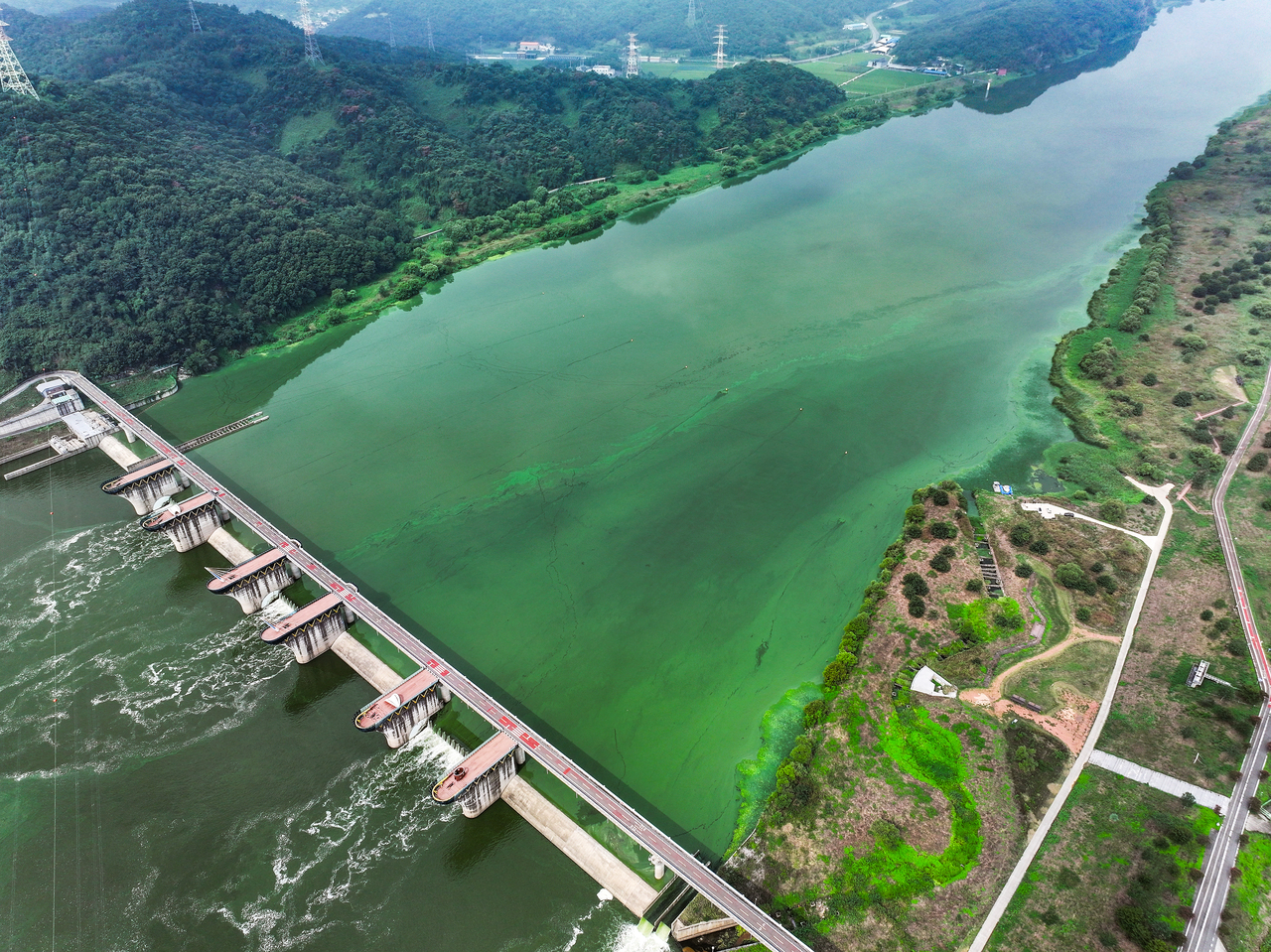
Drought severity varies by dam location and water source even within the same river basin, a new report says. The report calls for South Korea's water management system to be strengthened to track vulnerability and risk changes by region and by water source.
The National Assembly Research Service released a report titled "Recurring Drought in the Nakdong River: How Should We Respond? Watershed Water Management Reform Tasks in the Era of Climate Crisis," which analyzed precipitation and inflow patterns in the Nakdong River basin over the past decade.
According to the report, droughts have centered on major dams along the Nakdong River. Unmun Dam in 2017, Miryang Dam in 2022, and Andong's Imha Dam and Hapcheon Dam, among others, in 2023 were all placed under drought management.
A notable feature this year is that droughts have occurred sporadically across multiple water sources, with sharp variation in timing and location. Risk levels differ even within the same Nakdong River basin.
Unmun Dam was upgraded from the "Caution" level in March to "Serious" on July 15, while Yeongcheon Dam and Andong's Imha Dam remained at "Caution." Miryang Dam entered the "Alert" level on Aug. 2.
The timing and severity of droughts vary from year to year depending on the seasonal and regional distribution of rainfall, and their recurring nature makes the risk considerable.
As of July 8, rainfall in the basin of Andong's Imha Dam, within the same region, stood at 73 percent of the average for previous years, while Unmun Dam recorded 64 percent and Miryang Dam only 52 percent.
Unmun Dam's cumulative rainfall stood at 64 percent of the average for previous years, but rainfall over the 23 days following the start of the flood season was just 8 percent of the average. Miryang Dam recorded only 12 percent over the same period.
"Even when water supply and demand across an entire region are stable, that does not guarantee stability for individual areas and water sources within that region," said Kim Kyung-min, a legislative research officer at the National Assembly Research Service and the report's author. "This should be seen as a phenomenon in which shortfalls in inflow accumulate depending on the timing and spatial distribution of rainfall, leading to recurring water supply risks."
In response, the report proposed that mid- and small-sized basins, the vulnerability of individual water sources, and changes in risk all need to be managed together.
This is particularly true when a specific region relies heavily on a small number of dams or water intake sources. In such cases, a decline in rainfall and inflow at that source can directly translate into a water supply risk for the region. The report said such risk-aggravating factors should be actively incorporated into risk management. These include seasonal rainfall variation, consecutive dry spells, the ratio of supply to inflow, the rate of decline in reservoir storage, and the availability of alternative water sources.
"There is a need to closely identify the vulnerabilities of mid- and small-sized basins and individual water sources, and to combine climate-variability-informed risk assessments, linkages between water sources, and constant risk management to build resilience against recurring drought," Kim said.
thlee@heraldcorp.com



