Held Thursday at Gwangju Chamber of Commerce and Industry
About 500 industry, academic and research officials from southwest Korea attend
Chairman Jung Won-ju: "Honam expected to grow as new hub"
Mayor Min Hyung-bae: "Administration will not lag behind investment"
Ministry stresses speed, stronghold, spearhead and full support strategy
Samsung Electronics and SK hynix have decided to invest 800 trillion won ($598 billion) to build a new semiconductor cluster in southwest Korea. As a semiconductor supply shortage deepens, the two companies aim to ease it by establishing a production base in the region. With the AI revolution now a reality, the southwest is poised to become a focal point of new growth engines.
The Semiconductor and AI Transformation International Forum discussed concrete plans to ensure the success of the southwestern region's semiconductor investment project. Participants stressed the need for swift infrastructure investment — not only stable electricity and water supply but also urgent training of skilled workers for the field. With speed seen as critical to achieving the goal of starting mass production in the first half of 2030, cooperation between the public and private sectors is more important than ever.
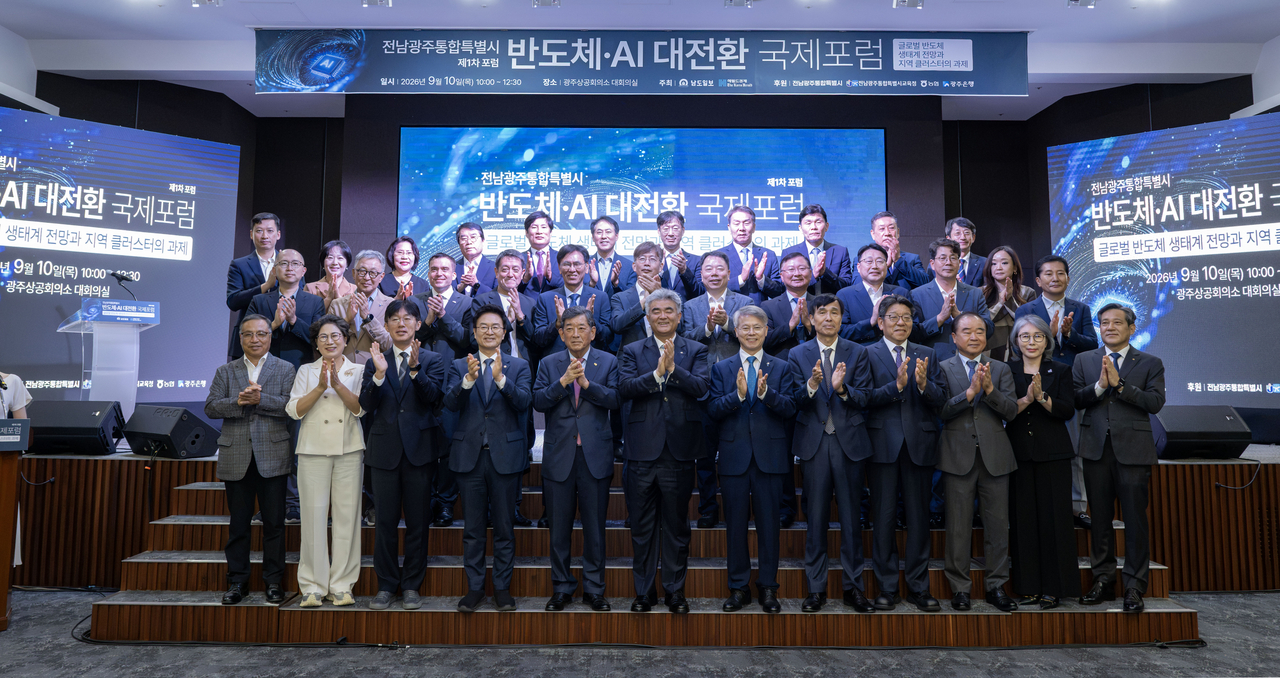
The first Semiconductor and AI Transformation International Forum for the integrated special city of South Jeolla and Gwangju was held in the main conference room of the Gwangju Chamber of Commerce and Industry on Thursday, bringing together officials from the semiconductor industry, academia and research institutes. About 500 regional experts filled the venue.
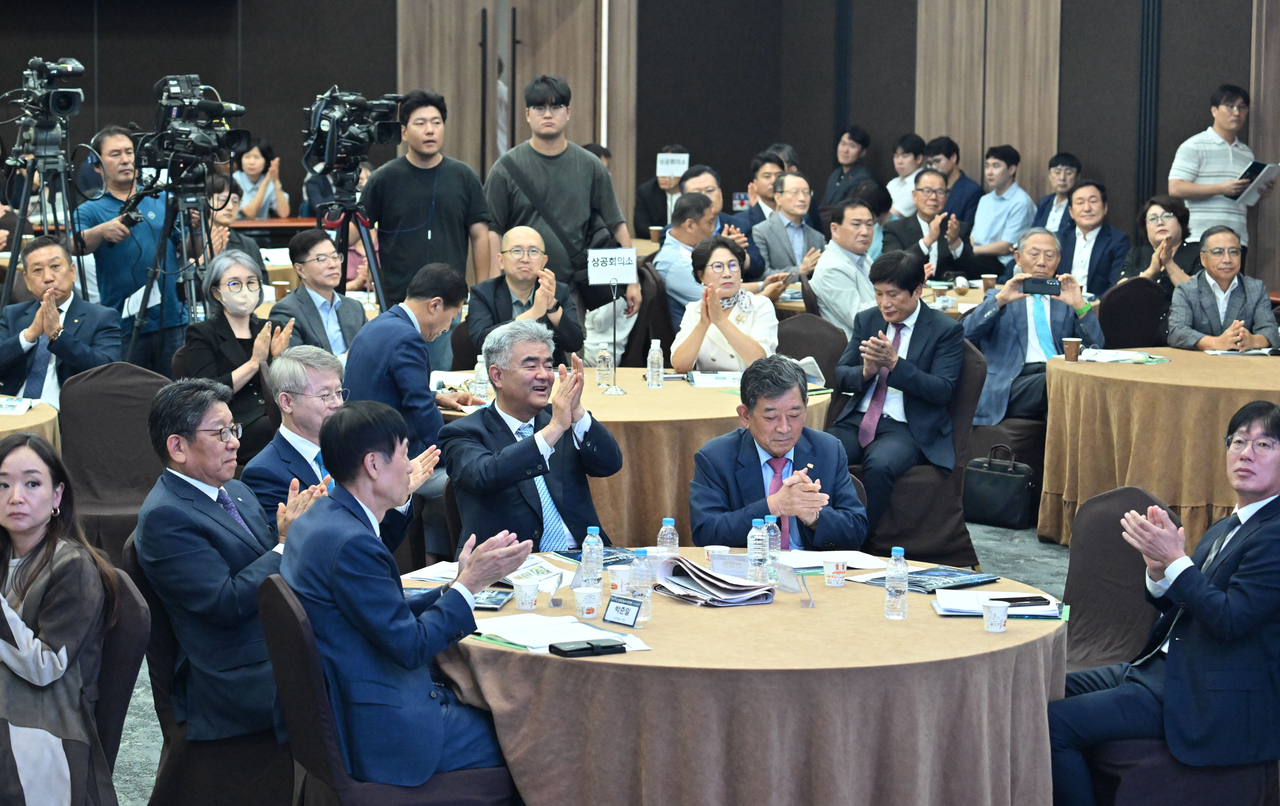
The forum, themed "Global Semiconductor Ecosystem Outlook and Challenges for Regional Clusters," was hosted by The Herald Business, The Korea Herald and Namdo Ilbo. As the first forum held since the announcement of the large-scale southwestern semiconductor investment plan in late June, both speakers and the audience showed high expectations for the presentations.
In particular, forecasts suggested that the semiconductor cluster development in the southwest could mark a major turning point for regional marginalization. That marginalization stemmed from the concentration of industrial development in the greater Seoul area during the country's industrialization. Analysts said the southwestern investment plan could become a new axis for balanced national development.
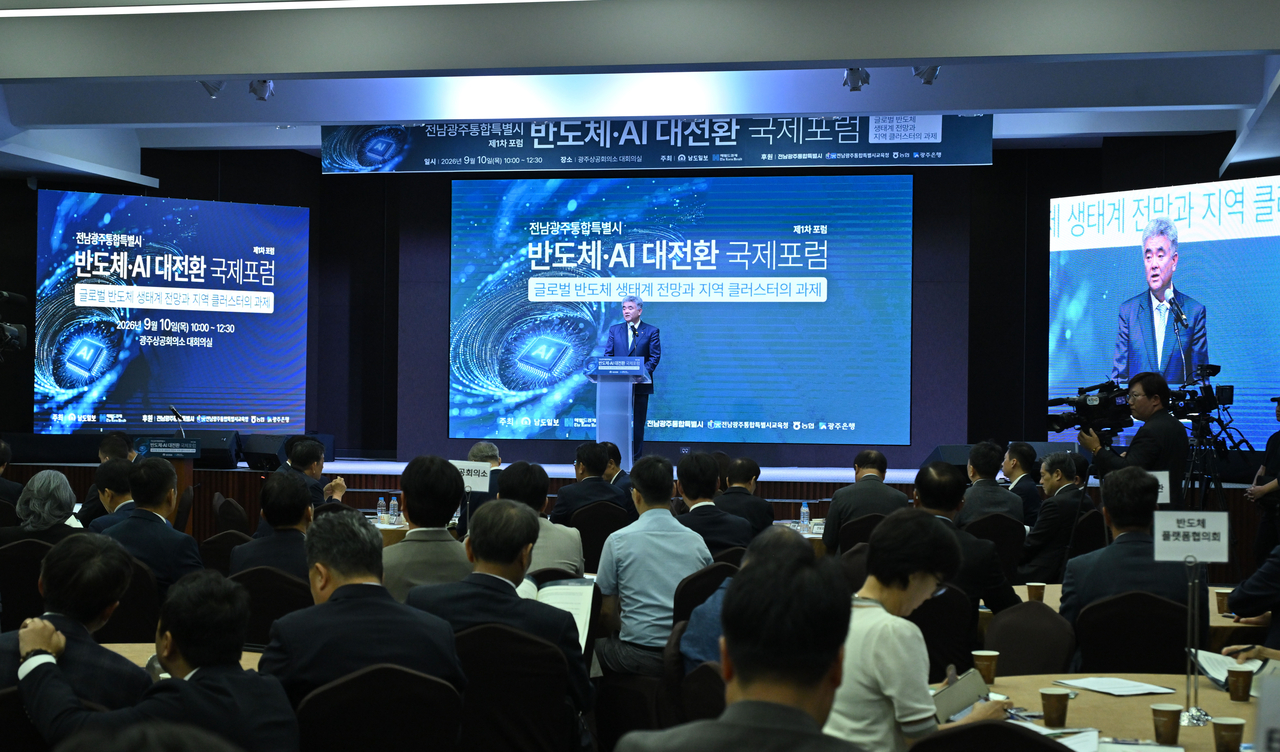
In his opening remarks, Jung Won-ju, chairman of Herald, Jungheung Group and Daewoo Engineering, said, "If Honam's AI capabilities and energy infrastructure are combined with advanced industries such as semiconductors, the region can grow into another pillar supporting South Korea's future industries." He added, "Honam has long struggled with structural challenges — the outflow of young people, population decline, a crisis among regional universities and a weak industrial base — but the success of the Honam mega project can help overcome these problems."
Jung also announced plans to donate 10 billion won to support the success of the Honam mega project, drawing applause from the audience. "Jungheung Group will donate 10 billion won for the success of the Honam mega project and South Korea's semiconductor-AI cluster," Jung said. "We hope this initial contribution will lead to greater participation from companies, universities and institutions, becoming a massive stream that shapes Honam's future."
Han Sang-won, chairman of the Gwangju Chamber of Commerce and Industry, said in his welcoming address, "As discussions between the government and the region on building a semiconductor cluster in the Honam region gain momentum, a golden opportunity is opening for the integrated special city of South Jeolla and Gwangju to become a key hub of the nation's advanced semiconductor industry." He added, "What is needed now is stable electricity and water supply, swift administrative approval, transportation and logistics infrastructure and, above all, the training of skilled workers needed on-site."
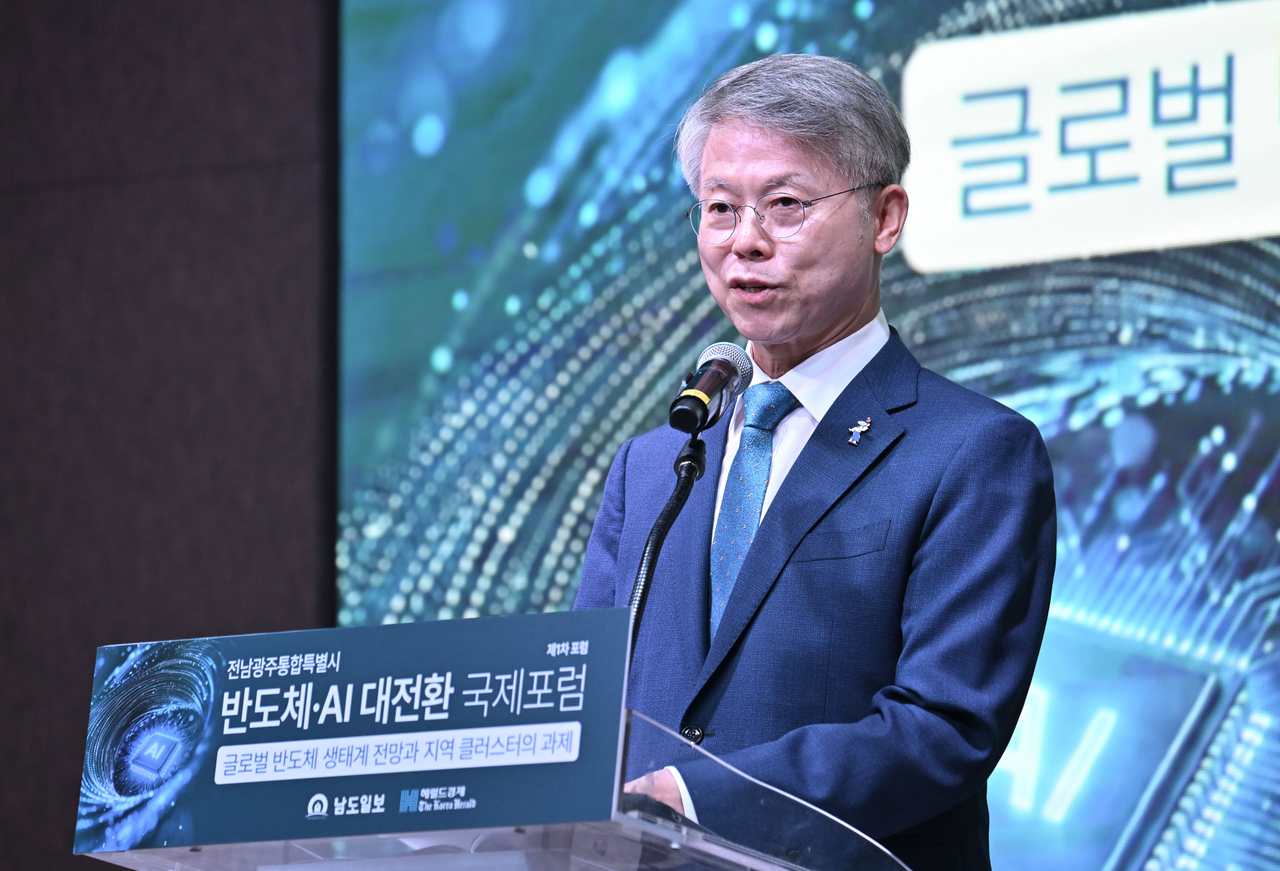
In his congratulatory remarks, Mayor Min Hyung-bae agreed with the diagnosis Han had raised in his welcoming address, calling it the right solution.
"The goal of the integrated special city of South Jeolla and Gwangju is clear," Min said. "We will break ground on the first phase next year, complete construction by the end of 2029 and begin the first production in the first half of 2030."
"We are working to ensure that administrative procedures do not fall behind corporate investment," he said. "As the Ministry of Trade, Industry and Energy, the Ministry of Climate, Environment and Energy and the Ministry of Land, Infrastructure and Transport are all doing their part, we will do our utmost to keep pace."
Officials from the Ministry of Trade, Industry and Energy, which is leading the "three mega projects," attended the forum. They explained the background and implementation strategy of the southwestern semiconductor investment plan. Min Woo Lee, director general for industrial growth at the Ministry of Trade, Industry and Energy, delivered the keynote speech, leading efforts to strengthen the competitiveness of the semiconductor industry, a strategic national asset.

"Our economy's potential growth rate has fallen from around 3 percent a decade ago to about 1 percent now," Lee said. "Except for semiconductors, China is closing in on our major industries at an alarming pace, making it difficult to find new growth momentum."
Amid these conditions, the government aims to turn the AI revolution into a new growth opportunity. "Centered on the three mega projects — semiconductors, physical AI and AI data centers — and regional growth engines, we will diversify the industrial structure currently concentrated in the greater Seoul area toward regions with potential, and build an industrial ecosystem for innovation for all," Lee said.
He noted that demand for AI semiconductors is surging, driven mainly by major US tech firms, and that current production capacity cannot keep up. This is why memory chip production bases are being expanded to the Honam region.
To ensure swift implementation, Lee introduced the "3S1F" strategy — Speed, Stronghold, Spearhead and Full Support.
"Our companies have said they will double semiconductor production capacity by 2030, but according to experts' forecasts, the semiconductor market itself is expected to grow fourfold by 2030," Lee said. "Expanding production bases to the Honam region to continually strengthen market share is the core of our industrial strategy." He added that Taiwan is also expanding its production bases, dividing them into northern, southern and central regions.
Physical AI and AI data centers are also fields expected to see new investment in the southwestern region. SK Group has already drawn up plans to invest 70 trillion won to build a 1 GW AI data center in the southwest, while Hyundai Motor Group plans to invest a total of 9 trillion won to build a complex cluster for future technologies in the Saemangeum area of North Jeolla Province.
Finally, Lee said, "The central government, including the Ministry of Trade, Industry and Energy, will do everything necessary for the success of this project." He added, "Please help build public support at the local level so that regional complaints do not delay the construction of key infrastructure such as electricity and water supply."
jeongwan@heraldcorp.com