
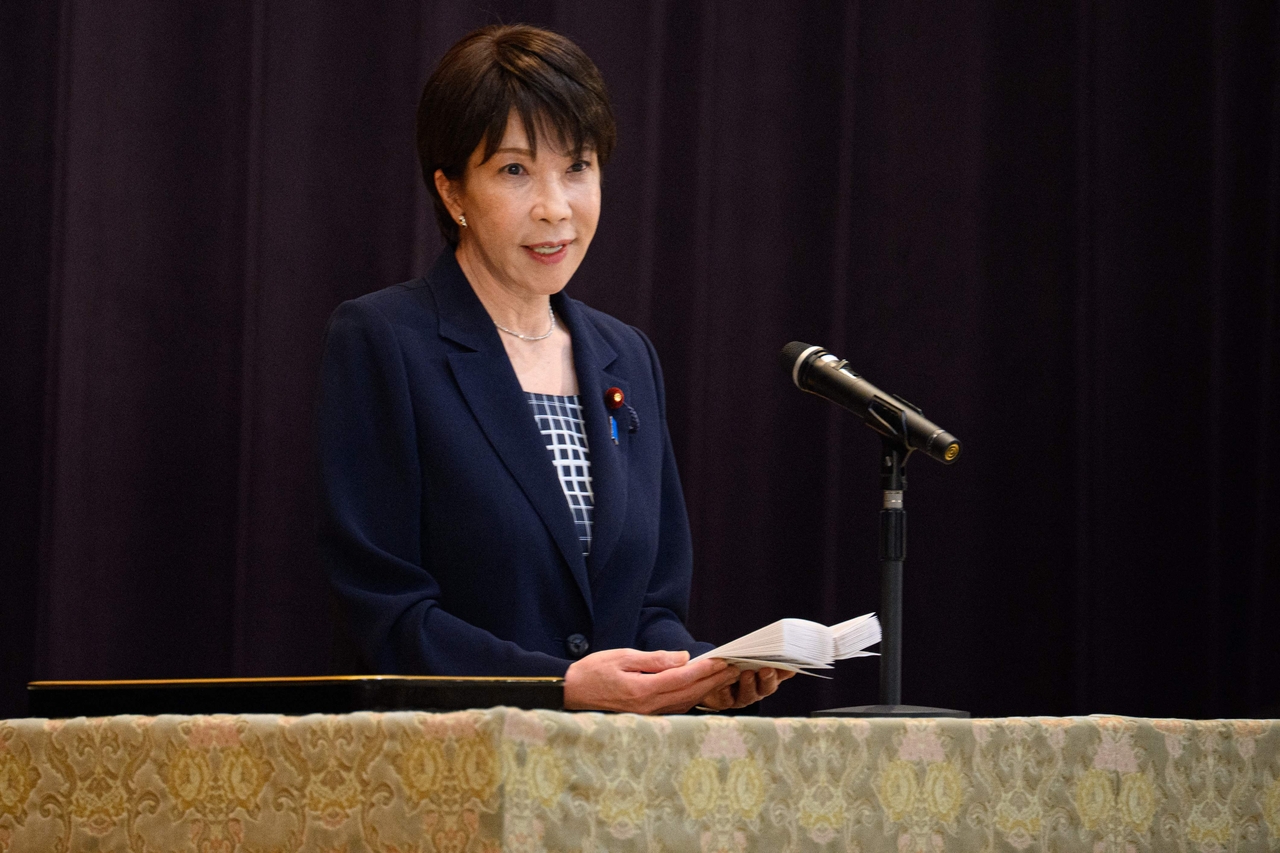
Prime Minister Sanae Takaichi's push for what is being called "Takaichi-style personnel reform," including merit evaluations of ruling party lawmakers ahead of a Cabinet reshuffle, has drawn wide attention. But behind the new approach lies a more practical reason: a political funding scandal has upended the customary practice of soliciting opinions from each faction ahead of a reshuffle. This made that process impossible and forced Takaichi to adopt a different method. Lacking a strong base within her own party, Takaichi appears to be using the moment to weaken her rivals' influence and cement her position for a long-term hold on power.
According to Jiji Press and other local media, Takaichi plans to reshuffle the Liberal Democratic Party's executive lineup on Wednesday, followed by a Cabinet reshuffle on Sept. 17. The Yomiuri Shimbun reported that Takaichi recently surveyed the party's House of Representatives lawmakers. She asked them to name up to five preferred positions they would like to hold in the government, the party or the Diet. Lawmakers were also asked to explain their reasons for each choice. Takaichi has reportedly been poring over the results since late August as she works out the personnel puzzle.
Ahead of the reshuffle and the party executive appointments, Takaichi has said she intends to base her selections purely on policy and ability. "I will not consider the number of times someone has been elected or their factional ties, and will choose based on policy and ability," she said. At a party executive meeting on Tuesday, she added, "I read through all the survey responses and realized just how deep the party's talent pool is." She stressed that she would give significant weight to the survey results in the reshuffle.
This marks a departure from past ruling-party personnel practices and Cabinet reshuffles. Previously, surveys asking lawmakers for their preferred ministry were limited to filling working-level posts such as vice ministers, parliamentary secretaries and assignments to Diet standing committees. This is the first time such a survey has been conducted across the board. Some observers see the move as an attempt by the prime minister to stamp her own brand — dubbed "Takaichi color" — on her first Cabinet reshuffle.
Critics say the new approach is in fact an "imperfect innovation" forced on Takaichi because a political funding scandal has all but destroyed the LDP's internal factions. In the past, ahead of a reshuffle, each faction would compile a list of lawmakers hoping to join the Cabinet. It was customary to submit this list to the prime minister, who also serves as party president. The prime minister would then draw up the Cabinet list based on those submissions, balancing factional quotas against lawmakers deemed "ripe for a Cabinet post." In Japanese politics, that term usually refers to lawmakers elected to the House of Representatives at least five times, or to the House of Councillors at least three times. Those lawmakers have yet to hold a ministerial post.
But the LDP's political funding scandal, which broke out in 2023, led to the dissolution of nearly all of the party's major factions. These included the factions once led by former Prime Minister Shinzo Abe and former Secretary-General Toshihiro Nikai. Only the faction led by Deputy President Taro Aso remains today. As a result, the old system in which each faction submitted its own list and received a "quota" of Cabinet posts is no longer workable.
Takaichi appears to be treating this period of factional disarray, brought on by the funding scandal, as an opportunity to expand her own influence within the party. With the factions weakened, she can wield her personnel authority, including over the reshuffle, with less concern about pushback.
Takaichi has long faced criticism for having a weak base within the party despite her popularity with the public. She appears to be trying to make up for that in this reshuffle. She is keeping her rivals from the recent party leadership race tied down with posts in the government and party leadership.
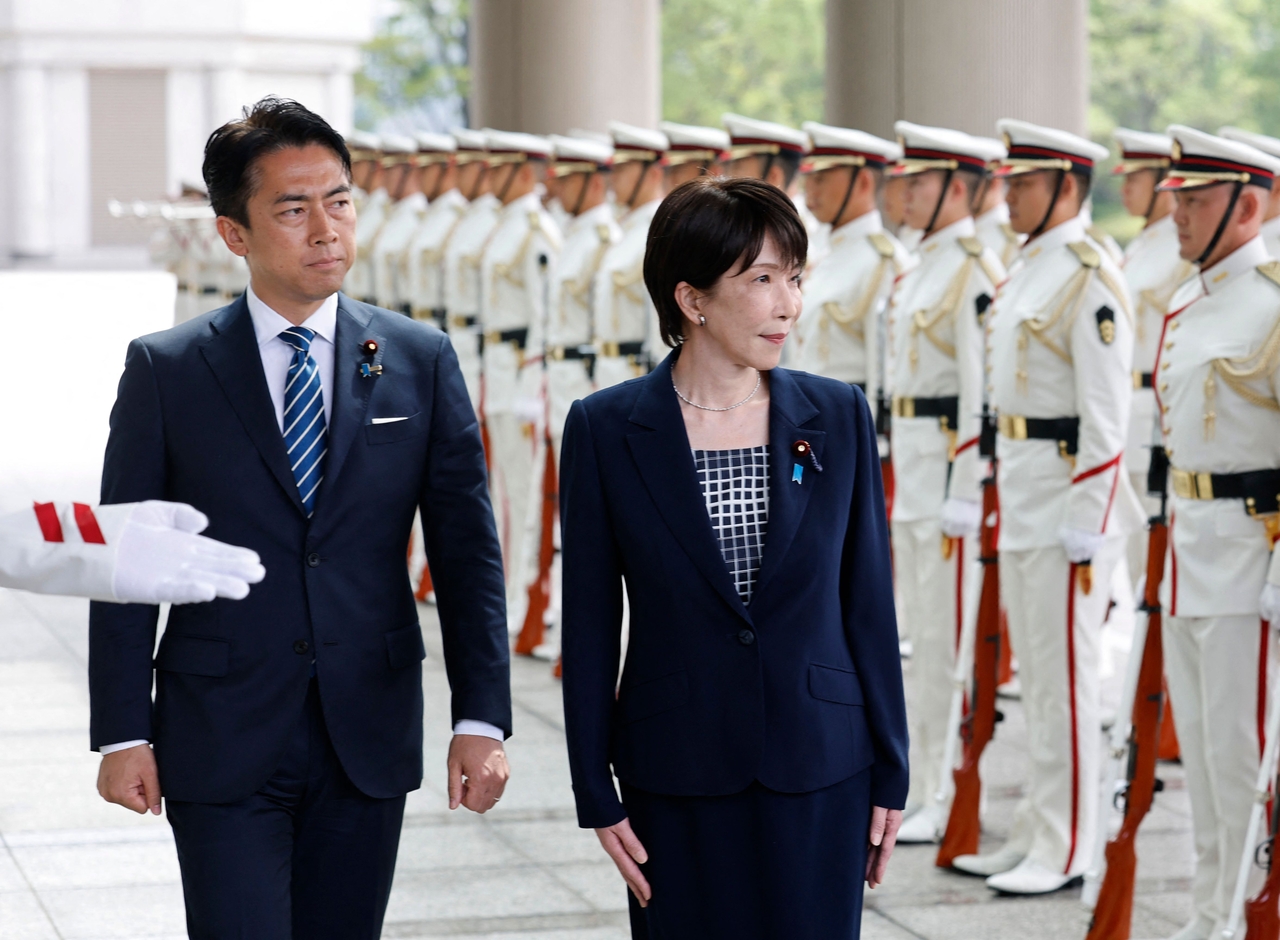
According to Jiji Press and other local reports, Takaichi has decided to keep three Cabinet and party officials in their current posts. They are Defense Minister Shinjiro Koizumi, Foreign Minister Toshimitsu Motegi and LDP Policy Research Council Chairman Takayuki Kobayashi. All three ran against her in the last LDP presidential race. The thinking behind retaining them, according to the reports, is to tie potential rivals to Cabinet and party positions. This would prevent them from properly preparing for the next presidential election in fall 2027.
Attention in Japanese political circles is now turning to Minister for Internal Affairs and Communications Yoshimasa Hayashi, who also challenged Takaichi for the party leadership. Hayashi is reportedly already being urged by those around him to make another run in the 2027 presidential race. Hayashi was asked about the Cabinet and executive personnel changes at a news conference on Tuesday. He responded cautiously, "Since this is entirely the prime minister's prerogative, I would rather refrain from commenting."
Debriefing: The Herald Business's international news desk digs up the untold stories behind the hottest global issues and lays them out clearly for readers. Debriefing aims to foster dialogue with readers — leave your questions in the comments!
kate01@heraldcorp.com



