Replaced by ITX-Maum, one-way fare jumps from 14,300 won to 42,600 won
Weekday fares double too, while nondisabled riders see only a 1.49-fold rise
Enforcement decree omits ITX-Maum but still lists discontinued commuter trains
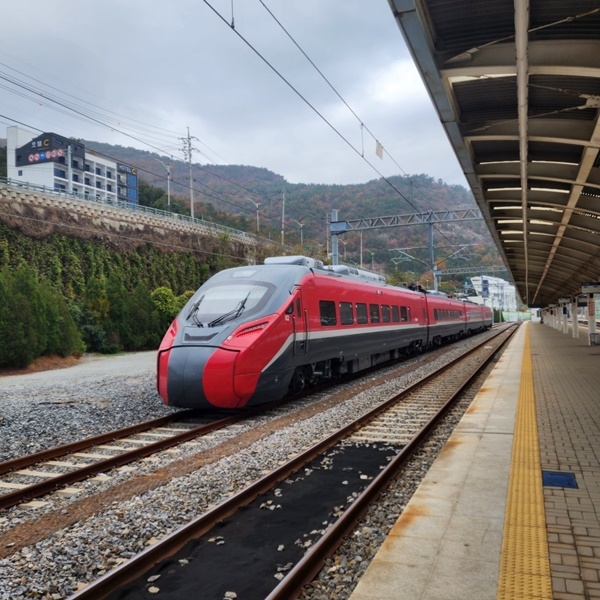
Aging Mugunghwa trains are being phased out in favor of ITX-Maum service. As a result, the weekend rail fare burden for people with mild disabilities traveling between Seoul and Busan has climbed roughly threefold for the same route, data showed. The jump stems both from higher base fares on the new train and the disappearance of the 50 percent discount once granted to people with mild disabilities.
Rep. Seo Mi-hwa of the Democratic Party of Korea, a member of the National Assembly's Health and Welfare Committee, obtained data from Korea Railroad Corp., or Korail, on Thursday. It showed the one-way weekend fare for mildly disabled passengers on the Seoul-Busan route rose 2.98-fold, from 14,300 won ($11) on Mugunghwa to 42,600 won on ITX-Maum. The round-trip fare climbed from 28,600 won to 85,200 won, an increase of 56,600 won.

For nondisabled passengers, the Seoul-Busan fare rises from 28,600 won on Mugunghwa to 42,600 won on ITX-Maum, a 1.49-fold increase. People with mild disabilities receive a 50 percent discount on Mugunghwa regardless of the day of the week. But ITX-Maum, which is classified at the Saemaul level, offers only a 30 percent discount on weekdays, with no discount at all on weekends and holidays.
The weekday burden also more than doubles. The actual one-way fare mildly disabled passengers pay on the Seoul-Busan route rises from 14,300 won on Mugunghwa to 29,820 won on ITX-Maum, a 2.09-fold increase. By contrast, people with severe disabilities receive a 50 percent discount regardless of the day or train type. Their fare rises from 14,300 won to 21,300 won, a 1.49-fold increase.
ITX-Maum began service in September 2023 on the Gyeongbu, Honam and Jeolla lines. Korail has been phasing out Mugunghwa trains as they reach the end of their service life since 2025. As a result, base fares have risen not only on the Seoul-Busan route but elsewhere. Yongsan-Mokpo climbed from 28,600 won to 39,600 won, Yongsan-Yeosu Expo from 27,600 won to 41,100 won, and Cheongnyangni-Donghae from 19,200 won to 27,500 won.
Since the introduction of new rail cars is not expected to be completed until the second half of 2029, the replacement of Mugunghwa trains is likely to continue for now. Observers say people with disabilities in regions with fewer public transit options and heavier reliance on Mugunghwa service could be hit hardest.
The problem is that the current criteria for discounted rail fares for people with disabilities have not kept pace with the changed train system. Attachment Table 2 of the enforcement decree of the Act on Welfare of Persons with Disabilities divides discount-eligible trains into two categories. One covers Mugunghwa and commuter trains; the other covers Saemaul and KTX trains. ITX-Maum, introduced in 2023, is not specified in either category, while commuter trains, whose service has already ended, remain eligible for discounts.
Korail has grouped ITX-Maum, which is absent from the decree, under the Saemaul category, applying only a 30 percent weekday discount to mildly disabled passengers. When ITX-Maum launched in 2023, Korail belatedly applied the discount for severely disabled passengers three weeks after the launch and the weekday discount for mildly disabled passengers two months later. However, it never introduced a weekend or holiday discount for mildly disabled passengers.
Last year, about 3 million people used discounted rail fares for people with disabilities, with the total discount amounting to 25.6 billion won. That accounts for 28.3 percent of the 90.4 billion won in total statutory discounts. Combining statutory discounts with Korail's own discounts, the total public discount came to 155.2 billion won.
"I agree with the direction of replacing old trains with safer new ones," Seo said, "but the cost of this policy overhaul should not be shifted onto the most vulnerable groups." She added, "The attached table in the enforcement decree needs to be revised to reflect the current train system, and transitional measures should be put in place to maintain the existing discount rates until the replacement of the rail cars is complete."
fact0514@heraldcorp.com