
Won strengthens as exporters offload dollar earnings amid strong exports
Converting $1 million now yields 160 million won less than when the rate was 1,500 won
Chipmakers cushion the blow with price, volume gains; automakers, petrochemical firms sound alarm
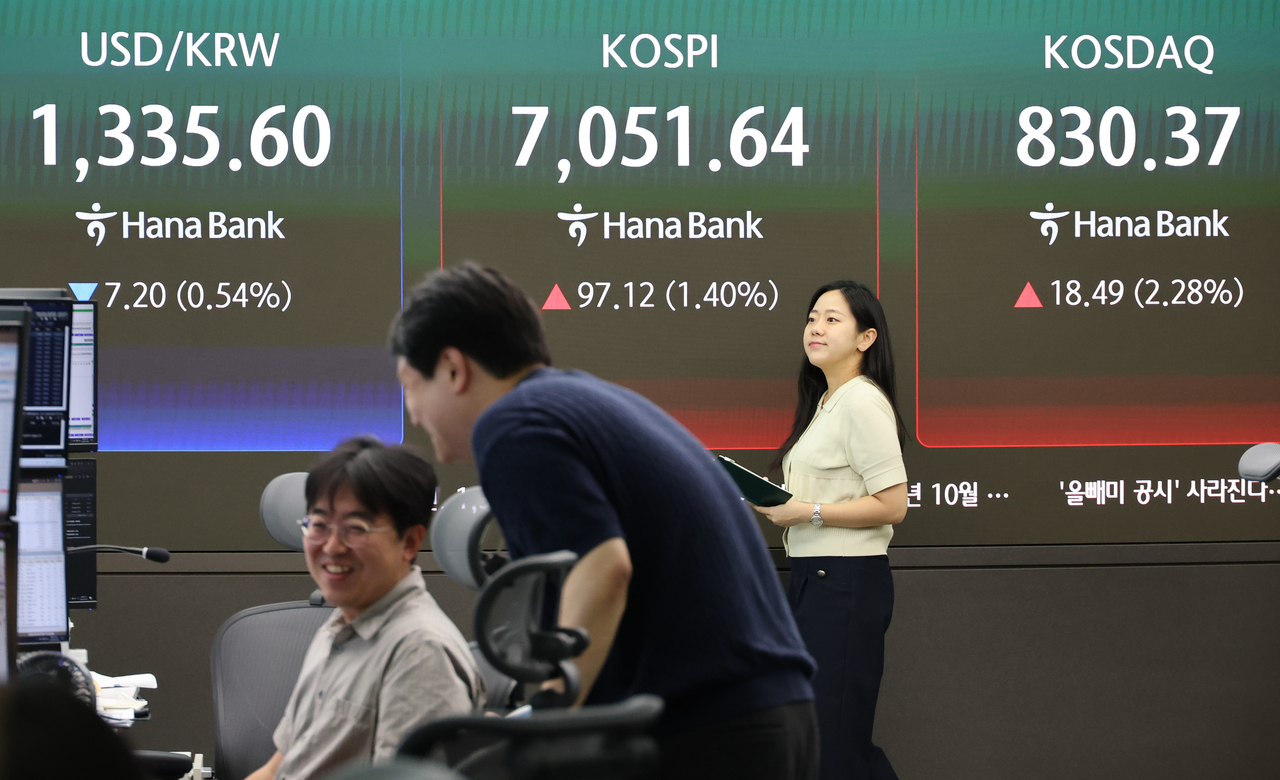
Strong semiconductor exports are driving down the won-dollar exchange rate, deepening the dilemma facing South Korean exporters. The more dollars exporters bring in and sell on the market, the stronger the won becomes — a paradox that then erodes their own won-converted sales and operating profit. Adding to the strain, Middle East tensions have pushed international oil prices to near $100 a barrel. This has left companies facing a double blow: shrinking profitability from the stronger won and rising raw material costs.
In Seoul's foreign exchange market Wednesday, the won-dollar exchange rate stood at 1,336.1 won as of 3:30 p.m., down 9.5 won from the previous session.
Despite Middle East instability and the spike in oil prices, what pulled down the exchange rate was the wave of dollar-selling, or "nego" settlements, by exporters including chipmakers. Analysts say the dollars exporters sold outweighed dollar demand from importers settling mid-month payments and from investors buying dollars for overseas stock purchases.
Robust semiconductor exports are, ironically, adding downward pressure on the exchange rate. As Samsung Electronics, SK hynix and other chipmakers convert their export dollar earnings into won, the supply of dollars in the market keeps growing. Nego settlements that used to be concentrated at month's end are now flowing into the market more frequently.
The problem is that this expanding dollar supply boomerangs back on exporters themselves. When the won-dollar rate falls, the same export amount converts into less money in won. For example, converting $1 million in export proceeds would yield 1.5 billion won at an exchange rate of 1,500 won per dollar. At the current rate of 1,336.1 won, the same amount would yield only 1.34 billion won. The shift in the exchange rate alone wipes out 163.9 million won.
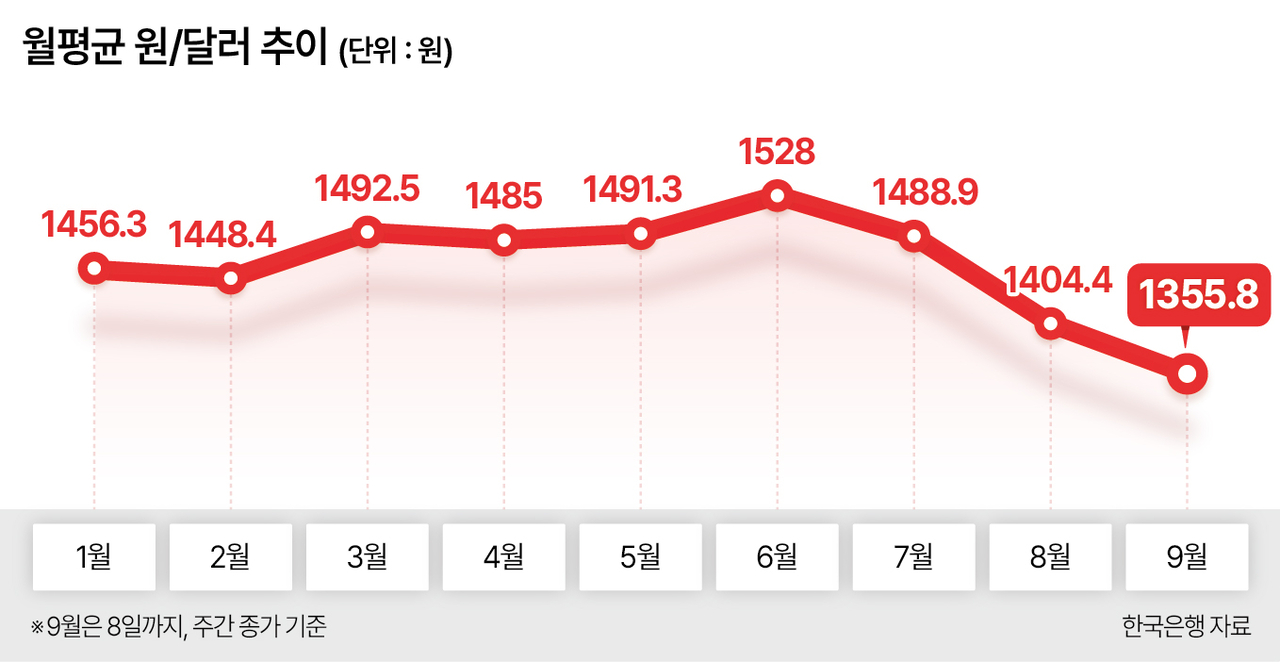
The faster the exchange rate falls, the greater the shock. If the exchange rate is lower when a company actually collects its export payment than it expected when signing the contract, the company can suffer a foreign exchange loss. Amid fierce global competition, raising dollar-denominated sales prices is not easy, so many companies end up absorbing the full impact of the won's appreciation.
Small and medium-sized exporters, which typically lack the capacity to hedge currency risk, bear a relatively heavier burden. Large companies can reduce exchange rate risk using forward contracts or currency options, but smaller firms struggle to respond actively due to cost and a shortage of specialized staff. Companies that source raw materials domestically and rely heavily on exports are especially exposed to the negative effects of a stronger won.
The impact is likely to vary by industry. In the semiconductor sector, where global demand continues to outstrip supply, companies can partly offset the decline in won-converted earnings from the weaker exchange rate. They can do so through higher sales volumes and prices. By contrast, industries facing intense global supply competition — such as automobiles, petrochemicals, steel and machinery — have less room to raise product prices, so their profitability could suffer more.
However, a stronger won is not necessarily bad news for every exporter. Companies that rely heavily on imported raw materials can partly absorb the shock of the falling exchange rate through lower dollar-denominated costs. Ultimately, profits and losses will likely diverge by company, depending on export exposure, raw material sourcing structure, settlement currency and whether a firm hedges its currency risk.
The surge in international oil prices is also limiting the positive effects of the falling exchange rate.
As of 4:20 p.m. Wednesday, Korean Standard Time, Brent crude futures for November delivery were trading at $100.02 a barrel on London's ICE Futures exchange, up 2.1 percent, or $2.10, from the previous session. This is the first time Brent crude futures have topped $100 a barrel since July 24. The renewed fighting between the United States and Iran has raised concerns over disruptions to oil shipments through the Strait of Hormuz. Tensions involving Houthi rebels along the Red Sea shipping route have also escalated.
A stronger won can partly offset the rise in crude oil import prices, but if the oil price rally persists, companies will find it hard to avoid heavier raw material and logistics costs. There are concerns that in energy-intensive industries such as petrochemicals, aviation and shipping, the burden from rising oil prices could outweigh the cost savings from the stronger won.
The dollar itself also weakened. The dollar index, which tracks the greenback's value against six major currencies, stood at 98.669 as of 3:30 p.m., down 0.185 from Tuesday. The yen-dollar rate fell 0.46 percent to 153.206 yen, while the won's cross rate against the yen dropped 3.07 won to 872.26 won per 100 yen.
Foreign investors net sold 224.5 billion won worth of shares on the Kospi that day, but this failed to reverse the exchange rate's downward trend. Market watchers believe the won-dollar rate could fall further if strong semiconductor exports and continued dollar-selling by exporters persist. However, the spread of the Middle East conflict and the spike in oil prices could boost demand for the dollar as a safe-haven asset. This could limit further declines in the exchange rate.
attom@heraldcorp.com




