"How can there be so much trash?"
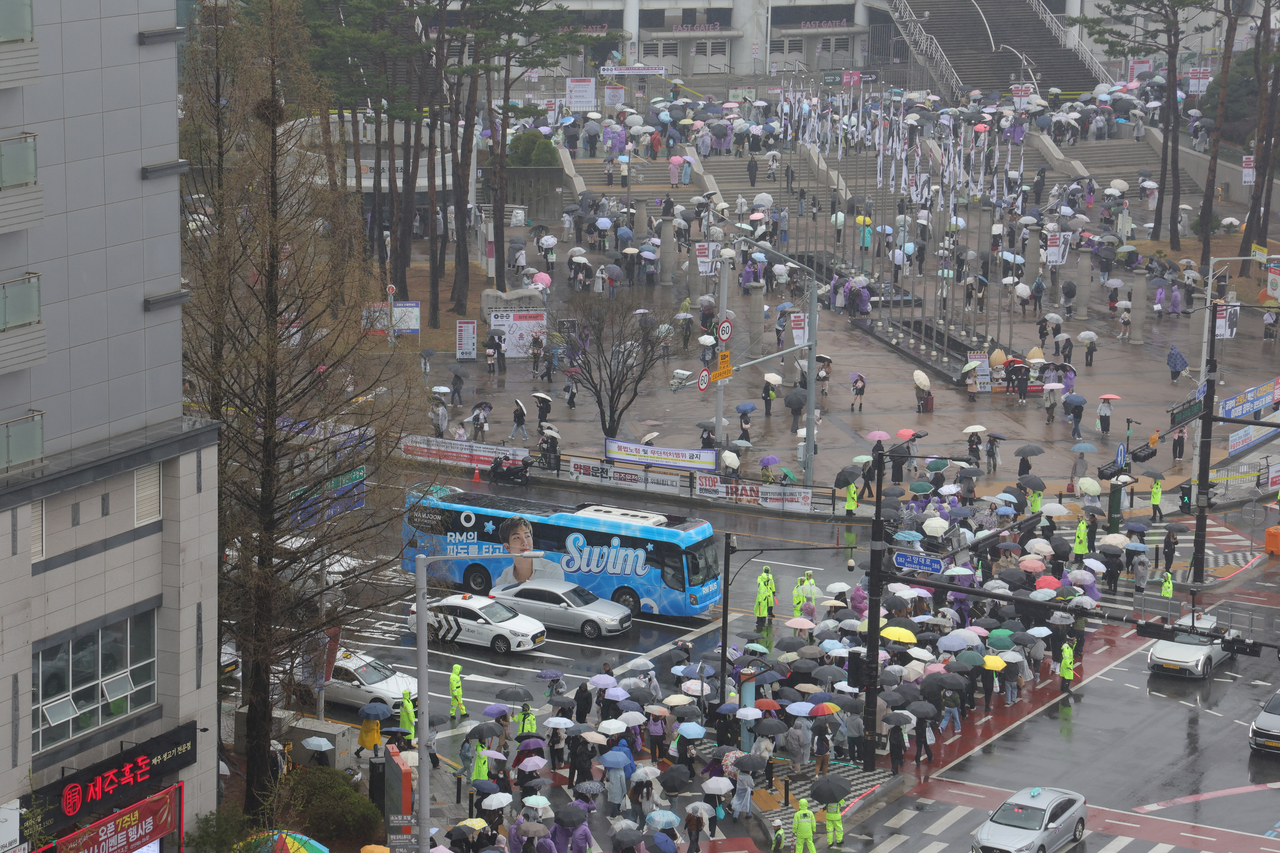
The scene at a K-pop idol's concert after it ends: empty water bottles, food and drink containers, and wrapping from merchandise litter the area around the venue once the crowd has gone home.
It looks like little more than a garbage dump. But there is a twist.
That visible trash, it turns out, is only an "extremely small fraction" of the environmental pollution a concert generates.

Large amounts of greenhouse gases are also emitted from electricity use and audience travel, among other things.
One analysis found that a single K-pop concert emits greenhouse gases equivalent to producing and discarding about 45 million disposable plastic cups.
Sustainable concert practices — such as cutting waste and using renewable energy — have already spread abroad, but change has come more slowly to the K-pop industry.

That mood is shifting, though. The government and the concert industry have begun discussions on common standards for sustainable performances.
Given that K-pop commands a global fandom of about 75 million, expectations are high that such change could have a major ripple effect on the music industry and its fans.
K-pop's influence grows, but eco-friendliness lags
Kpop4Planet, a fan-led climate action platform, published a report titled "Low-Carbon Concerts: A New Stage to Save K-pop." It found that live performances account for about 73 percent of the music industry's emissions.
The entire process — from electricity use to audience and artist travel, equipment transport and waste — generates carbon.
Actual measurements from K-pop concerts make the scale easier to grasp. According to YG Entertainment's sustainability concert report, Blackpink's 2023 Seoul concert generated about 5,953 tons of greenhouse gases over two days.
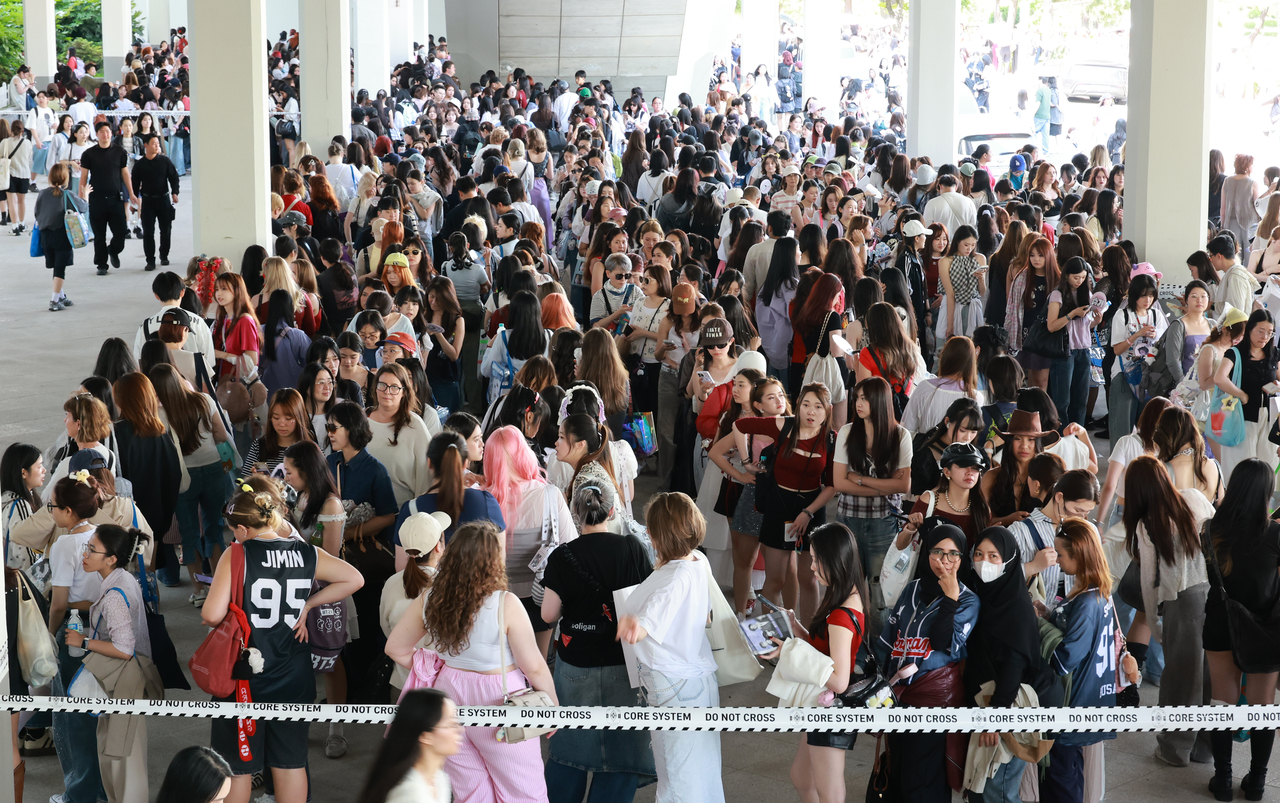
That comes to an average of about 3,000 tons per day — equivalent to running about 700 gasoline-powered cars for a year or to producing and discarding about 45 million disposable plastic cups.
Still, it would be unfair to say the K-pop industry has ignored sustainability altogether. Efforts to change, particularly around waste reduction, have continued at K-pop concerts.
When Kpop4Planet analyzed five major domestic entertainment companies last year, it found several had taken steps to cut waste, such as recycling banners or making merchandise from recycled materials.
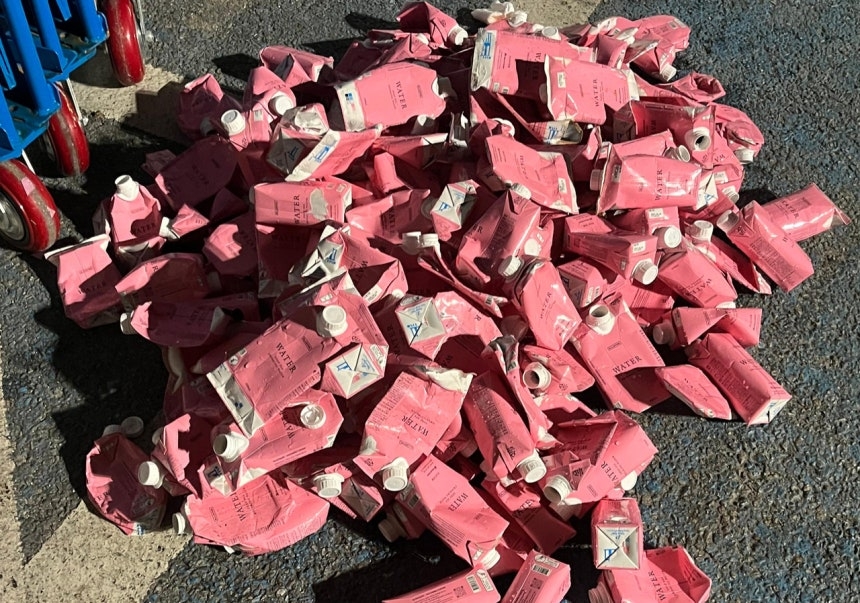
By contrast, the companies showed relatively weak, concrete efforts to cut emissions in areas such as energy and transportation — the main sources of carbon output. None of the concerts analyzed at the time used renewable energy.
Abroad, artists have already begun rethinking how concerts are produced. The British rock band Coldplay has used renewable energy and cut back on single-use water bottles and air travel while touring.
The band has also installed a "kinetic floor" that converts the energy of jumping fans into electricity, along with bicycle-powered generators. Through such measures, Coldplay cut the direct carbon emissions of its recent tour by more than half compared with its previous one.
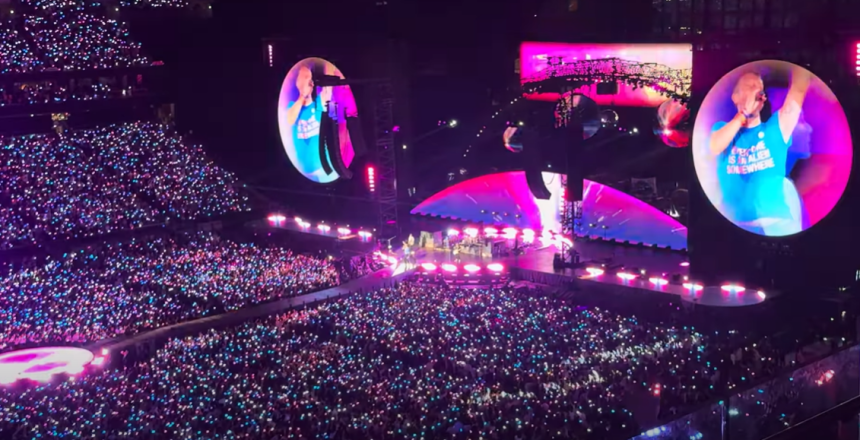
This has fueled calls for K-pop, given its global reach, to take a more active role in sustainability as well. Because the industry commands such a tightly knit and highly engaged fandom, some argue that changes in how concerts are run could shape public awareness and behavior more broadly.
"If the power of culture can be directed toward the environment, it will not only showcase South Korea's global leadership but also help trigger a positive domino effect across the industry," said Lee Da-yeon, a campaigner at Kpop4Planet.

K-pop moves to set its own sustainability standards
Change is already underway. This year, the Korea Creative Content Agency has been running a beta test to measure carbon emissions at concert venues in Seoul and Incheon, working with three major entertainment companies — SM Entertainment, HYBE and JYP Entertainment.
At the Sustainable Wave Festival held in Incheon last month, organizers tested ways to cut emissions on-site, including introducing a mobile energy storage system, or ESS, to reduce reliance on diesel generators.

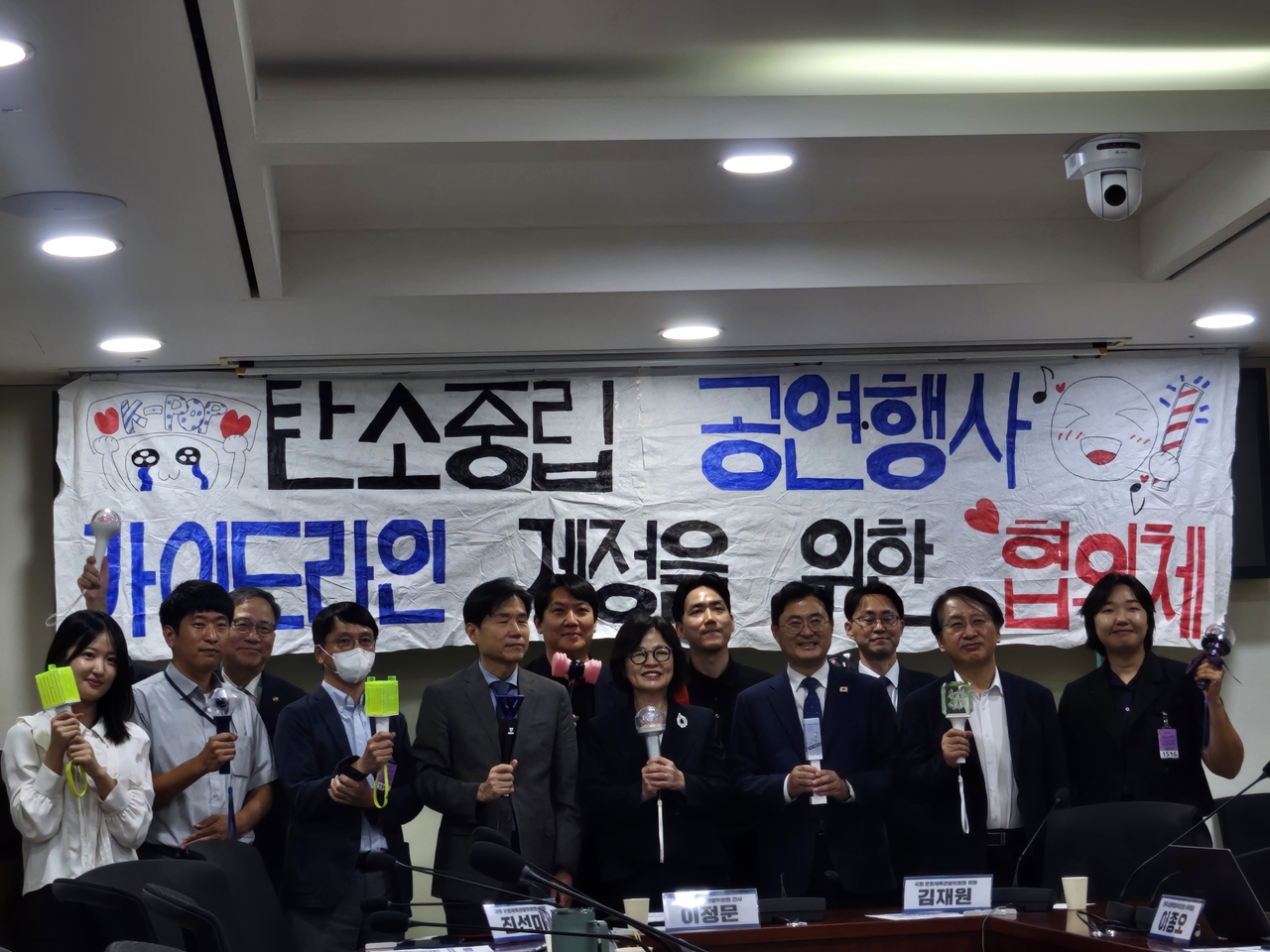
Discussions have also begun on how to spread such individual efforts across the industry as a whole. Kpop4Planet held a launch ceremony and policy forum Tuesday at the National Assembly for what it calls the "consultative body for establishing carbon-neutral concert and event guidelines."
The forum exposed a lack of common standards for how far to measure carbon emissions and how to gather related data.
Naeilui Sseuim, a group that has measured emissions from K-pop concerts, ran a participatory carbon calculator to survey audience travel, but participation stayed below 10 percent. It struggled to use ticketing platforms and organizers' notification channels to reach audiences. Gathering data from concert-related vendors was also difficult, since they are under no obligation to provide it.
The cost and infrastructure needed for eco-friendly concerts remain challenges as well. At the Sustainable Wave Festival, producing eco-friendly banners cost about three times more than conventional printing, and mobile ESS units also faced capacity constraints domestically.
The financial burden on entertainment companies is one of the biggest issues. Many companies lack the dedicated staff or budgets that larger agencies have, and the scale and facilities of each concert vary widely.
How much any future guidelines account for such differences will be key. If the standards end up too uniform, industry insiders worry they could function as a de facto regulation even without legal force.
Choi Tae-young, secretary-general of the Korea Popular Music Industry Association, who attended the forum, said, "Large agencies are subject to mandatory disclosure requirements and have dedicated departments, but there are far more companies that do not." He added, "The guidelines are not meant to be punitive, but there is concern that those who fail to comply could suffer reputational damage."
"Just as every facility has its own characteristics, every concert has its own characteristics as well," he said, criticizing a uniform approach as inefficient when applied across such varied performances. He suggested it would be more realistic to set standards tailored to each facility's conditions rather than applying a single uniform standard to all concert organizers.

The government says it will first assess the current situation and consult with the industry. Kim Yu-mi, director of the popular culture industry division at the Ministry of Culture, Sports and Tourism, said, "To create guidelines, we first need to understand the current situation behind the concerns being raised." She added, "Based on that assessment, we plan to review the guidelines with the industry next year."
The consultative body plans to hold five rounds of discussion through next February. Starting with measuring carbon emissions, it will address energy transition at concerts, waste reduction and management, and incentive design. These discussions aim to support the Ministry of Culture, Sports and Tourism's formal establishment of carbon-neutral concert and event guidelines.
"Fans played an absolutely essential role in K-pop's growth into music enjoyed by people around the world, and as a fan myself, I could not be prouder," campaigner Lee said. "I hope K-pop will now take the lead in responding to the climate crisis as well, setting the standard for sustainable concerts and showing how it can drive change across the global music industry."

woo@heraldcorp.com