
41 gift filings by people in their 20s in August
7 of every 10 filings concentrated in Seongdong-gu
Year-to-date total up 3.8-fold from last year
"Tax overhaul stokes asset-transfer demand"
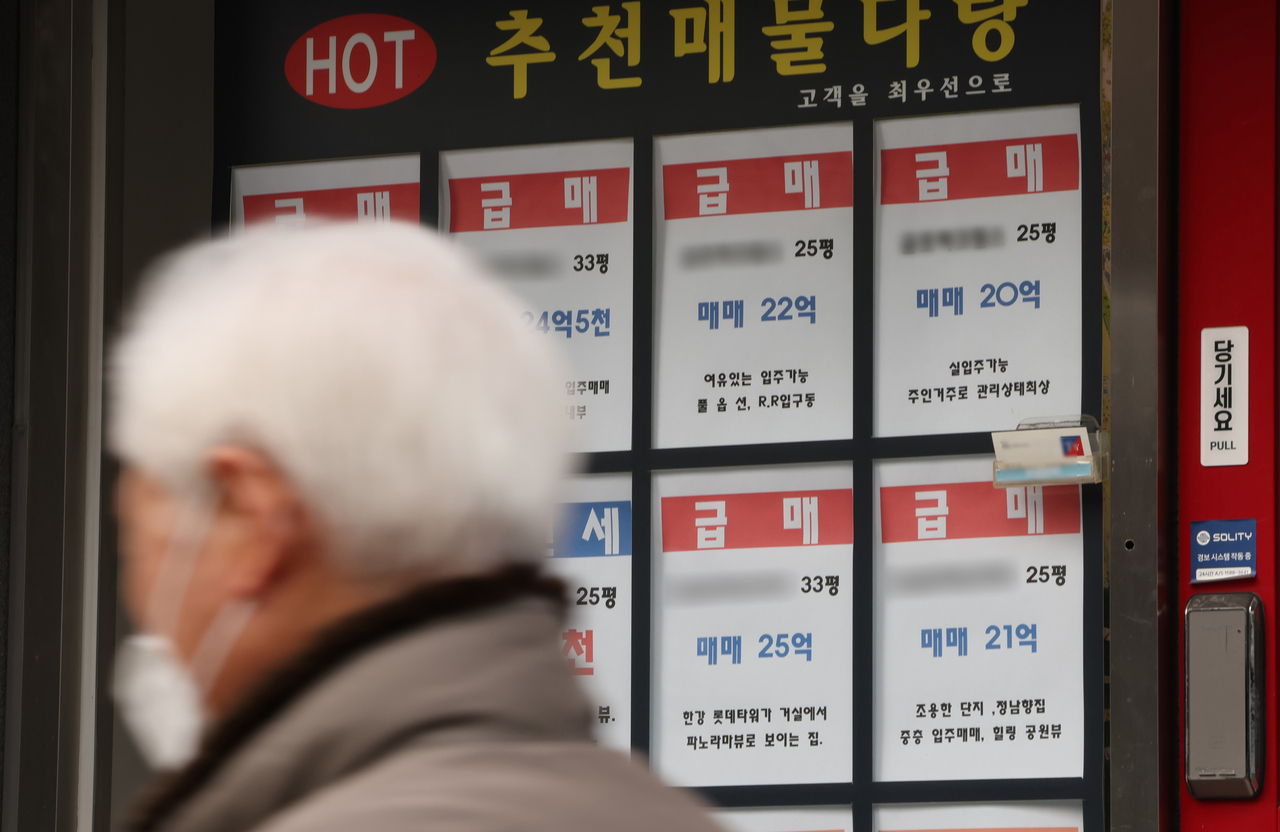
The number of people in their 20s who received gifts of condominiums and other collective-titled properties in Seoul hit a roughly nine-year high last month, following the government's announcement of a real estate tax overhaul. Analysts say heavier holding and capital gains taxes on multiple-home owners are accelerating parents' decisions to hand properties down to their children. Tougher loan regulations have also made it harder for young people to buy homes on their own, adding to the trend.
41 gift filings for Seoul homes by people in their 20s in August, 68 percent in Seongdong-gu
According to the court's Registry Information Plaza on Wednesday, 41 gift-registration filings for collective-titled properties by Seoul residents ages 19 to 29 were submitted last month. That is the highest monthly tally in 110 months, since June 2017, when 53 such filings were recorded.
By district, Seongdong-gu accounted for the largest share by far, with 28 filings, or 68.3 percent of the total. The average apartment market price there stands at 1.94 billion won ($1.45 million), according to KB Real Estate data. In other words, roughly seven out of every 10 gift filings by people in their 20s took place in Seongdong-gu. Guro-gu followed with four filings, Dobong-gu with three, Gwanak-gu with two, and Gangseo-gu, Geumcheon-gu and Yeongdeungpo-gu with one each.
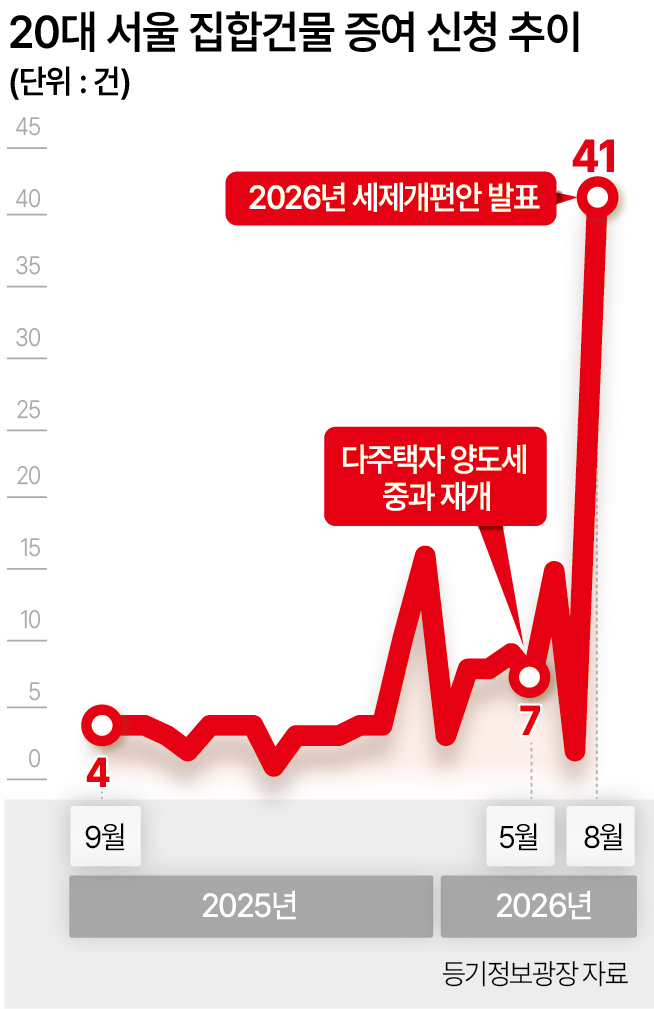
Gifts targeting people in their 20s, who typically have limited home-buying power, have surged sharply this year. From January to August, 93 gift filings for collective-titled properties by people in their 20s were submitted in Seoul. That is about 3.88 times the 24 filings recorded over the same period last year.
Analysts say the government's revamped tax policy has played a role in the sharp rise in gifts to young people. Last month's surge in filings coincided with the announcement of the tax overhaul. Analysts say this points to asset-transfer demand driven by the coming change in tax burdens.
On Aug. 3, the government unveiled its 2026 tax overhaul plan, which strengthens taxation on multiple-home owners and non-resident housing. The plan centers on raising the comprehensive real estate tax on "homes that are not lived in" and following through on the planned heavier capital gains tax on multiple-home owners.
In particular, the plan introduces a cap on the long-term holding special deduction, halting a structure in which the deduction amount grows in proportion to capital gains. After a one-year grace period, the cap will be set at 2 billion won in 2028 and lowered to 1 billion won starting in 2029. Analysts say the government's announcement that it would overhaul the deduction system — shifting the basis from simple ownership to residency — has accelerated this trend. Many parents are now deciding it is better to hand properties down to their children instead. Under the government's plan, the ownership-based deduction will be eliminated starting in 2029, leaving only a residency-based deduction of 8 percent per year, for a maximum deduction of 80 percent.
Gifting erases capital gains tax; loan curbs push parents to build children's housing ladder
As a result, multiple-home owners who hold "homes they do not live in" are increasingly weighing whether to sell or gift them. Transferring a home to a child in advance allows parents to reduce the number of homes they own, lowering their future comprehensive real estate tax and capital gains tax burden. Looking at the family as a whole, this can also help maintain the overall "total" number of properties held.
"If parents give a house to their child, it can effectively bring the capital gains tax down to zero," said Nam Hyuk-woo, a researcher at Woori Bank's real estate research institute. "However, whether a low-price sale or an outright gift results in a bigger tax reduction varies case by case."
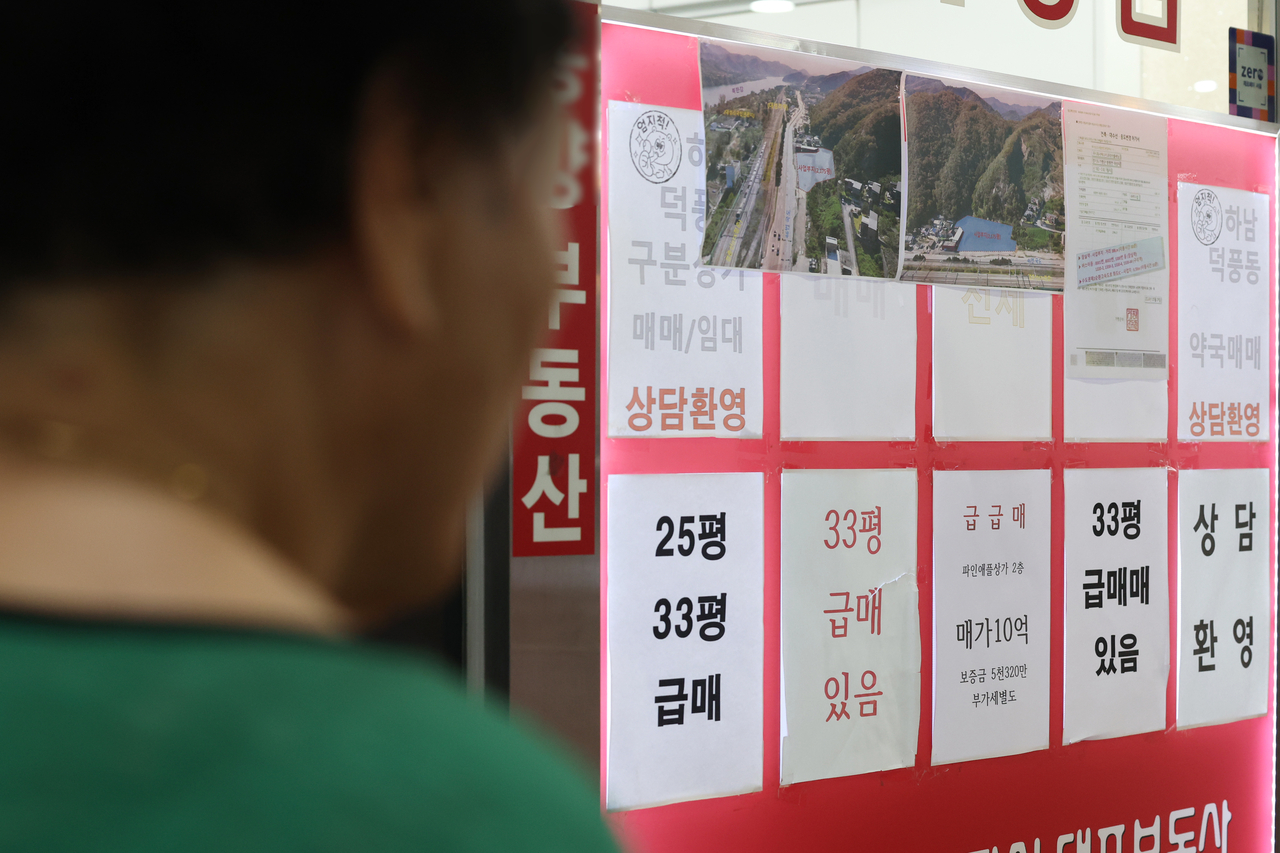
Some analysts caution that the recent rise in gifts to people in their 20s cannot be explained solely by an attempt to avoid taxes on high-priced homes. As Seoul home prices have risen sharply and loan regulations have tightened further, parents are increasingly gifting homes in outlying areas to help their children secure funds.
"In reality, more parents are choosing to pass down homes in outlying areas such as Guro-gu, Dobong-gu and Gwanak-gu that are not selling," Nam said. "With loans so restricted, this also appears to be an attempt to give children a stepping stone toward securing a home."
This has raised concerns that the gap in housing conditions could widen between young people who inherit assets from their parents and those who do not. As a result, young people's housing circumstances increasingly hinge on the size of their parents' assets.
"As tighter loan regulations and high interest rates make parents' financial power a key variable in determining whether young people can enter the housing market, gifts to people in their 20s ahead of time are becoming concentrated," said Jung Jae-hoon, an assistant professor of urban planning and real estate at Dankook University. "While young people who receive support in transferring assets can secure housing stability early, the majority of young people who must raise funds on their own face high barriers to entry — a structural inequality at the starting line."
hss@heraldcorp.com




