
Cultivated area fell 0.2% but yield per unit area rose 1.7%
Favorable temperatures and sunshine in April and May boosted crop growth
South Chungcheong Province accounts for 17.1% of national output with 62,000 tons
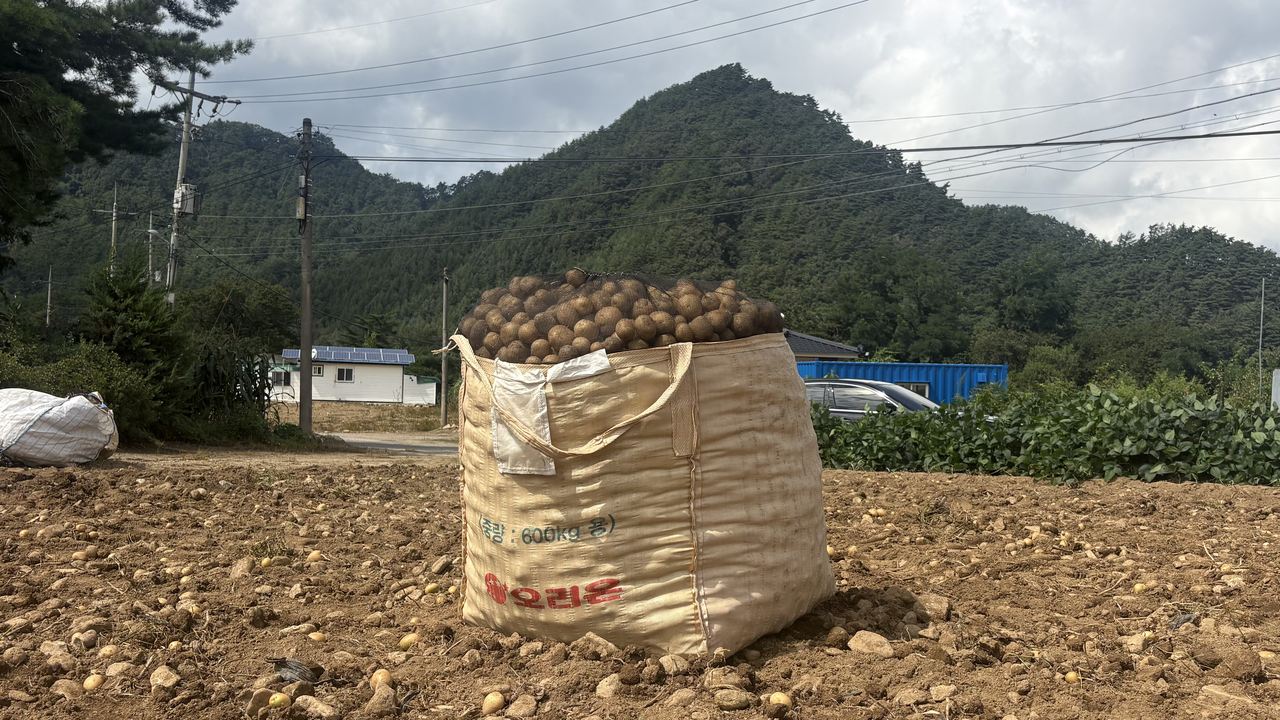
South Korea's spring potato output reached 361,000 tons this year, up 1.5% from last year, as better growing conditions during the crop's key development period offset a slight decline in cultivated area caused by farmers switching to other crops.
According to the Ministry of Statistics' "2026 Spring Potato Production Survey" released Tuesday, spring potato output totaled 361,167 tons this year, an increase of 5,469 tons, or 1.5%, from last year's 355,698 tons.
The cultivated area for spring potatoes fell to 14,897 hectares, down 30 hectares, or 0.2%, from 14,927 hectares the previous year. The ministry attributed the decline to farmers converting some potato fields to other crops.
Output per 10 ares, however, rose from 2,383 kilograms last year to 2,424 kilograms this year — a gain of 41 kilograms, or 1.7% — more than compensating for the reduction in planted area.
Weather conditions during April and May, when potatoes grow and bulk up, were more favorable than a year earlier. The average temperature during that period rose 1.3 degrees Celsius to 16.2 degrees, up from 14.9 degrees last year. Sunshine hours increased 3.3%, from 459 hours to 474 hours, while rainfall rose 11.1%, from 184.6 millimeters to 205.1 millimeters.
Spring potato output has fluctuated in recent years depending on weather and changes in cultivated area. Production fell from 380,000 tons in 2021 to 303,000 tons in 2022, then recovered to 358,000 tons in 2023 and climbed to 398,000 tons in 2024 before slipping back to 356,000 tons last year. This year's figures mark a return to growth.
By region, South Chungcheong Province led the country with 61,648 tons, accounting for 17.1% of national output. The South Jeolla-Gwangju integrated special city followed with 56,623 tons, or 15.7%, and Gangwon Province came in third with 56,190 tons, or 15.6%.
South Chungcheong Province's output rose 5.6% from last year. Gangwon Province saw total production rise 16.3%, driven by a 15.6% expansion in cultivated area and a 0.6% gain in yield per unit area. Gyeonggi Province posted a 20.6% increase in output, supported by a 13.3% rise in yield per unit area.
North Gyeongsang Province, by contrast, saw output fall 24.5% as both cultivated area and yield per unit area declined by 17.1% and 9.0%, respectively. North Chungcheong Province's output also dropped 22.4%.
fact0514@heraldcorp.com




