A classical epic reborn on screen through Christopher Nolan's vision
Why South Korea is gripped by 'Odyssey' fever
From IMAX ticket wars to soaring book sales
The questions of war, homecoming, hospitality and atonement it raises

A timeless classic has found new life through the vision of director Christopher Nolan, captivating audiences with a grand and immersive cinematic experience. "Odyssey," Nolan's adaptation of Homer's "Odysseia" — an epic composed some 3,000 years ago — crossed the 10 million admissions mark Sunday, 33 days after its opening.
The film's remarkable popularity has spilled far beyond the multiplex. Bookstores were swept by demand for Homer-related titles the moment the film opened, and streaming platforms have seen a surge in viewership for related titles such as "Troy" (2004), which covers the Trojan War. The craze grew so intense that scalpers began reselling premium-screen tickets at several times face value, ultimately prompting the government to launch a crackdown. There is no question about what has consumed the late-summer box office: "Odyssey," by a wide margin.
How did a hero's journey home from a war celebrated for its cunning — a story scarred by a decade of battle — leap across millennia to win such mass affection? This is a look at the road to 10 million.
Behind 'Odyssey's' success: a childhood staple of Greek mythology comics

"Odyssey" is based on a classic, yet its narrative is relatively accessible. The original "Odysseia" has long been a cornerstone of humanities education in the Western world, but Korean students rarely encounter Western classical literature in their standard school curriculum. Even so, the story of the Trojan War — symbolized by the wooden horse — and a hero's scarred journey home is far from unfamiliar to Korean audiences. Much of the credit goes to a series of Greek and Roman mythology comics that have been considered essential reading for children in Korea for decades. In the early 2000s, an animated adaptation of the series further broadened its reach.
As a result, the film quickly won over a younger generation already comfortable with Greek mythology, and word of mouth spread rapidly through social media, propelling it onto a steep box-office trajectory in a short time. Pop culture critic Kim Heon-sik said the story's familiarity made it accessible across generations, and that the mythology comics had already primed audiences' interest. "Because the younger generation led the box-office charge, the film's popularity grew into a full-blown craze," he said.
The film's early establishment as family-friendly content rooted in a classic has also been a key driver of its success. It is not uncommon to hear of audiences overcoming the perceived barrier to entry on their own — by watching YouTube explainers or picking up related books before heading to the theater. The ability to watch together and keep talking about it afterward sets this film clearly apart from ordinary entertainment fare.
Yoon Ji-won, 24, a university student, said she went to see the film with her family and felt it was something everyone could enjoy. "Particularly because it draws on a classical work, I was struck by how delicately it balanced action and emotional depth, and how subtly it conveyed complex thoughts and feelings," she said.
A 39-year-old man surnamed Lee said that most films leave him with nothing more to say than "that was fun," but "Odyssey" was different. "From its craftsmanship to its storytelling, there was so much to discuss," he said. "I felt the same with 'The King's Warden' — Korean audiences seem to prefer content they can chew on and revisit, rather than pure entertainment."
'Nolan must be surprised too' — Korea's answer to a director's first-ever visit
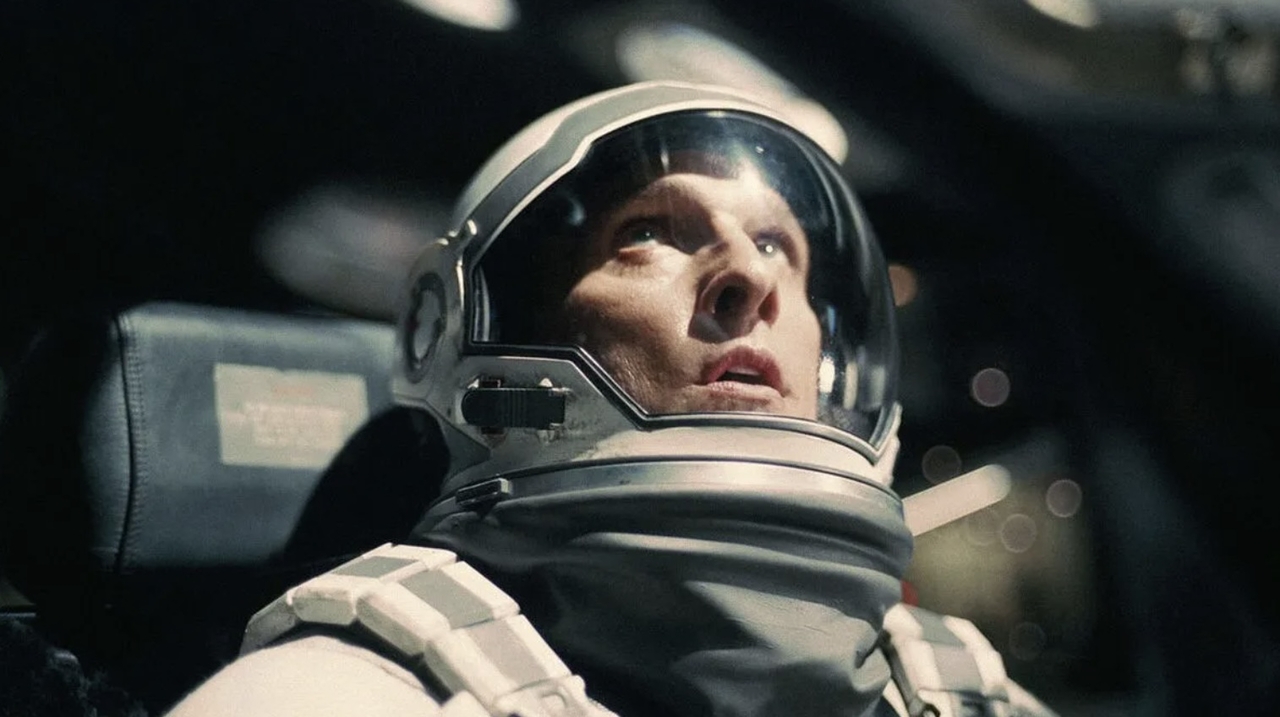
South Korea is a particularly special market for Nolan. His films — including "The Dark Knight" (2008), "Inception" (2010), "The Dark Knight Rises" (2012), "Interstellar" (2014) and "Oppenheimer" (2023) — have drawn a cumulative audience of more than 36 million in Korea alone. "Interstellar" in particular, the first of his films to cross 10 million admissions here, actually performed better in Korea than in North America — a remarkable feat given the handicap of a November release, traditionally one of the slowest periods for Korean theaters.
At an Asian tour press conference at the time, Nolan said he believed "Interstellar" succeeded in Korea because of Korean audiences' loyalty to cinema and their scientific literacy.
The parallels between "Odyssey" and "Interstellar" go beyond both crossing the 10 million mark. The exceptional heat in Korea compared with the rest of the world is another shared trait. In most countries outside Korea, "Spider-Man: Brand New Day" is outperforming "Odyssey."
In North America, there is even speculation that "Spider-Man: Brand New Day" could surpass "Star Wars: The Force Awakens" as the all-time box-office record holder. Deadline reported that the film has become the distributor's highest-grossing release of all time in multiple countries. That stands in sharp contrast to the situation in Korean theaters, where "Odyssey" knocked "Spider-Man: Brand New Day" off the top spot immediately after opening and has held it ever since.
A theater industry official said Korean audiences have an especially high level of trust in Nolan as a director. "A masterpiece that lived up to fans' expectations arrived, and the positive feedback from those fans appears to have primed the pump for the broader box-office run," the official said.
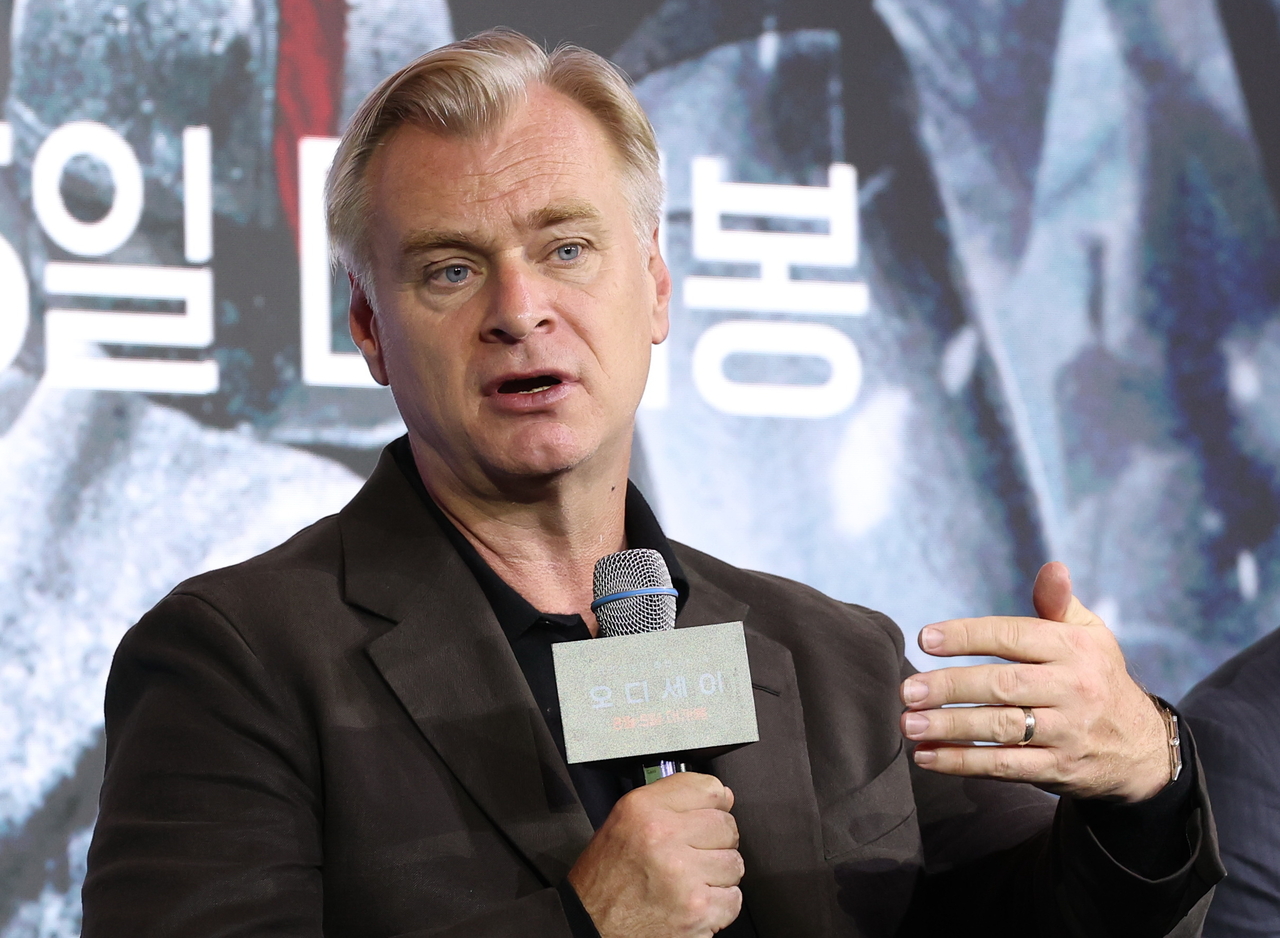
Despite that extraordinary affection, Nolan had never once set foot in Korea — until early last month, when he visited for the first time in his career ahead of "Odyssey's" opening. He announced the trip with a handwritten letter that signaled his affection for the Korean market in advance. At the press conference, he said he had wanted to visit since "Interstellar." "It was so strange that people in a country I had never been to loved my films," he said. "I am so happy to finally be here."
The Yongsan IMAX ticket war: this is what cinema is for
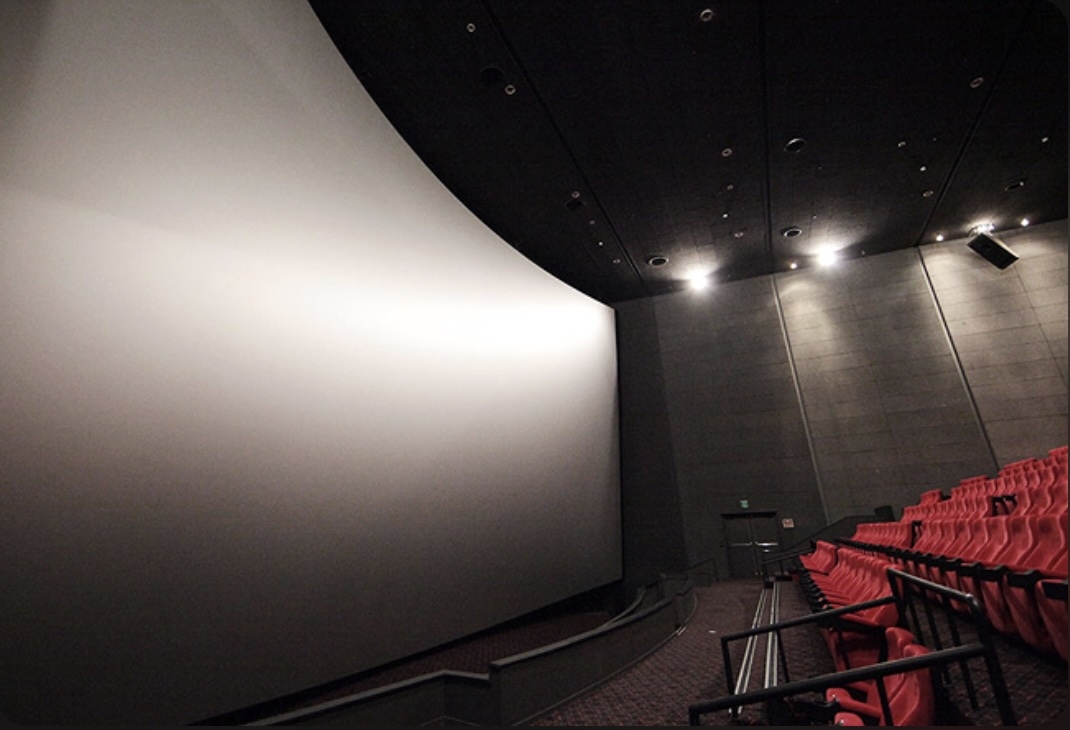
The scramble for seats at the IMAX auditorium of CGV Yongsan I'Park Mall — known among fans as "Yongamek" — has been relentless from opening day through the film's 10-million milestone and shows no sign of letting up. The frenzy even spawned a new word: "chwiketring," a portmanteau of "cancellation ticket" and "ticketing," describing the practice of hunting for last-minute cancellations just before showtime. A "Yongamek simulator" that lets viewers preview sightlines from individual seats has been circulating widely among audiences, and the "Odyssey" phenomenon has sharpened preferences for specific auditoriums and specific seats to a degree rarely seen before.
Scalpers moved in to exploit the demand. As seats at Yongamek became vanishingly scarce, resale platforms began listing tickets at seven to eight times face value. With prices topping 100,000 won, the Ministry of Culture, Sports and Tourism moved to amend the law to extend the country's anti-scalping legislation to cover the film sector.
Underpinning the extraordinary enthusiasm is the unmatched cinematic experience "Odyssey" delivers. The film is the first in history to be shot entirely on 70mm IMAX film cameras, and reviewers say the depth and immersion it provides are in a class of their own. Behind that achievement lies Nolan's directorial philosophy — a belief in the power of the analog even in the age of digital technology and AI.
In an interview with CBS's "60 Minutes," he described IMAX film as "a giant negative." "When it's properly exposed and properly printed and projected on a large screen, you get an image quality you simply cannot get anywhere else," he said. "This is a human process, an analog process," he added.
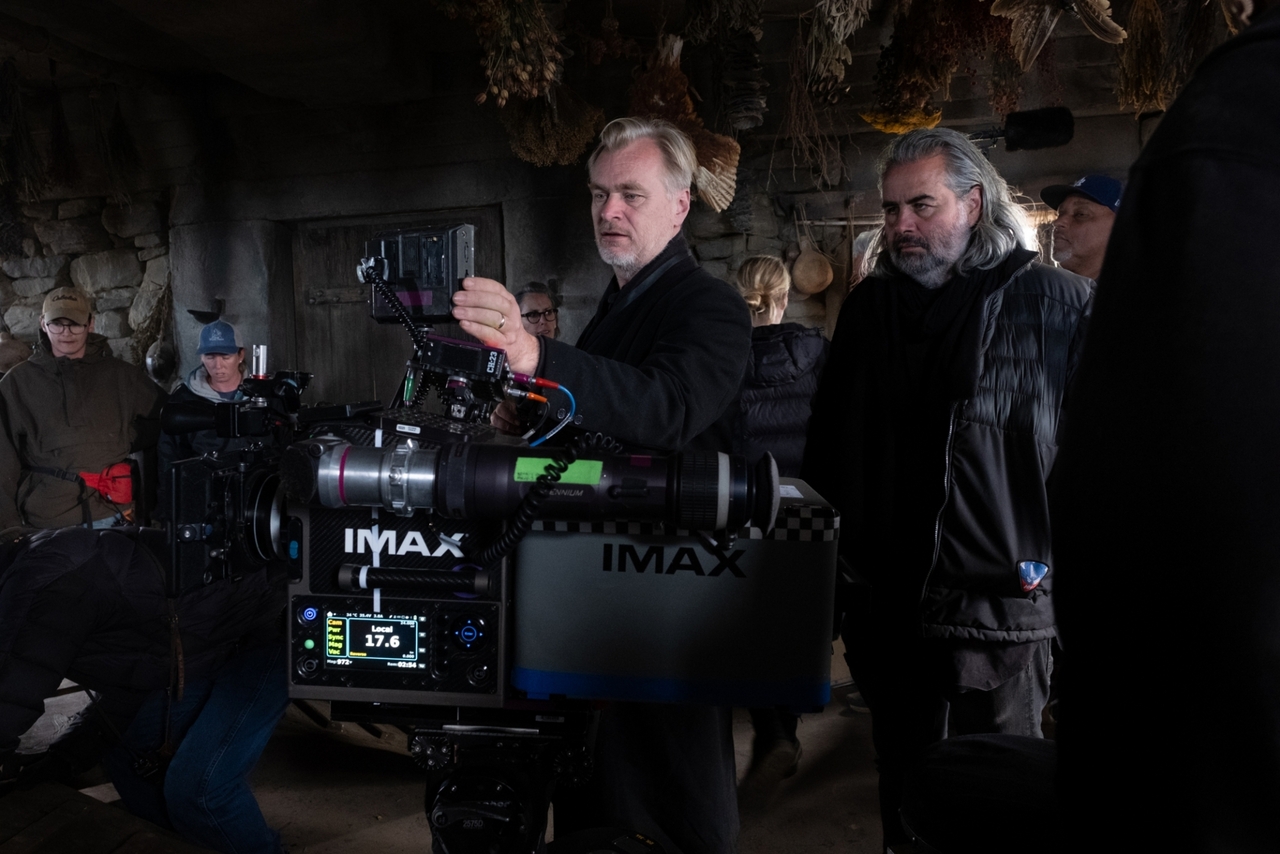
That philosophy extended to minimizing computer-generated imagery and realizing the story within actual physical environments. Nolan shot the entire film on location in Greece, Italy, Iceland, Scotland and the United States, and had a 10.7-meter Trojan horse — the symbol of both Odysseus's greatest trial and the end of a 10-year war — built as a practical prop. The ship carrying Odysseus and his crew was constructed to be fully seaworthy. Even the scene in which Circe's magic transforms the sailors into pigs was captured entirely in-camera.
"The elements that have always drawn audiences to the cinema — overwhelming sets, breathtaking locations, thousands of cast members — are still just as valid today," Nolan said.
Audiences have responded in kind, with many saying the sheer scale of the film, the tactile realism of its analog imagery and the experience of watching a blockbuster made with no expense spared were worth every penny — things a mobile device can never replicate.
A 39-year-old office worker surnamed Eom said she had not been to a movie theater in two years but went after hearing universal praise. "I kept thinking: this is content worth spending your money and time on, and that's why everyone is coming to see it," she said.
War, family and the reason a classic endures across the ages
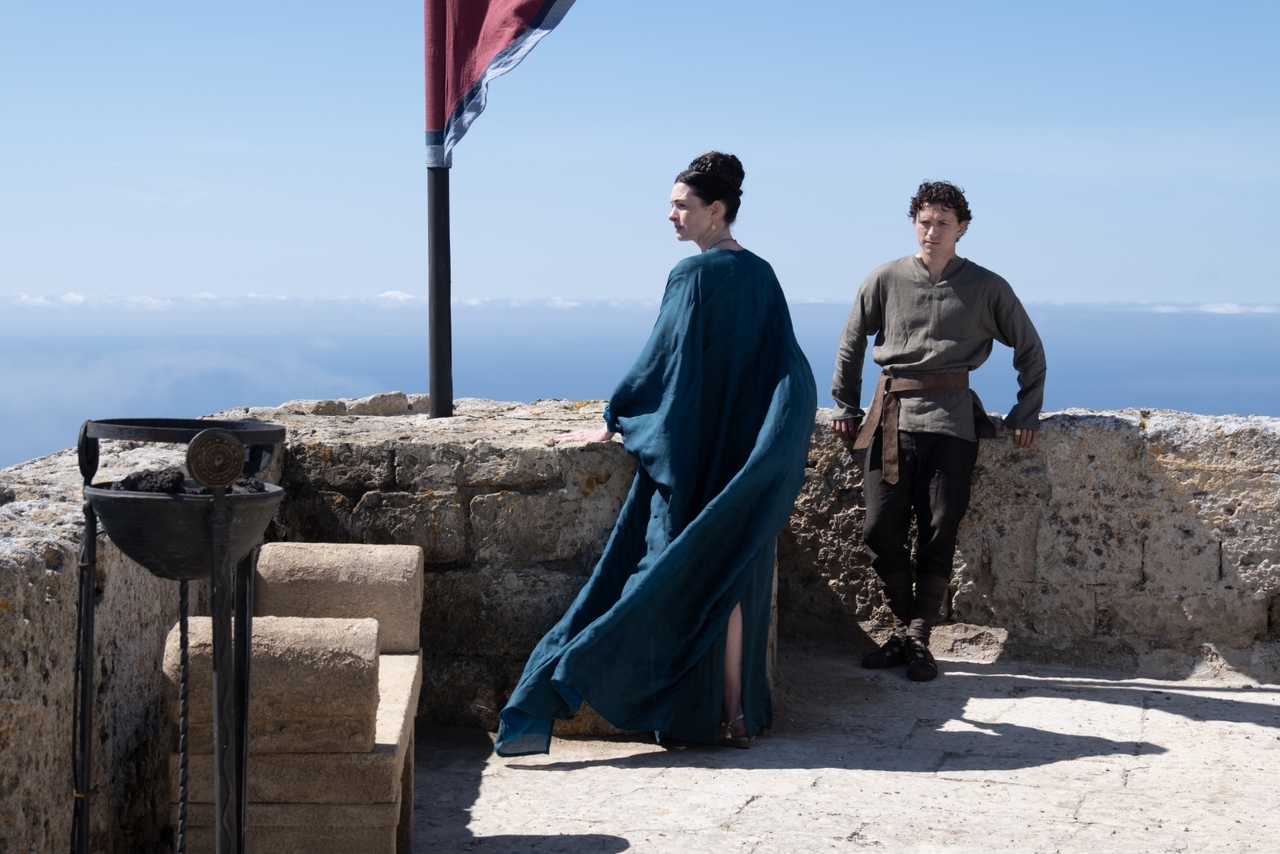
The reason a story that has survived nearly 3,000 years still resonates on a 21st-century screen ultimately lies in the power of the narrative itself. One man's journey home after a long war, the wife and son waiting for him, and the layers of guilt and atonement accumulated along the way — these themes transcend time and map directly onto the lives of modern audiences.
Nolan has said he decided to adapt the story after discovering that humanity's most famous tale had never been given a proper cinematic treatment. "The genre of Greek mythology essentially does not exist in film," he said. "What I saw in 'Odyssey' was a gap that had never been filled."
The film that emerged from that realization is becoming more than a blockbuster — it is taking shape as a cultural phenomenon. Brisk sales of Homer-related books at bookstores across the country are evidence of that. The overflow of demand from audiences who want to understand the story more deeply suggests that "Odyssey" is clearly communicating something to people today.
According to the first-week September bestseller list released by YES24, "Odysseia," translated by Kim Heon, topped the overall chart. A separate translation by Park Mun-jae also reached fourth place, putting two editions of the same source text in the top five simultaneously.
Scholars point to the ancient Greek concept of "xenia" — interpreted as the law of Zeus — as the central message "Odyssey" carries for contemporary audiences. It is the social norm that when a stranger appears at your door, you must offer food, shelter and safety before even asking who they are.

Kim Heon, a professor at Seoul National University's Institute of Humanities, appeared recently on the tvN program "You Quiz on the Block" and said the film carries a message about restoring the ethics of hospitality. "It warns that breaking the ethics of hospitality can plunge us into barbarism and bring down human civilization," he said.
The journey home from war's wounds to one's family, and the human pride and atonement encountered along the way, converge with xenia to pose an ancient question that cuts through our own age of conflict: what matters, and how do we live together? That is precisely why the classic endures as a living, breathing work — and why it is still called essential reading for all of humanity.
Pop culture critic Kim said the film's thematic core — war and repentance — gives it a weight that speaks directly to the present day, including the ongoing conflict in Iran. "It is a work about discovering who you are, and about someone waiting faithfully for that person across a long stretch of time," he said. "It makes you reconsider the classical values of faith and trust."
balme@heraldcorp.com