Oulu: a city where cutting-edge technology and pristine nature coexist
Stillness and natural rhythms as a path back to balance
Art and culture that invite us to face nature's own time
Air guitar as a cry for peace
![The Koiteli rapids, about a 30-minute drive from downtown Oulu, Finland [Visitoulu]](https://wimg.heraldcorp.com/news/cms/2026/09/22/news-p.v1.20260921.67f4f2814a644efb90454bc61b255c70_P1.jpg)
The river, swollen by heavy rain, rushes through dense forest, its current swift and full. Sunlight scatters freely off the churning water, and the roar of the rapids dissolves the stiffness that city life leaves in the body. Walking along the riverbank, you follow a course that bends around boulders, splits apart and rejoins itself.
The white noise of the water, warm sunlight filtering through a thick canopy, and the cool freshness of the forest fill the lungs with something that feels like a deep, natural breath. It is ordinary and extraordinary at once — a moment that belongs only to nature. Watching the river move effortlessly toward the sea, you find your own hurried pace slowing, almost without trying.
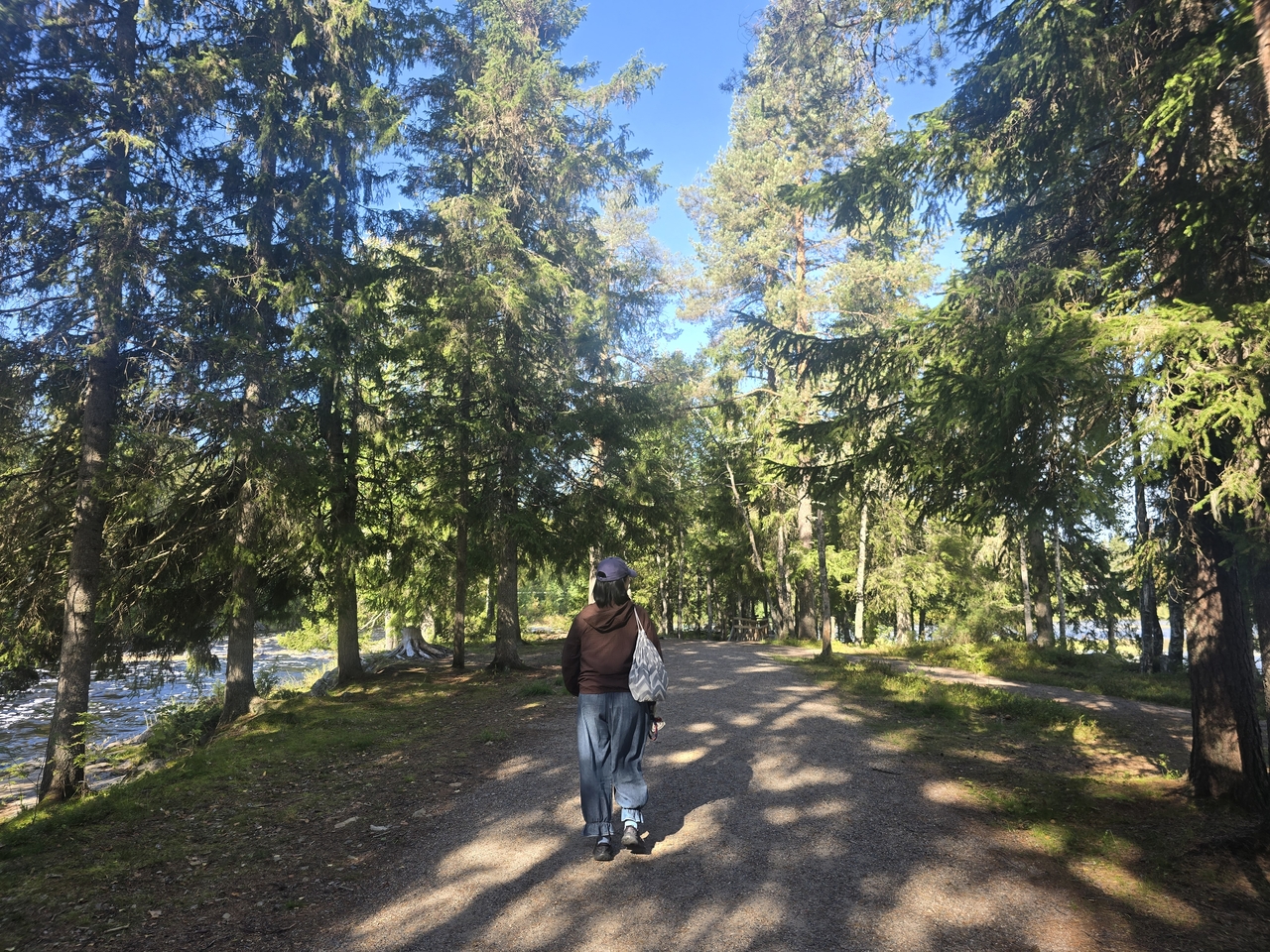
Koiteli lies about 30 minutes by car from downtown Oulu. Stretching roughly 3 kilometers along the Kiiminkijoki River through dense forest, the rapids zone is one of Oulu's signature outdoor destinations — a place for hiking, picnicking, canoeing and fishing. Bridges and wooden decks wind non-linearly across the forest and river, and somewhere along the way, visitors find themselves breathing in time with nature. That wilderness this close to a city center exists at all is the first clue to understanding Oulu.
Finland's fifth-largest city is perhaps best known internationally as the home of Nokia. But the true character of this city of 220,000 — a driving force behind Finland's IT industry — may lie just beyond its high-tech core, where forests, wetlands and sea come together in a landscape that feels like a gift. Oulu is a city where technology and nature do not compete but complement each other. That contrast between extremes may be the most accurate way to describe it.
Stillness as progress — finding balance in nature
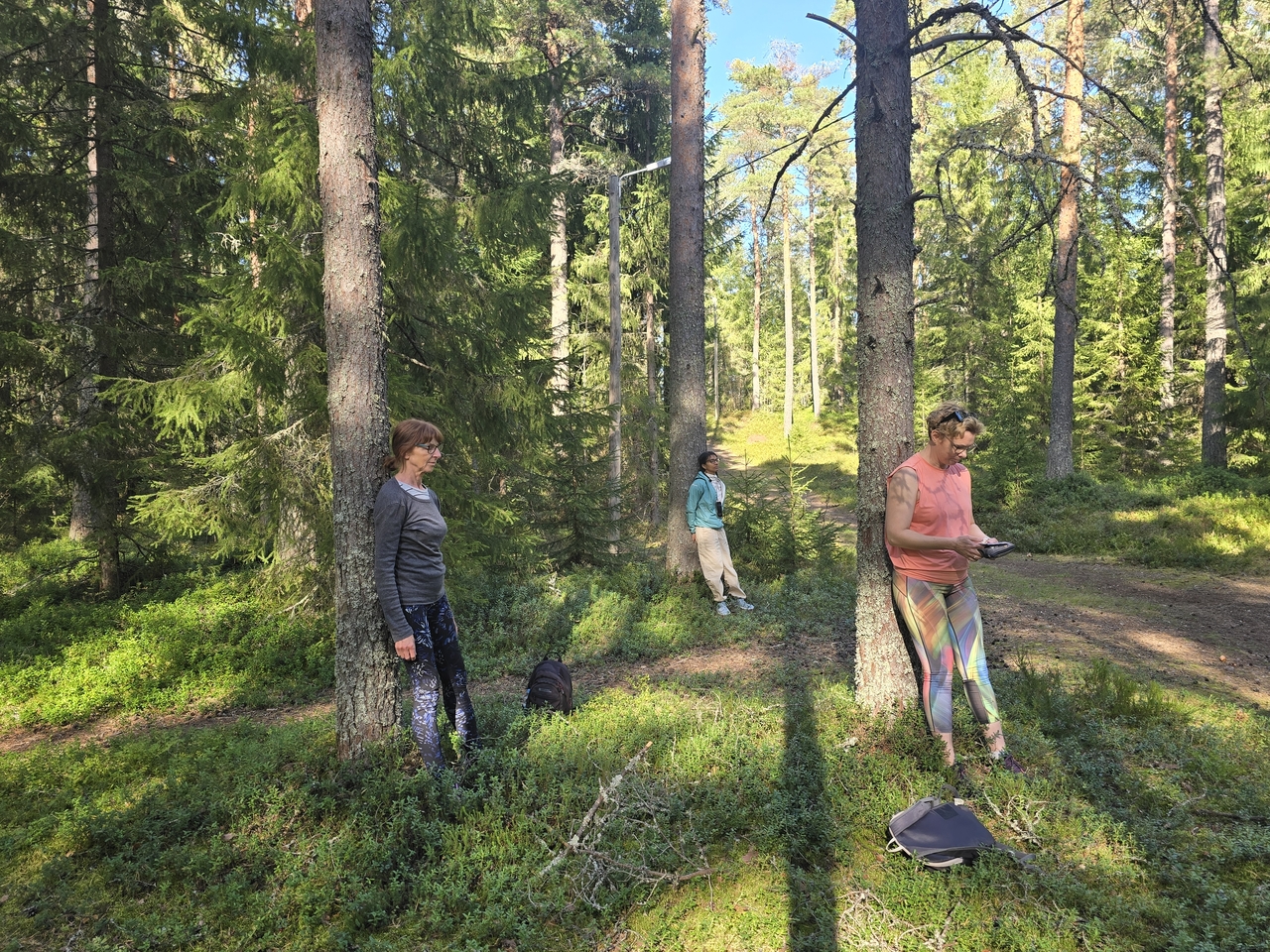
Here, stopping is not a failure — it is a prescription for surviving an age of relentless speed. Nature holds and restores a mind and body worn down by the manufactured world. In a country where roughly 70 percent of the land is forest and 10 percent is lakes, nature is not a retreat destination but the default backdrop of daily life and the baseline of recovery.
Finland has already turned the art of restoring balance — between body, mind and nature — into a structured practice. The ForestMind program, encountered in Oulu, is one example. It requires no special equipment or location. The whole point is to stop mid-walk and savor the pleasure of noticing something new in everyday nature. You might lean against a tree and let it share the weight of your day, or wrap your arms around a trunk and feel its warmth. What matters is not what you do, but the will and courage to stop.
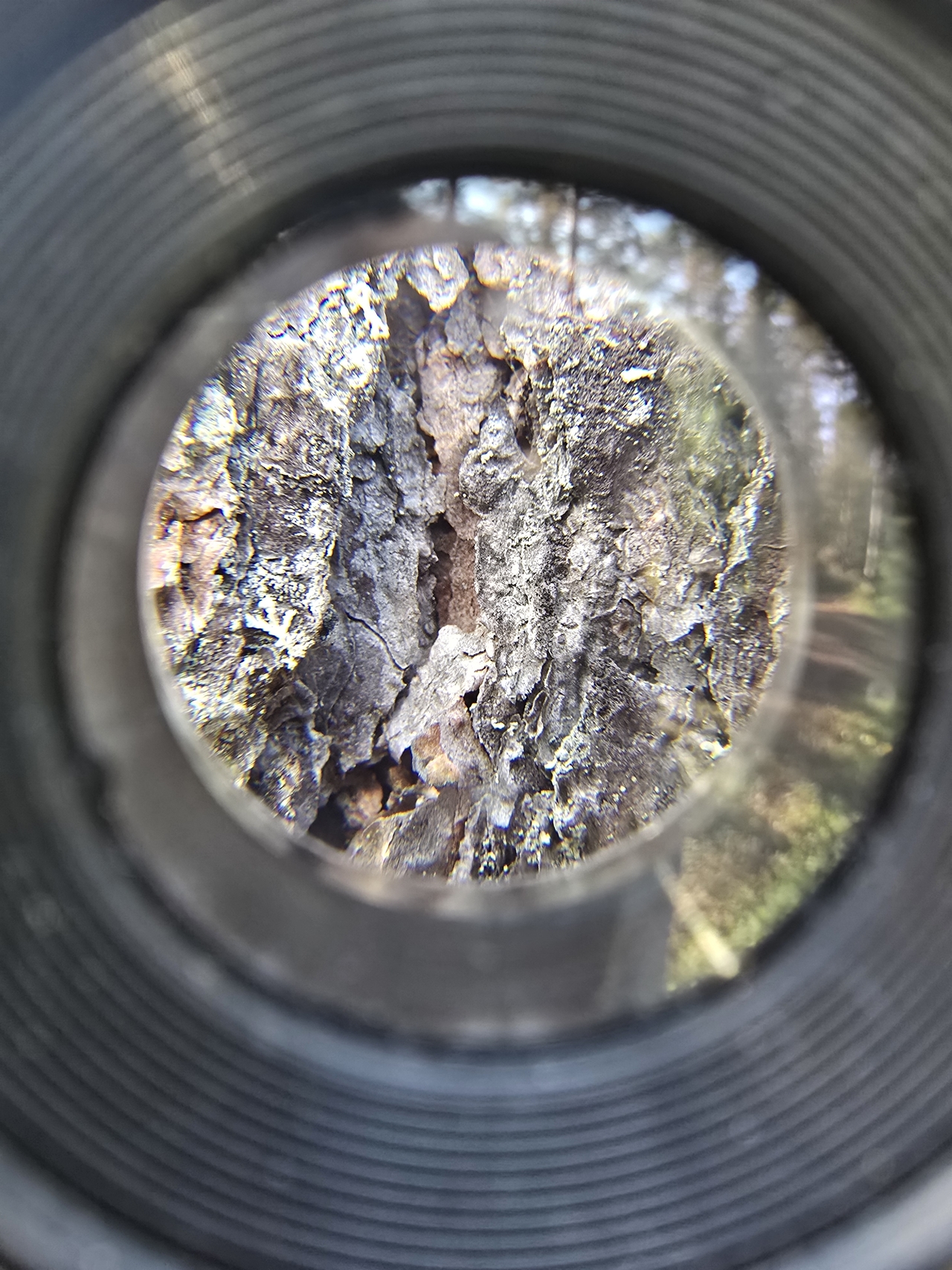
Pauliina Pakaslahti, a ForestMind instructor, said the core idea is to use the power of nature for mental restoration. "When you reduce stress, your concentration and resilience improve," she said. "That means stopping is also progress."
Walking through the forest, you come across mushrooms and wild berries growing along the path. Staring in mild wonder at these wild things rarely seen up close, local guides cheerfully offer to pick some for you to try. Treading on the damp forest floor, gathering sweet blueberries and tart lingonberries, you find yourself wishing the time would not pass so quickly.
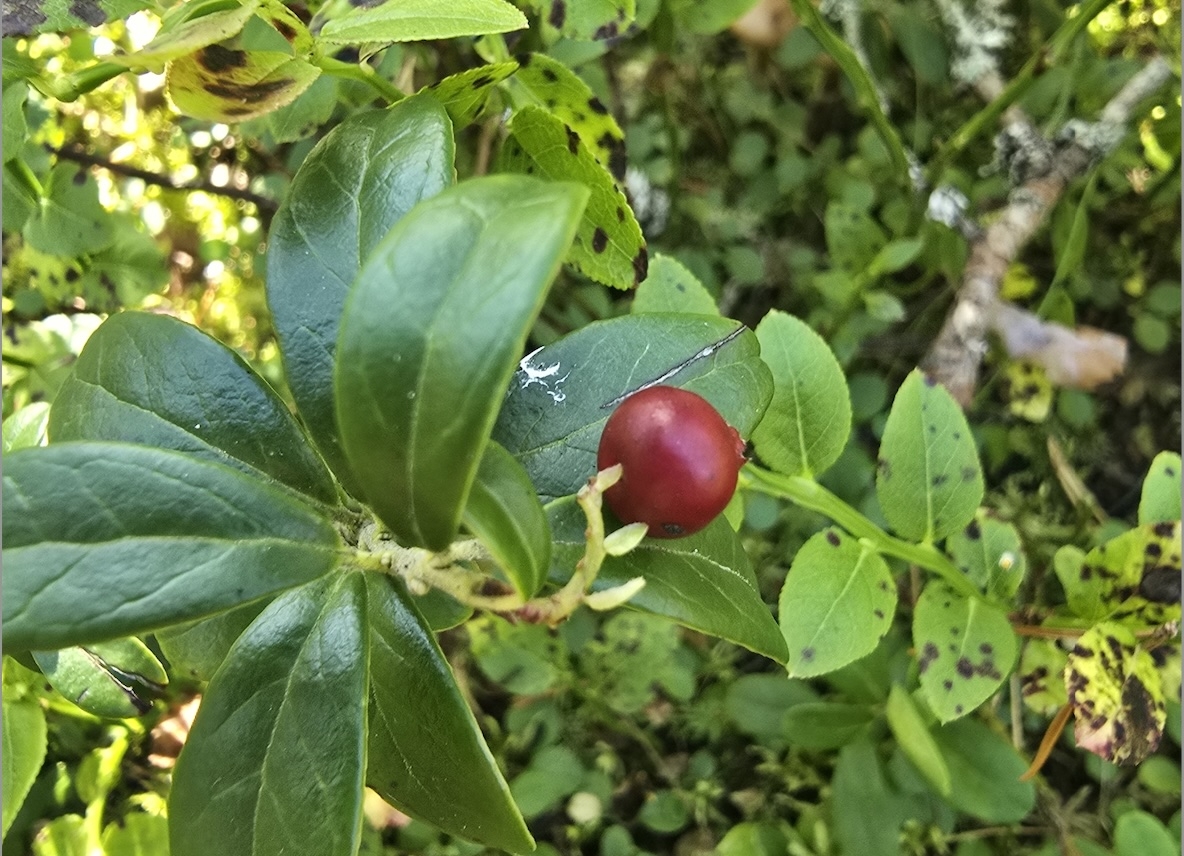
This is guaranteed by a Finnish principle known as "Jokamiehenoikeus," or everyman's right — the freedom for anyone to forage wild produce from the land. For Finns, heading into the forest in summer and autumn to pick berries and gather mushrooms is a perfectly ordinary part of life.
Reading time anew — the Climate Clock
!["Super Kello (2026)" by Superflex, part of the Climate Clock project, photographed by Maija Toivanen [Oulu2026]](https://wimg.heraldcorp.com/news/cms/2026/09/22/news-p.v1.20260921.3d17013947fa4b11a2169b18394794b6_P1.jpg)
This year, Oulu earned an additional distinction. The EU selected the northern Finnish city as the 2026 European Capital of Culture — a designation the EU awards annually to a city in one of its member states, providing support for cultural and arts programming.
Living up to the title, Oulu is presenting a year-long program of cultural and arts events together with 39 municipalities across northern Finland. Winter brings activities set against frozen seas and snowfields; summer fills forests, rivers and lakes with outdoor programming. Nature sits at the center of it all.
Among the year's initiatives, the Climate Clock stands as the flagship project of Oulu2026. It is a series of permanent public art installations created by internationally renowned artists in collaboration with scientists from the Oulu region.
The name carries a double meaning: a warning that the climate crisis is ticking closer, and a metaphor for nature's own time — a rhythm distinct from the clock humans have made. Aimed at "reconnecting us to nature's time," the project spans six to seven sites across Oulu, including Haukipudas, Kiiminki, downtown Oulu, Oulunsalo, Ylikiiminki and Yli-Ii.
!["Olet Tässä (2026)" by Antti Laitinen, part of the Climate Clock project, photographed by Maija Toivanen [Oulu2026]](https://wimg.heraldcorp.com/news/cms/2026/09/22/news-p.v1.20260921.8c6eda8221634c1fb91871dbce7b2601_P1.jpg)
At Koiteli, visitors can encounter one of the installations: "Olet Tässä (2026)" — Finnish for "You Are Here" — by Finnish artist Antti Laitinen.
Two spheres suspended in the air and several circular frames twisted from branches wait for visitors throughout the forest, like figures in a hidden-picture puzzle. Each circular frame turns the landscape beyond it into something resembling a painting; the round spheres rotate with the wind, making time feel alive and in motion. True to its title — "You Are Here" — the work asks viewers to look directly at the nature of this exact spot, this exact moment.
'Air guitar, not war' — crying out for peace from thin air
![A scene from the Air Guitar World Championship, held annually in Oulu, Finland [Oulu2026]](https://wimg.heraldcorp.com/news/cms/2026/09/22/news-p.v1.20260921.35549e4b29f64688b47f1b7d21a88434_P1.jpg)
Oulu is also known as the home of the Air Guitar World Championship. The quirky competition — in which contestants perform elaborate guitar routines to music without any actual instrument — has been one of the city's proudest traditions since 1996.
This year marked the championship's 30th anniversary, drawing more than 50 competitors from 13 countries. The final, held on a waterside stage at Pökkelöpuisto park in late August, drew an audience of about 5,000. The greatest spectacle of the event is watching entirely different performances emerge from contestants who are all listening to the same music.
For all its playfulness, the scoring criteria are clear. Among the measures — originality, stage presence, technical skill and artistic expression — the most distinctive is "Airness": the quality of transcending mere imitation of guitar playing to become a work of art in its own right.
![A competitor delivers a passionate performance at the Air Guitar World Championship in Oulu, Finland. [Oulu2026]](https://wimg.heraldcorp.com/news/cms/2026/09/22/news-p.v1.20260921.a85730b6ae904080af675b370bc70eb0_P1.jpg)
Aline Westphal, the 2011 champion known by the stage name "Devil's Niece," said Airness is difficult to put into words. "But when you see it, you feel it immediately," she said.
At intervals throughout the competition, the emcee calls out "Make Air!" — and the crowd roars back "Not War!" Air guitar, not war: that has been the event's slogan for 30 years. A contest mixing laughter, wit, madness and passion, it shows that peace and joy can be shared without a single real instrument. The act of believing in something invisible and playing it as if it were real is, in its own way, a gesture of faith in the invisible — love, belief and the possibility of peace.
Justin Howard of the United States, the 2012 champion, said: "I think the moment you believe in something, it becomes real. And I think that belief can make the world a better place." He added: "We make air, not war. We are real, and peace is real."
balme@heraldcorp.com