
Cheon Ha-ram alleges nominee used demolition-victim status to acquire Seocho-gu apartment
Kang Shin-cheol says Cheonwang-dong home was his birthplace and sole residential base
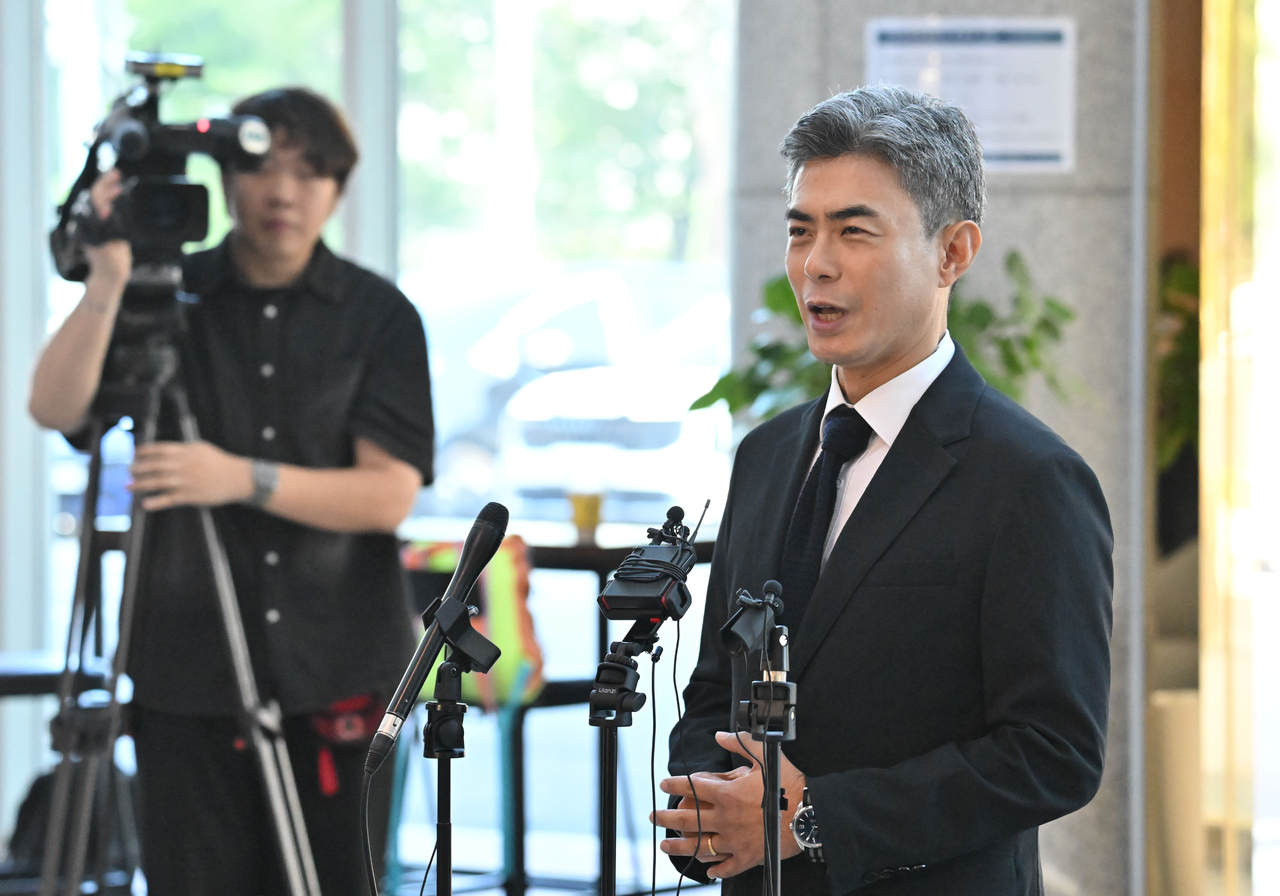
The confirmation hearing preparation team for Defense Minister nominee Kang Shin-cheol pushed back Sunday against media reports alleging he had fraudulently obtained an apartment subscription by exploiting a special allocation program for demolition victims, calling the claims "contrary to the facts."
Earlier that day, Cheon Ha-ram, acting leader and floor leader of the Reform Party, held a press conference at the National Assembly's media center and alleged that Kang had secured demolition-victim status through a false address registration while on military duty, then used that status to improperly acquire an apartment in Seocho-gu, Seoul.
According to Cheon, Kang received a house in Cheonwang-dong, Guro-gu, Seoul as a gift in July 1997, and in March 2008 — while stationed in Hwacheon, Gangwon Province — registered his address there along with his spouse.
Seven months later, in October of that year, Guro-gu purchased the property as compensation for the relocation of the Seoul Southern Detention Center, granting Kang demolition-victim status. He then allegedly received an apartment in the Seocho Nature Hill 3 complex in Seocho-gu through the special demolition-victim allocation program in August 2012.
The apartment's pre-sale price at the time was 520 million won ($382,000), but its current market price is around 2.2 billion won — a gain of roughly 1.7 billion won, Cheon said.
In response, the preparation team issued a statement saying the address in question was "the place where the nominee was born and raised" and "a detached house legitimately received as a gift in 1997, where the nominee, his spouse and other family members regularly stayed."
The team added that "due to the nature of military service, the nominee was required to rotate through remote postings on a one-to-two-year cycle, and the quarters at those postings were merely temporary duty stations — the home he owned in Seoul was the sole residential base to which he would return."
However, the team acknowledged that "it is true that, in the course of moving between duty stations, some administrative steps were not handled carefully — such as keeping the registered address aligned with the actual place of residence, or documenting the legally recognized exceptions under the enforcement decree of the Land Compensation Act."
The team went on to say that "while it is the nominee's fault that he neglected personal matters while focused on his core military duties, there was absolutely no intent to falsely register an address or any illegality in the subscription process."
Meanwhile, Kang — nominated to succeed Minister Ahn Gyu-baek — began his official schedule Thursday when he reported to the confirmation hearing preparation office, with his National Assembly confirmation hearing set for Sept. 16.
At the hearing, ruling and opposition parties are expected to clash not only over the false-registration and fraudulent-subscription allegations, but also over Kang's role as deputy commander of the Combined Forces Command during the Dec. 3 emergency martial law declaration, the transfer of wartime operational control, and the proposed integration of the three service academies.
rimsclub@heraldcorp.com




