Boosting local tourism for longer stays
Regional airports to share joint brand identity
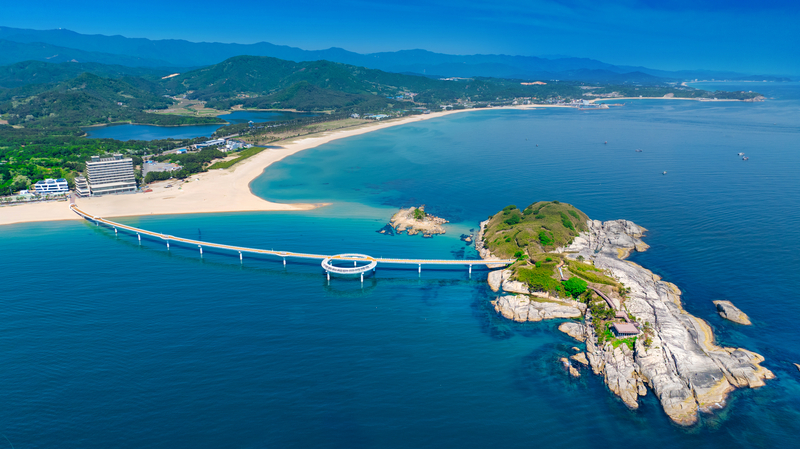
The government will channel new budget funds from the Ministry of Culture, Sports and Tourism into revitalizing five regional tourism zones anchored by local airports, including Yangyang Airport in Gangwon Province, starting next year.
According to the ministry's budget proposal for next year released Friday, the government plans to invest a total of 93.5 billion won — comprising 65.9 billion won ($48.1 million) in national funds and 27.6 billion won in local government funds — in a new "regional airport-centered tourism zone development" initiative beginning in 2027. The goal is to encourage inbound tourists to enter Korea directly through regional airports, travel across multiple areas, stay longer and contribute to local economies.
The strategy centers on gateway cities with international regional airports and links them to nearby cities with distinctive tourism assets. The ministry plans to designate five tourism zones this year and develop them intensively.
The five regional airports targeted for support are Yangyang, Gimhae, Daegu, Cheongju and Muan.
The Ministry of Culture, Sports and Tourism said it will provide comprehensive support across all stages of the inbound tourism experience in these five zones — from raising awareness and helping visitors decide to come, to facilitating arrival, getting around and having experiences — while also working to enhance the overall appeal of each destination.
The ministry will first establish a joint brand for each tourism zone to promote Korea's regions to a global audience, and expand the gateway for regional entry through promotional and marketing campaigns tied to regional airports.
It will also build out tourism transport networks connecting regional transit hubs to local attractions, and create a stress-free travel environment for foreign visitors through an integrated Korea tourism pass that combines transit payments with discounts at tourist sites.
The ministry will support the development of K-pop concerts as tourism products and pop-up exhibitions, and establish K-content multiplex experience centers at major tourist destinations popular with foreign visitors — all aimed at cultivating internationally competitive tourism zones that can rival the Greater Seoul area.
The 93.5 billion won budget for the five regional airport tourism zones breaks down as follows: 18 billion won for raising international awareness through joint brand development and overseas promotion; 14.3 billion won for boosting regional entry through airport-linked attraction programs and cruise port tourism; 14.9 billion won for improving in-region mobility and payment convenience; and 18.7 billion won for developing specialized tourism content and expanding hallyu tourism.
The ministry's broader vision goes beyond supporting the airports themselves — it aims to comprehensively revitalize the tourist destinations surrounding each regional airport.
In addition, the ministry will significantly strengthen the foundation for the accommodation industry in preparation for an era of 30 million foreign visitors annually.
Loan support for tourism businesses will be substantially expanded, including specialized facility financing for the construction of large hotels in regional areas where accommodation is scarce.
The ministry will also consolidate fragmented lodging industry data into an integrated accommodation information platform to serve as the foundation for lodging promotion policy. To improve accommodation quality, it will offer quality assessments and tailored consulting for general and lifestyle lodging establishments — covering 2,500 sites for quality evaluation and 2,000 for consulting. To fund these efforts, the loan support ceiling for tourism businesses will be raised sharply from 637.5 billion won to 856.2 billion won.
abc@heraldcorp.com