Multi-domain exercise to include maritime missile defense, anti-submarine warfare
UFS scaled back, Ssangyong canceled, but trilateral drill proceeds as planned
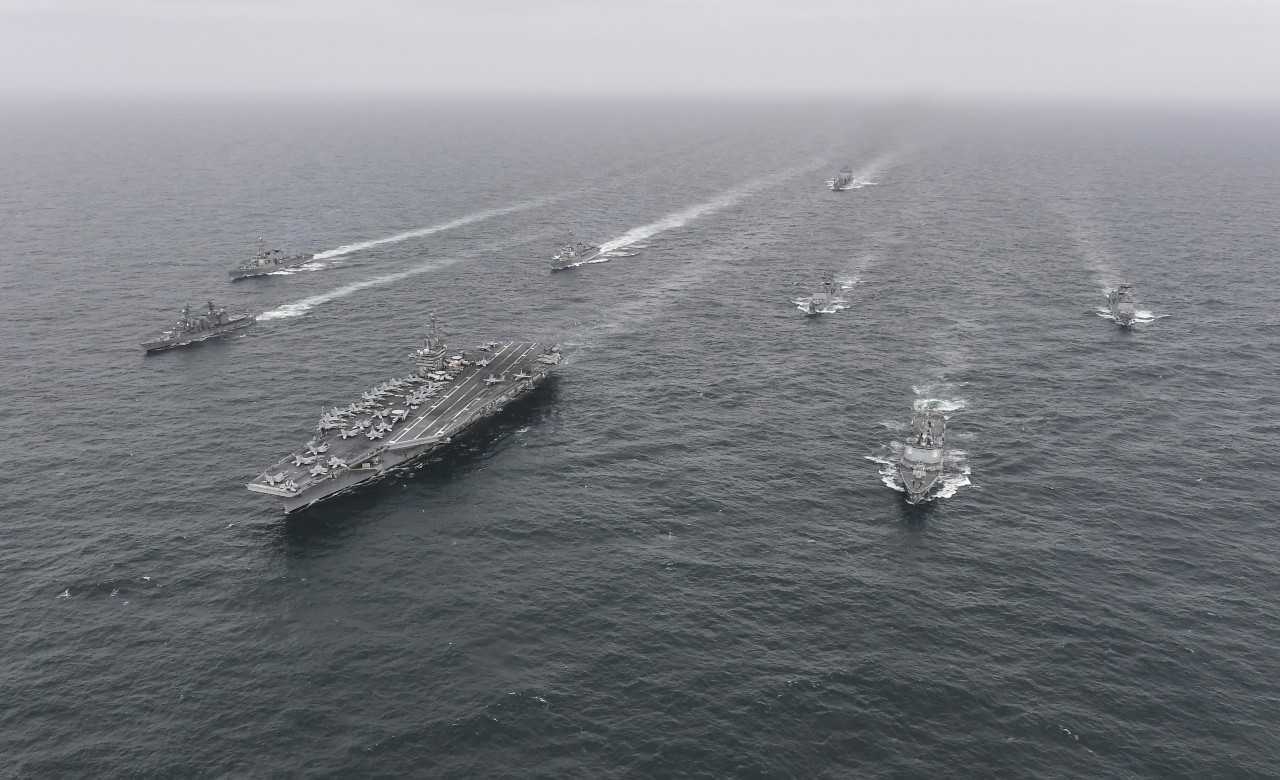
South Korea, the United States and Japan will conduct the 2026 Freedom Edge exercise in international waters east and south of Jeju from Sept. 7 to 11, the Joint Chiefs of Staff announced Friday. The JCS described the drill as a defensive, annual exercise the three countries hold to counter North Korea's nuclear and missile threats and safeguard peace and stability in the region.
The announcement comes as Donald Trump has moved to scale back or cancel a series of combined US-South Korea exercises with an eye toward resuming North Korea-US dialogue.
Freedom Edge takes its name from the front half of the US-South Korea exercise Freedom Shield and the back half of the US-Japan exercise Keen Edge, forming a regular trilateral multi-domain drill. It was first held in June 2024 following an agreement by the three leaders at the Camp David summit in August 2023, and has since been conducted three times — again in November 2024 and most recently in September last year.
Past iterations have included maritime missile defense, anti-submarine warfare, air defense and aerial operations, search and rescue, maritime interdiction, and cyber defense drills. The third exercise last year also featured counter-piracy training.
Trump ordered the second-half combined exercise Ulchi Freedom Shield to be scaled back on Aug. 16 (local time), cutting short what had been planned as an 11-day drill; it ended Friday after just five days. The Ssangyong exercise — a division-level combined naval and Marine Corps drill scheduled for next month — was also canceled.
Freedom Edge, by contrast, is confirmed to be proceeding at its originally planned scale and scope without reduction. However, other combined US-South Korea exercises scheduled between September and November this year — including Iron Mace, a nuclear-conventional integration CPX; Freedom Flag, a combined air exercise; and the Ssangmae exercise — could be affected by moves to restart US-North Korea dialogue, analysts say.
North Korea has pushed back sharply each time Freedom Edge has been held. After the three countries' joint chiefs agreed last month to continue holding the exercise annually, a North Korean Defense Ministry spokesperson said through KCNA that the drill reflected "the unchanging hostile intent of the US, Japan and South Korea to gain military superiority and pursue geopolitical interests by strengthening trilateral military cooperation," calling it "the root cause of destroying regional peace and stability."
rimsclub@heraldcorp.com