PPP warns of 'backdoor troop dispatch'; Democratic Party says mission is to protect Korean vessels and nationals
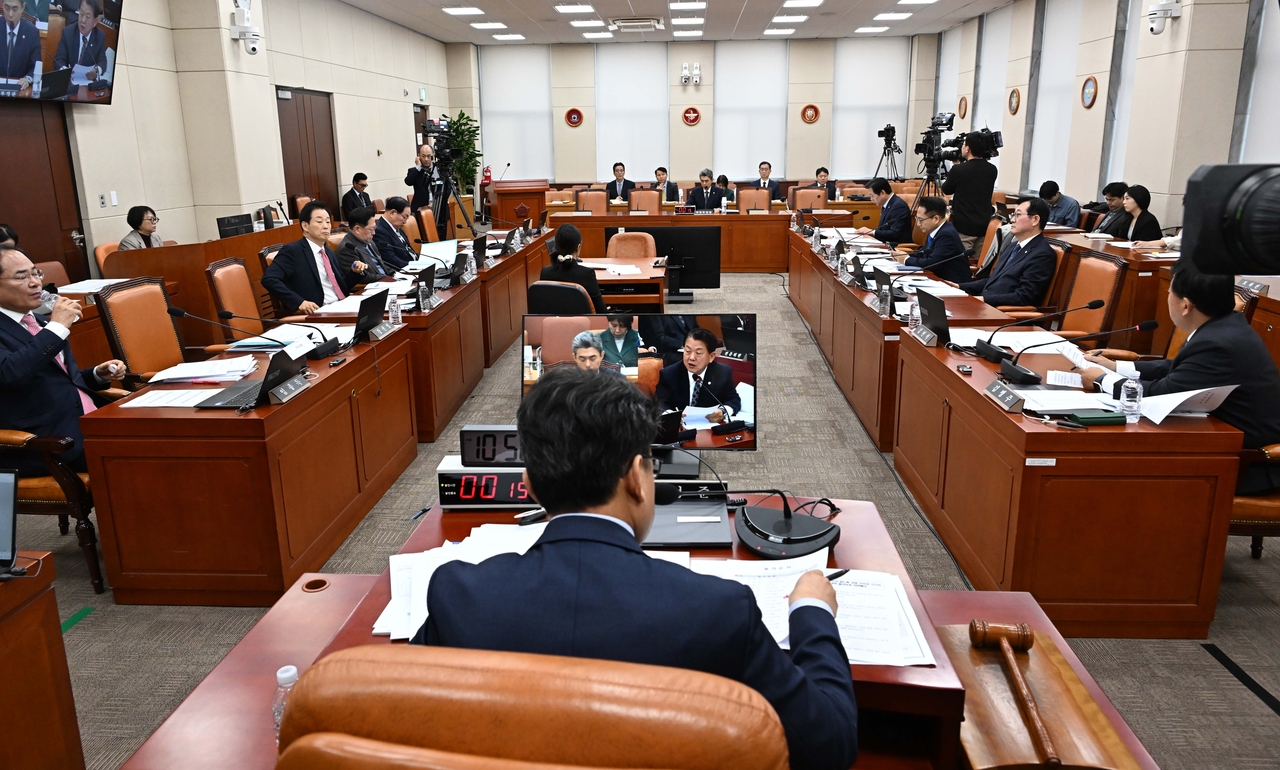
Ruling and opposition parties clashed Monday at a plenary session of the National Assembly's National Defense Committee over a revised motion to extend the Cheonghae Unit's deployment and expand its operational area to include the Gulf of Aden. The People Power Party argued the move could amount to a "backdoor troop dispatch" driven by US pressure, while the Democratic Party of Korea countered that the extension was intended solely to protect Korean merchant vessels and nationals in the region.
Rep. Im Jong-deuk of the People Power Party, who leads his party's side on the committee, said the government appeared paralyzed — unable to refuse President Donald Trump's demands yet unwilling to commit to a full deployment. "There is considerable talk that what is happening amounts to a backdoor troop dispatch," he said.
Im pressed Defense Minister Kang Shin-chul on what the military would do if Korean lives and property suffered serious harm in the Strait of Hormuz. Im also asked whether a clause could be added to the bill explicitly prohibiting any dispatch to the Strait of Hormuz under any circumstances.
Rep. Yoo Young-ha of the same party raised concerns about patrol aircraft operations and the health of deployed troops. "There is a risk that patrol aircraft could be interpreted by the other side as military intelligence gathering or hostile military activity," Yoo said. "If the deployment is prolonged, the health of the troops stationed there also becomes a serious issue."
Rep. Kim Byung-joo of the Democratic Party, who leads his party's side on the committee, drew a line, saying the motion "does not involve South Korea in a war between the United States and Iran in the Strait of Hormuz." Kim described it as "simply an extension to protect our merchant ships, oil tankers and compatriots in the Gulf of Aden and surrounding waters."
On concerns about a backdoor troop dispatch, Kim said public worries would be compiled during the legislative subcommittee and plenary reviews and attached as supplementary opinions. "It is important that this proceed without the slightest shadow of doubt," Kim said.
Jin Seong-jun, the Democratic Party lawmaker who chairs the National Defense Committee, also questioned Defense Minister Kang, asking whether the military was being sent to expand its mission in a Middle East region marked by instability and active hostilities. Jin urged the ministry to communicate sufficiently in advance with countries in the region "so that unnecessary misunderstandings do not arise."
The committee referred the revised motion to its legislation review subcommittee for further examination. A separate motion to extend the dispatch of South Korean troops for training purposes with the UAE military was also sent to the subcommittee.
Protests emerged outside the National Assembly as well. Progressive Party floor leader Yun Jong-o and fellow party lawmakers held a picket demonstration before the plenary session began, calling for a halt to the processing of the revised Cheonghae Unit deployment extension motion.
rimsclub@heraldcorp.com