
Ministry of Land, Infrastructure and Transport, Korail analyze vulnerabilities, tailor safety measures
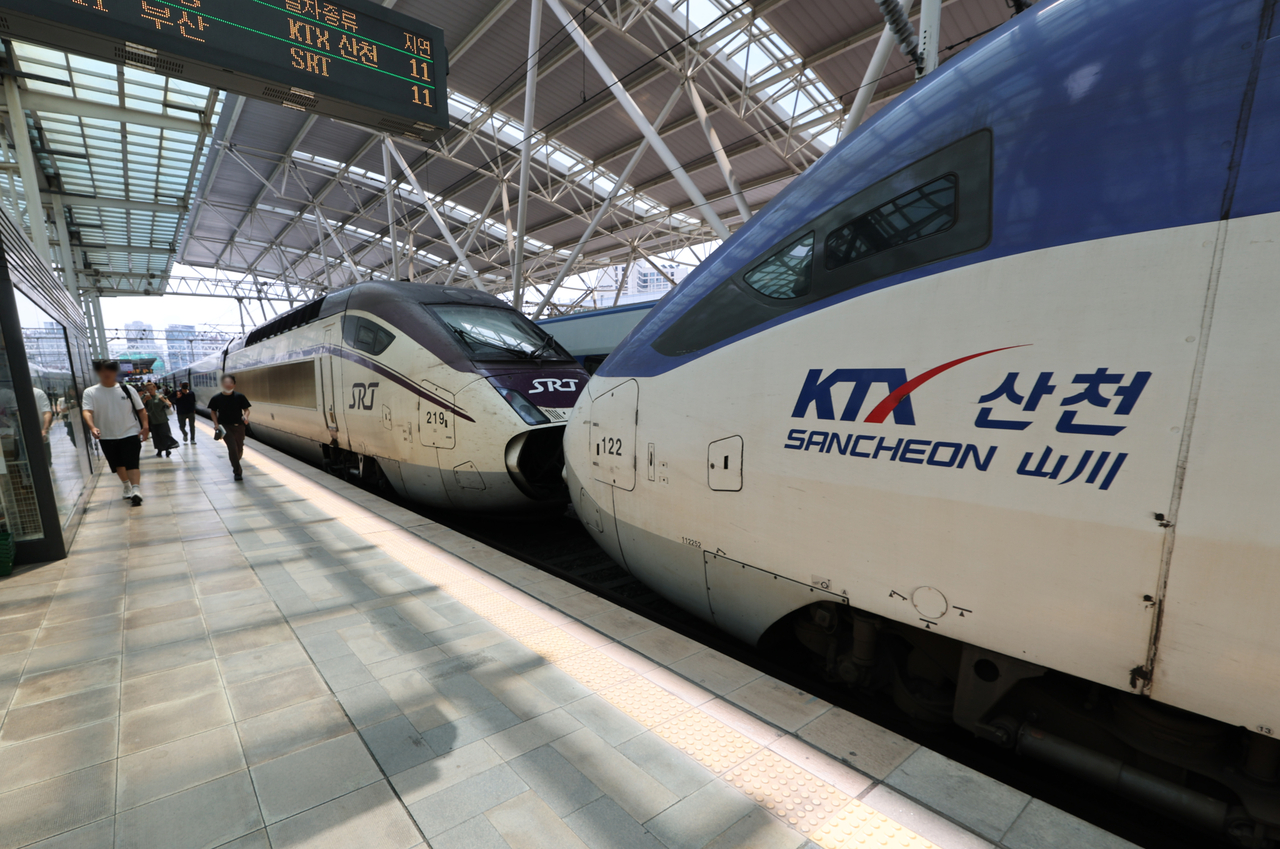
South Korea is significantly strengthening on-site safety management ahead of a major expansion in high-speed rail services and seating capacity set to take effect Tuesday, when the country's two rail operators merge.
The Ministry of Land, Infrastructure and Transport said Thursday it is working closely with Korea Railroad Corporation (Korail) and SR to ensure passengers can use high-speed rail more safely and conveniently once integrated operations begin.
The ministry and the two operators have gathered frontline input through labor-management-government consultations, staff interviews and roundtable meetings, using that feedback to identify vulnerabilities — including newly added routes and changed working conditions — and refine tailored safety measures.
With the separation between KTX and SRT routes set to disappear, engineers previously assigned to specific lines have been required to obtain certification for new routes and rolling stock. For newer trains such as the KTX-1, experienced KTX engineers have ridden along to conduct hands-on proficiency training.
To prepare for the increase in coupling and decoupling operations that comes with more frequent services and longer coupled-train runs, as well as shorter intervals between trains, the ministry has also reinforced on-site safety management through repeated drills, additional staffing and stronger information-sharing between control centers and field crews.
The ministry and Korail expect the merger to add an average of 23 high-speed rail services on weekdays and 26 on weekends each day, bringing daily totals to 402 on weekdays and 457 on weekends. Seat capacity will rise accordingly — by more than 15,000 seats per day on weekdays and more than 17,000 on weekends.
The ministry said it plans to complete approval of the revised railway safety management framework for the Korail-SR merger by the end of August, and will continue to prioritize rail safety after Tuesday's launch — including deploying two engineers on certain routes and inspecting engineer training practices.
A joint task force involving the ministry, Korail and SR has been operating since this month to act swiftly on findings from joint inspections and address any issues that arise during the early phase of integrated operations.
On Friday, the day before the merger, the ministry will conduct a joint on-site inspection at Seoul Station with safety managers from Korail and SR, directly checking KTX-1 on-the-job training, station guidance systems, and the control and emergency-response setup at Seoul Station's local control center.
In the early weeks of integrated service, ministry staff will ride the trains themselves to monitor operations and station use, making immediate corrections wherever shortcomings are found, with the aim of ensuring a stable launch.
"The high-speed rail integration is an important turning point that improves travel convenience for the public while raising the efficiency and safety of rail operations to a new level," said Kim Tae-byeong, director general of the ministry's railway bureau. "We will build a tight inter-agency collaboration framework so there are no gaps in safety or service, and will comprehensively review and adjust overall operations to ensure the integrated service runs stably in the field."
Korail President Kim Tae-seung also said the company would "prepare thoroughly to the very end to minimize any confusion that may arise in the early stages of integration and to let the public use the improved high-speed rail service with confidence."
smh@heraldcorp.com




