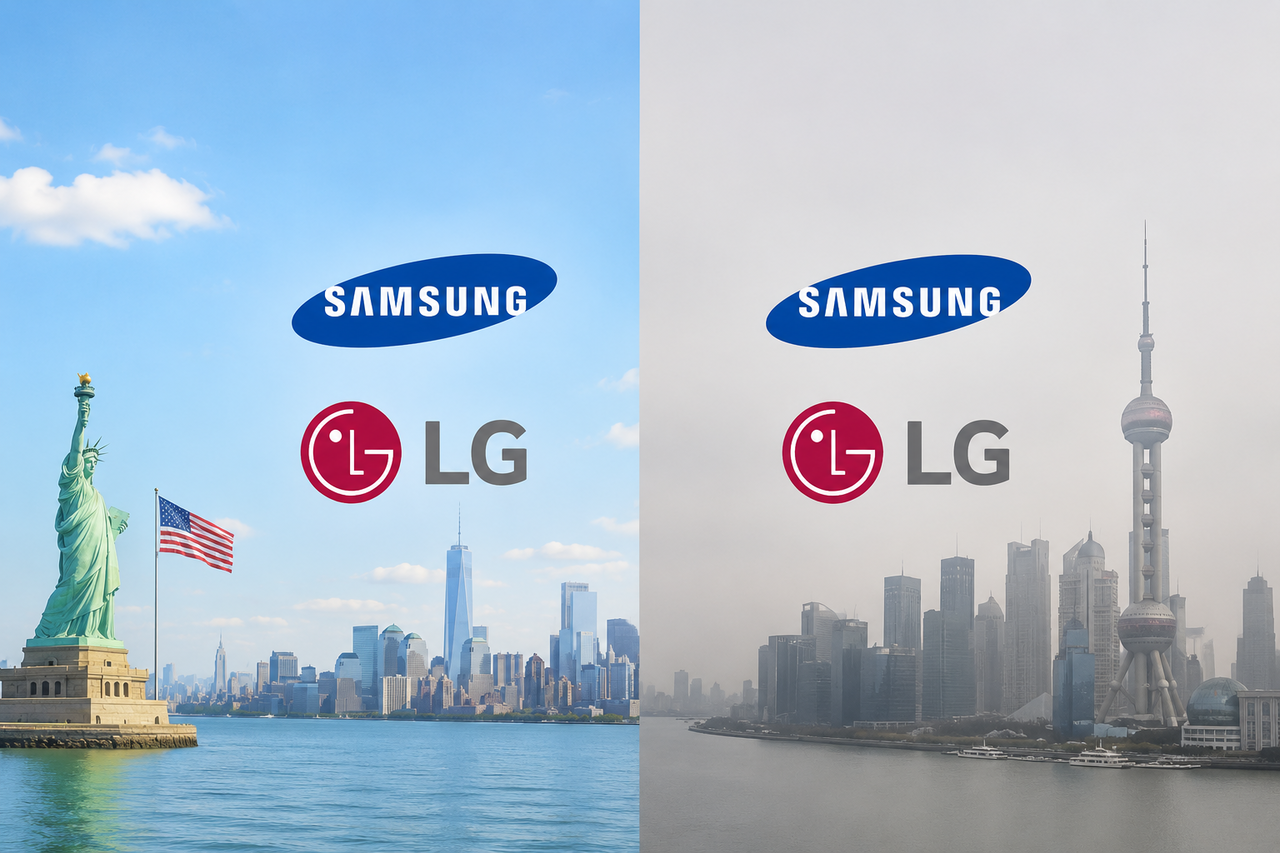
Samsung Electronics and LG Electronics recorded starkly different results for their appliance businesses in the United States and China in the first half of this year. Both companies performed well in the US, but in China, sales and operating profit fell at both firms compared with the same period last year. Samsung, which has decided to pull back from parts of its China business, recorded a net loss there.
Despite higher tariff barriers driven by protectionism, both companies pushed into the US market with premium products. In China, however, intensifying low-price competition led by local manufacturers left little room to maneuver. LG Electronics has continued to pursue a premium strategy in China as well, maintaining a profit.
According to the Financial Supervisory Service, Samsung Electronics America (SEA) posted sales of 20.83 trillion won ($15 billion) and net profit of 1.29 trillion won in the first half, compared with sales of 20.36 trillion won and net profit of 939.8 billion won in the same period last year — a 2 percent increase in sales and a 37 percent rise in net profit.
SEA handles sales of TVs, home appliances and smartphones in the US market. Founded in 1978, it has stood at the forefront of Samsung's American push for nearly five decades and is by far the leader among Samsung's overseas sales subsidiaries in terms of profitability.
LG Electronics USA (LGEUS) also delivered strong first-half results. It posted sales of 6.86 trillion won and net profit of 802.5 billion won, compared with sales of 6.84 trillion won and a net loss of 6.8 billion won a year earlier — a modest sales gain and a swing to profit. Industry observers attribute last year's net loss to the impact of US tariffs on the market.
The US is LG Electronics' single largest market across the entire company. Among the major customers LG Electronics disclosed for the first half were US electronics and large-format retailers Best Buy, Home Depot and Lowe's.
Both companies are targeting the US market with AI-powered and built-in appliances. Analysts say a premium strategy underpinned the strong profitability at their US units in the first half. Both are focusing on supplying large-scale built-in appliances to upscale residential complexes through their premium brands.
Samsung Electronics is targeting the B2B market through its Dacor brand, working with major construction companies. LG Electronics is similarly deepening its collaboration with builders under the SKS brand. Earlier last month, it opened SKS's fourth showroom in Boston, expanding its B2B customer footprint.
In China, both companies turned in weaker results than in the US, though LG Electronics fared better than Samsung. LG Electronics China (LGECH) posted sales of 118.2 billion won and net profit of 45 billion won in the first half, compared with sales of 124.2 billion won and net profit of 40.6 billion won a year earlier — net profit actually rose despite the slight revenue decline.
Samsung Electronics China (SCIC) posted first-half sales of 943.5 billion won and a net loss of 51.2 billion won, against sales of 4.41 trillion won and net profit of 533.6 billion won in the same period last year — a 78 percent drop in sales and a swing to a loss.
The sharp deterioration in profitability reflects follow-through measures after reports emerged earlier this year that Samsung would exit its China appliance business. In April, reports citing foreign media indicated Samsung would withdraw from selling home appliances and TVs in China. The company held briefings for business partners and local employees to announce it would end sales by year-end.
LG Electronics, by contrast, is doubling down on high-income consumers in China through a premium approach even as low-price competition intensifies. Analysts say that while China's appliance and TV market is crowded with brands, demand for LG Electronics' products has consistently held up in the high-end segment.

jeongwan@heraldcorp.com